The ink on diplomatic cables rarely smells like ink. It smells like ozone and burnt hair.
In the high-altitude chill of Washington corridors, whispers move faster than encrypted transmissions. Rumors had begun to pool in the quiet corners of foreign ministries—stories of secret conduits, of billions in frozen assets unlocked, of a sudden thaw in the eternal winter between two capitals that have spent four decades refusing to say each other's names without a sneer. The word was simple. Relief. A grand bargain. A quiet turning of the page.
Donald Trump heard the chatter. He did not whisper back.
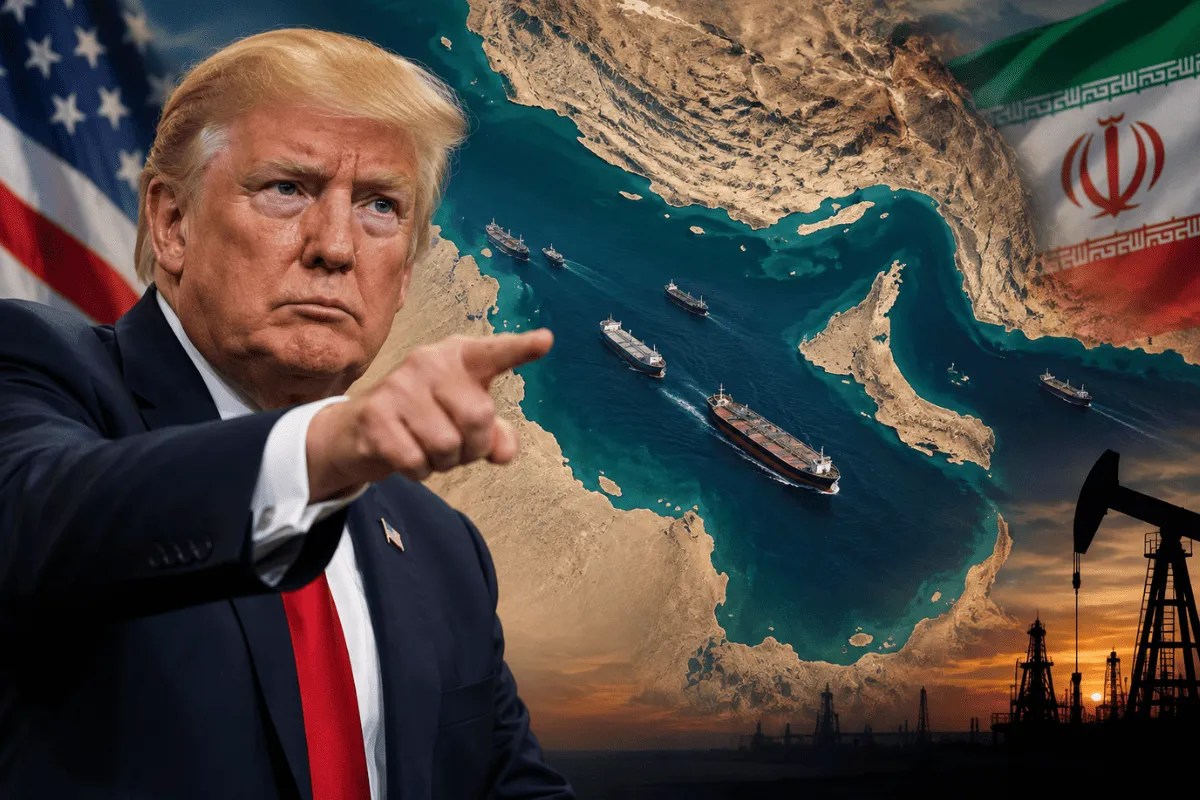
With the blunt force of a wrecking ball hitting drywall, the former president took to his digital pulpit to shatter the illusion. No sanctions lifted. No vaults opened. No olive branches extended in the dark. Fake news. Fabricated smoke from a fire that was never lit.
To understand why this denial matters—why a rumor about money and sanctions can send tremors from Tehran to Wall Street—you have to step away from the podiums and look at the kitchen tables.
Imagine a shopkeeper in the crowded alleys of the Grand Bazaar of Tehran. For years, he has watched the value of his life’s savings dissolve like cotton candy in a puddle. Every morning, he checks the exchange rate not as a matter of finance, but as a matter of survival. When headlines break across international screens suggesting that billions in frozen Iranian funds might finally trickle back into the banking system, his heart does a frantic, dangerous dance. It is the hope that kills you. It is the whisper of relief that makes the current reality feel twice as heavy.
Then comes the correction.
Trump’s flat denial is not merely a political statement. It is a psychological anchor dropped into turbulent waters, dragging every flickering hope straight down to the seabed.
The mechanics of modern economic warfare are bloodless on paper. We talk about "maximum pressure campaigns," "sanctions waivers," and "asset freezes" as if they are chess pieces moving across a pristine felt board. But every policy term is a tourniquet. When sanctions bite, medicine fails to clear customs. When assets remain locked, infrastructure crumbles silently in the dark.
For months, anonymous sources had fed journalists a narrative of quiet diplomacy. It is a classic dance. Test the waters through third-party intermediaries—Oman, Qatar, Switzerland. Leak a possibility to gauge the domestic blowback. Watch how the markets react. If the public flinches, deny everything.
Trump’s immediate and aggressive pushback short-circuited that entire choreography.
Why? Because in the theater of international relations, perception is currency. To admit to offering concessions—even exploratory ones—is to project weakness. In the calculus of strength that defines modern populism, backing down by an inch is equivalent to losing the mile. By labeling the reports of sanctions relief and fund unfreezing as entirely fabricated, the message sent to Tehran was unambiguous: the wall has not moved. Not a single brick.
Yet, the persistence of these rumors tells a deeper story. It reveals a profound, collective exhaustion. Both sides—exhausted by decades of brinkmanship, cyber warfare, proxy conflicts, and the perpetual hum of impending crisis—are desperately looking for an exit ramp. The rumors of secret talks were not necessarily born of malicious deception; they were born of wishful thinking. People whispered about relief because they so desperately needed it to be true.
Consider the geopolitical chessboard from Tehran's perspective. The economy groans under the weight of isolation. Currency depreciation acts as an invisible tax on every citizen buying bread or fuel. The leadership in Iran walks a razor-thin tightrope between projecting defiance to their hardline base and managing the simmering discontent of a populace that has grown weary of paying the price for ideological purity. When a rumor surfaces that billions are coming back, it offers a fleeting, intoxicating glimpse of breathing room.
When that glimpse is violently snatched away by a social media post from Florida, the psychological whiplash is profound.
This is the hidden cost of rumor-driven diplomacy. It creates a roller coaster of false dawns. Every time a leak suggests a breakthrough, hopes rise, only to crash violently against the hard rock of political reality.
Trump’s intervention lays bare the fundamental truth of this standoff. There is no secret backroom deal waiting to be unveiled. There is no sudden epiphany of reconciliation. There is only the grinding persistence of hostility, locked in a holding pattern that defies easy resolution.
The shopkeeper in Tehran returns to his ledger, his hands steadying after the initial shock. The diplomats in Washington pack away the hypothetical maps. The headlines shift to the next outrage, the next crisis, the next cycle of friction.
Nothing has changed. And in the geometry of international power, sometimes the most deafening sound is the absolute silence of a door remaining firmly, unmistakably shut.