The numbers on the digital display flicker like a heartbeat. $4.89. $4.92. $5.10. At a rest stop off I-80, a long-haul trucker named Elias grips the plastic handle of the nozzle, his knuckles white against the grime. Every click of the meter isn't just a measurement of volume; it is a subtraction from his daughter’s tuition, a dent in his mortgage, a slow erosion of the life he built during three decades on the road. For Elias, and for millions of Americans staring at those same shifting digits, the gasoline tax isn’t an abstract line item in a federal budget. It is a weight.
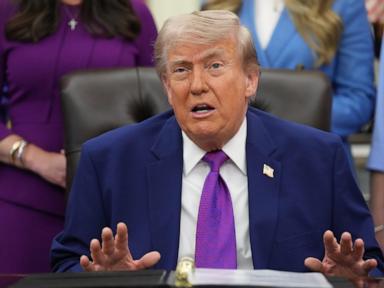
When a political figure steps onto a stage and promises to lift that weight with a single stroke of a pen, the relief is visceral. Donald Trump’s recent vow to move toward suspending the federal gasoline tax hits like a cool breeze in a heatwave. It sounds simple. It sounds immediate. It sounds like justice for the person holding the nozzle.
But the machinery of American governance is rarely as fast as a campaign promise. Beneath the surface of that easy rhetoric lies a complex web of constitutional limits, legislative gatekeepers, and the stubborn reality of how a nation actually pays for its roads.
The Man with the Pen
The promise rests on a powerful image: a President sitting at the Resolute Desk, signing an executive order that instantly slashes 18.4 cents off the price of every gallon of gas. It is a seductive vision of executive strength. However, the reality of the Oval Office is defined more by its boundaries than by its reach.
The federal gasoline tax is not a suggestion or a temporary regulation. It is a law. Specifically, it is a revenue measure codified by Congress. In the American system, the "power of the purse" belongs exclusively to the legislative branch. This isn't a mere technicality; it is the bedrock of the separation of powers. A President can suggest a tax cut, they can lobby for it, and they can certainly tweet about it, but they cannot unilaterally delete a tax from the books any more than they can rewrite the criminal code by lunch.
Consider the hypothetical case of a small-town mayor. If the mayor decides the city’s property taxes are too high, they can’t simply walk into the tax collector’s office and tell them to stop sending bills. They have to go to the city council. They have to debate. They have to find a way to fill the hole that the missing money leaves behind. On the federal level, that "city council" is a divided, slow-moving Congress that guards its taxing authority with predatory intensity.
The Ghost in the Asphalt
To understand why suspending the tax is so difficult, we have to look at where those cents actually go. They don't just disappear into a generic "government pot." They flow directly into the Highway Trust Fund.
This fund is the lifeblood of the American commute. It is the money that replaces the rusted rebar in a bridge in Pittsburgh. It is the funding that paves the potholes on a rural route in Alabama. It is the invisible force keeping the infrastructure from crumbling beneath Elias’s eighteen-wheeler.
If the federal gas tax vanishes tomorrow, the Highway Trust Fund doesn't just shrink; it enters a state of cardiac arrest. The 18.4 cents per gallon for gasoline and 24.4 cents for diesel provide the vast majority of the funding for federal highway and transit programs. Without that revenue, the government faces a brutal choice: let the roads rot, or find billions of dollars elsewhere in an already bloated budget to keep the orange cones standing.
The Paper Tiger of Executive Action
There is a recurring theme in modern politics: the "Day One" promise. Candidates often speak as if the presidency is a kingship, capable of overturning decades of established law through sheer force of will. While a President can direct the Treasury Department to study a tax or prioritize certain types of enforcement, the suspension of a tax requires a literal act of Congress.
History shows us the friction of this process. Even when a President’s own party controls both the House and the Senate, passing significant tax legislation is a marathon of concessions and backroom deals. In a divided government, a proposal to suspend the gas tax becomes a hostage. It becomes a chip in a much larger game involving climate policy, electric vehicle subsidies, and national debt ceilings.
For the voter in the car, the nuance of "Article I, Section 8 of the Constitution" feels like a betrayal. When they hear a promise to cut the tax, they expect the price to drop. They don’t want to hear about the Committee on Ways and Means or the parliamentary hurdles of the Senate. They want the $0.18 back.
The Mirage of the Savings
Even if the miracle happened—if Congress and the President shook hands and the tax was suspended—there is no guarantee the consumer would ever see the full benefit.
The oil market is a turbulent sea of supply and demand. Retailers at the corner station don't change their prices based solely on taxes; they change them based on what the guy across the street is charging and what it costs to refill their underground tanks. Economists often point to "tax incidence," a dry term for a frustrating reality: when a tax is cut, the seller often absorbs part of that cut to increase their profit margin.
If the tax drops by 18 cents, the price at the pump might only drop by 10 cents. The rest evaporates into the complex logistics of the energy industry. For someone like Elias, who burns hundreds of gallons a week, ten cents is better than nothing. But it isn’t the revolution he was promised.
The Weight of the Promise
Politics is often the art of telling people what they want to hear in a way they can’t quite verify. Suspensions of the gas tax have been proposed before, by both Democrats and Republicans, usually when prices spike and approval ratings dip. It is a "break glass in case of emergency" tool that rarely gets used because the consequences are so permanent and the benefits so fleeting.
We live in an era of immediate gratification. We want our packages delivered in two hours and our economic problems solved in a single news cycle. The idea that a President can't just "fix it" feels like a failure of leadership rather than a feature of democracy. But the guardrails are there for a reason. They prevent any one person from bankrupting the country's infrastructure to win a week of positive headlines.
Elias finishes filling his tank. The total is staggering. He climbs back into the cab, adjusts his mirrors, and pulls back onto the highway. The road beneath him is smooth, for now. It was paid for by the person who stood at this pump before him, and the person before them. It is a rolling contract between the citizen and the state—a messy, expensive, bureaucratic contract that keeps the wheels turning.
The promise of a tax-free gallon is a beautiful story. It is a story about a hero who steps in to save the day with a stroke of ink. But as the truck gathers speed, the reality remains: the pen is only as powerful as the law that allows it to write, and the road ahead requires more than just a signature to stay open.
The nozzle clicks back into the holster. The display resets to zero. The wait for a miracle continues, while the cost of the journey only goes up.