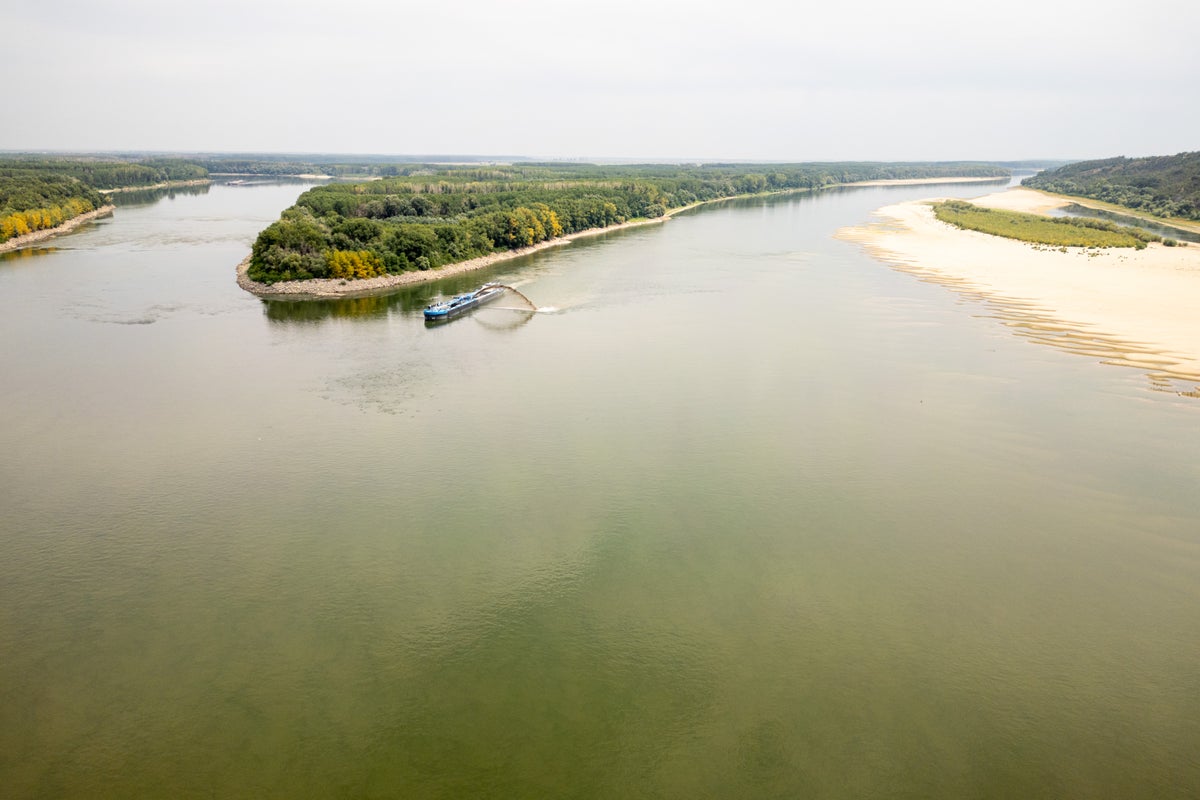
Severe hydrological depletion along the Danube River basin forces unprecedented emergency interventions, exposing structural vulnerabilities in base-load energy architecture. When record-low water flows collapse the intake volumes necessary for thermodynamic dissipation, national grid stability degrades within hours. Romania's operational response to sink rock-laden barges near the Bala Canal illustrates the high-stakes friction between climate volatility and critical infrastructure design. Understanding this crisis requires examining the thermodynamic constraints, operational trade-offs, and systemic failure loops that govern thermal power generation under extreme drought conditions.
The Thermodynamic Dependency Vector
Base-load nuclear facilities operate on Rankine thermodynamic cycles, requiring continuous, high-volume heat rejection to maintain efficiency and structural integrity. The Cernavoda plant relies on the Danube River to supply this cooling capacity. Water is drawn directly from the channel, circulated through condensers to absorb waste heat from the turbine steam cycle, and discharged back into the river at an elevated temperature constrained by environmental regulations.
When regional precipitation deficits and protracted heatwaves drive river discharge down to historic minimums—dropping below 1,400 cubic meters per second in parts of Romania—the physical volume of available cooling water shrinks. This reduction initiates a compounding operational hazard:
- Inlet Temperature Elevation: Shallower, slower-moving river water absorbs ambient thermal energy more rapidly, raising the baseline temperature of the intake fluid.
- Delta-T Compression: Higher intake temperatures narrow the differential between the reactor cooling loop and the ultimate heat sink, reducing thermodynamic efficiency.
- Regulatory Discharge Thresholds: Environmental protection limits cap the maximum allowable temperature of discharged water to prevent aquatic ecosystem collapse, forcing plant operators to throttle output or trip reactors if cooling capacity falls below critical design baselines.
The preemptive shutdown of Unit 1 and the desperate measures to sustain Unit 2 reflect the harsh binary of thermal engineering. A nuclear reactor cannot operate without an absolute, uninterrupted heat sink. When ambient hydrology fails, the plant's capacity factor drops to zero regardless of fuel availability or grid demand.
Hydraulic Manipulation and the Cost Function of Emergency Engineering
Faced with an imminent loss of approximately 20 percent of national electricity generation, Romanian authorities bypassed standard regulatory timelines to execute aggressive physical alterations to the Danube riverbed. These interventions followed a strict escalation hierarchy:
- Mechanical Dredging: Initial attempts focused on deepening shallow intake channels to maintain volumetric flow, yielding marginal gains as siltation outpaced excavation rates.
- Explosive Rock Blasting: Military engineers utilized controlled detonations to fracture the Pârjoaia rock formation near the Bala branch, removing natural sub-surface bottlenecks that impeded downstream velocity.
- Improvised Obstruction Sinking: The sinking of four rock-filled barges directly into the Bala channel functions as a macro-hydraulic damming maneuver.
This final intervention alters the distributive fluid dynamics of the river bifurcation. By artificially increasing hydraulic resistance in the Bala secondary arm, the submerged vessels force a larger fraction of the main Danube volume down the Old Danube channel toward the Cernavoda intake structures.
The mathematical margins involved are razor-thin. Engineering estimates indicate this obstruction raises local water levels by roughly 10 to 12 centimeters, translating to an estimated extension of operational runtime for Unit 2 from five days to approximately nine or ten days. This represents a high-cost, short-duration tactical buy rather than a strategic solution. The physical alteration of a major international waterway carries unmodeled sediment transport consequences, potential navigational hazards, and legal vulnerabilities regarding cross-border water flow management with neighboring riparian states.
Regional Grid Contagion and the European Power Deficit
The vulnerability at Cernavoda does not exist in an isolated national vacuum. Southeast Europe operates as an interconnected synchronous electrical grid where thermal stress on cooling water infrastructure creates a cascading contagion effect. Across the region, parallel environmental baselines are triggering concurrent generation losses:
- In Hungary, the Paks nuclear facility faces severe output restrictions due to high Danube temperatures and low flow rates.
- In Serbia, low water levels impair both thermal coal-fired boilers and hydroelectric generation capacity.
- In Slovenia, the Krsko nuclear plant operating on the Sava River has been forced to reduce power output to 80 percent, tightening reserve margins for neighboring Croatia.
This synchronized contraction of base-load capacity across multiple jurisdictions eliminates the safety buffer of cross-border emergency imports. When Romania declares a nationwide state of alert in the energy sector and prepares tiered industrial consumption restrictions, the domestic market absorbs a localized supply shock that cannot be easily mitigated by regional spot-market purchases. Neighboring exporting nations are experiencing identical generation constraints, turning regional grid cooperation into a zero-sum rationing exercise.
Long-Term Capital Allocation and Resilience Failures
Relying on military explosives and sunken barges to secure a multi-gigawatt power plant highlights a profound structural deficit in long-term climate adaptation planning. Infrastructure engineered in the late twentieth century assumes stationary hydrological models. Historical flow averages derived from decades past are obsolete in an era of amplified meteorological extremes.
To resolve this systemic risk, future capital allocation must bypass temporary civil engineering patches and target fundamental thermodynamic decoupling:
- Closed-Loop Cooling Towers: Retrofitting facilities with mechanical draft cooling towers eliminates direct river volume dependency, substituting high-flow once-through cooling with evaporative consumption systems.
- Diversified Source Intakes: Designing redundant subterranean or multi-point withdrawal systems provides operational resilience against single-channel siltation or low-flow drops.
- Grid-Scale Storage Buffers: Pairing nuclear assets with localized high-capacity storage mitigates the instantaneous economic shock of sudden, mandatory thermal load shedding.
Execute immediate diplomatic coordination with upstream river management authorities to establish dynamic ecological flow releases, while simultaneously fast-tracking the engineering feasibility study for closed-loop cooling infrastructure at Cernavoda to permanently eliminate single-point hydrological vulnerability.
(https://www.youtube.com/watch?v=8wtJO-6ryI4)]
This video provides contextual analysis and visual documentation of the engineering operations and explosive clearing of the Danube riverbed to support the Cernavoda nuclear facility.