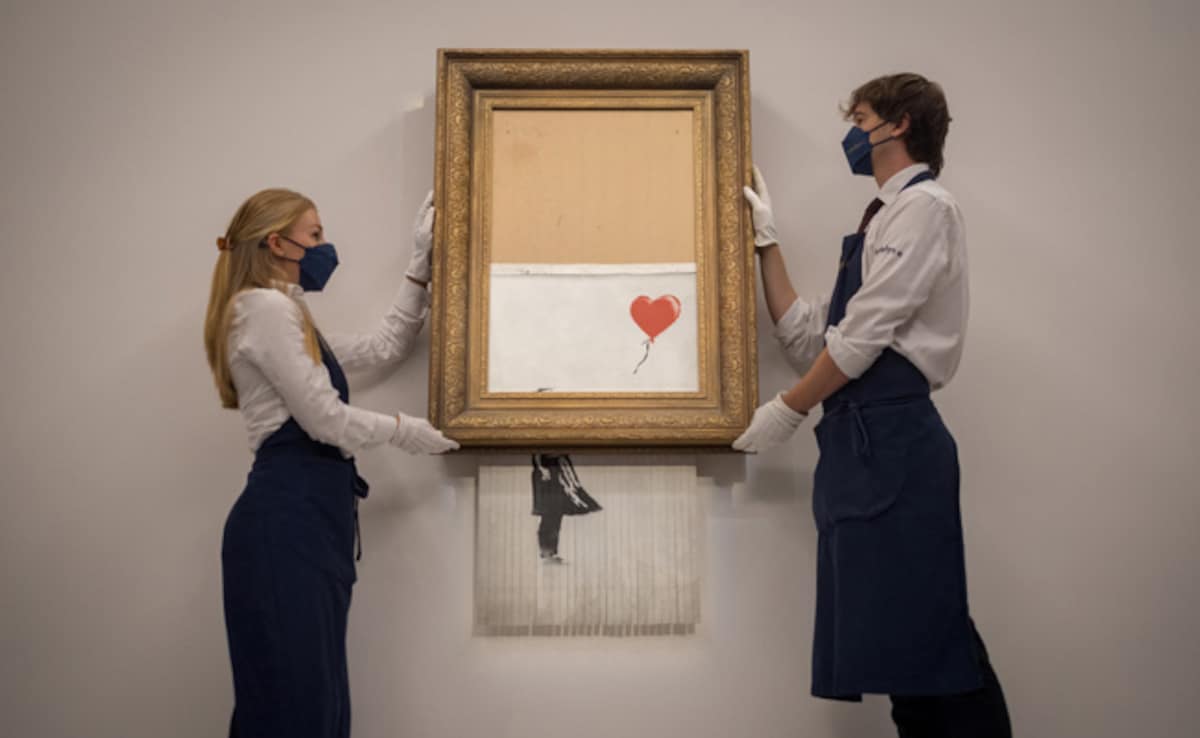
You’ve seen the shredded Girl with Balloon. You’ve probably seen the rats scurrying across London Underground walls or the massive, dystopian playground of Dismaland. But the one thing you haven’t seen—at least not officially—is the face of the man holding the spray can. For decades, the media has obsessed over "unmasking" Banksy. Every few years, a new "definitive" report claims to have finally solved the puzzle. Yet, here we are in 2026, and the Banksy brand is stronger than ever precisely because the man stays in the shadows.
The truth is that the world doesn't actually want to know who he is. The mystery is the product. Once you attach a middle-aged guy with a mortgage and a favorite pair of sneakers to those stencils, the magic evaporates. But if you're looking for the most credible theories based on geographic profiling and legal slips, the trail isn't as cold as you might think.
The Robin Gunningham Theory and the Science of Where
The most persistent name linked to the Banksy moniker is Robin Gunningham. He’s a Bristol-born artist who supposedly moved to London around the same time Banksy’s work started appearing there. In 2016, researchers at Queen Mary University of London decided to use a technique normally reserved for catching serial killers: geographic profiling.
They analyzed the locations of over 140 artworks in London and Bristol. The data points didn't just cluster randomly. They clustered around an apartment in Bristol and three specific addresses in London. All four locations were linked directly to Gunningham. It’s hard to argue with math. When your "artistic" output mirrors the daily commute and living patterns of a specific human being, the coincidence starts to look like a confession.
But knowing a name isn't the same as an unmasking. Gunningham has never confirmed it. His family denies it. The "reveal" didn't change a thing because, in the art world, a name is just a label. The persona is what sells at Sotheby’s.
The Massive Attack Connection and the Tour Date Theory
If you don't buy the Gunningham story, the next best bet involves Robert "3D" Del Naja of the band Massive Attack. This theory gained massive traction because of a slip-up by DJ Goldie during a podcast interview. While discussing the commodification of graffiti, Goldie said, "No disrespect to Robert, I think he’s a brilliant artist. I think he’s flipped the world of art over."
The internet went into a frenzy. Was he talking about Robert Del Naja?
Journalist Craig Williams did the legwork on this one. He plotted Banksy’s mural appearances against Massive Attack’s tour dates. The overlap was eerie. Murals appeared in Melbourne, San Francisco, New Orleans, and Toronto right when the band was in town. Del Naja was a graffiti artist in Bristol long before he was a rock star, and he’s admitted to being friends with Banksy.
Maybe Banksy isn't one person. It’s a popular theory that "Banksy" is actually a collective of artists led by a figurehead. This would explain how massive installations appear overnight without anyone getting caught. It’s a logistics operation as much as it is an art project.
Why the Legal System Might Finally Break the Silence
For years, Banksy used his anonymity as a shield. It protected him from vandalism charges and helped build his "outlaw" reputation. But that shield is becoming a liability in the courtroom.
To own a trademark, you generally have to show you're using it and be willing to identify yourself as the owner. In recent years, Banksy’s company, Pest Control Office Ltd, has been embroiled in legal battles over the rights to his most famous images. A greeting card company called Full Colour Black challenged his trademark on the "Flower Bomber" image. The argument was simple: if you won't reveal who you are, you can't claim the protections of a creator.
The European Union Intellectual Property Office (EUIPO) initially ruled against him, stating that his anonymity meant he couldn't be identified as the unmistakable owner. While some of these rulings have been fought and occasionally overturned, the pressure is mounting. The art world's biggest secret is now a massive legal hurdle. If he wants to keep his millions, he might eventually have to show his ID.
The Accidental Unmasking in the 2003 Interview
Sometimes the best evidence isn't a complex scientific study or a tour date map. Sometimes it’s just a forgotten tape. In 2023, a "lost" interview from 2003 resurfaced from the BBC archives. In the recording, a reporter asks if his name is "Robert Gunningham." The man on the tape—purportedly Banksy—replies, "It's Robbie."
It was a small, human moment. It didn't have the flair of a grand reveal, but it added a layer of suburban normalcy to a guy who usually feels like a ghost. He sounded like a regular guy from Bristol, not a shadowy mastermind.
The Logistics of a Midnight Stencil
People always ask how he gets away with it. It’s not just luck. It’s planning. Banksy’s team often uses high-visibility vests and traffic cones. If you look like you're supposed to be there, nobody looks twice. We've been conditioned to ignore "men at work."
He also uses pre-cut stencils to minimize the time spent on-site. Most of his street pieces take less than 15 minutes to execute. By the time the paint is dry, he’s miles away. This efficiency is why "unmasking" him in the act is so rare. You’re not looking for an artist; you’re looking for a construction crew.
What You Should Do Next
If you’re fascinated by the intersection of art and anonymity, stop looking for a face and start looking at the paperwork. The real "unmasking" is happening in the registries of companies like Pest Control Office Ltd.
Follow the legal filings if you want the truth. But if you want to enjoy the art, keep the mystery alive. The moment we have a definitive photo of Robbie or Robert or whoever it is, the stencil on the wall becomes just another piece of expensive property.
Go visit a local street art festival. Support artists who are working in the open. The Banksy phenomenon taught us that the street is a gallery, but the next great artist might be someone who actually wants you to see them. Stop obsessing over one man's identity and start noticing the work being done in your own neighborhood.