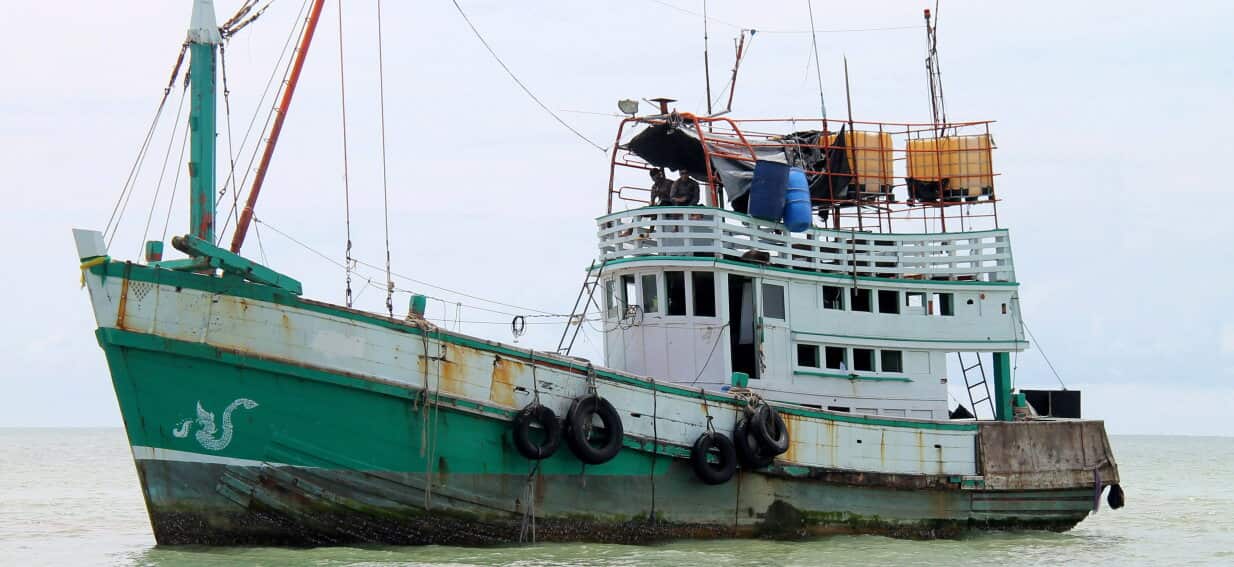
A maritime catastrophe in the Bay of Bengal has left more than 500 Rohingya refugees feared dead after two overcrowded vessels capsized off the coast of Myanmar. The twin disasters underscore the sheer desperation driving the persecuted Muslim minority to risk everything on the open sea, escaping the dual horrors of military violence in Rakhine State and squalor in Bangladeshi refugee camps. Yet, this is not merely a tragedy born of misfortune. It is the direct result of a highly organized, multi-million-dollar human trafficking pipeline that operates with near-total impunity across Southeast Asian waters.
For years, the international community has treated these seasonal maritime migrations as isolated humanitarian crises. They are not. They are the predictable output of a lucrative criminal enterprise that capitalizes on regional geopolitical paralysis. As long as regional governments treat the symptom—the boats—rather than the transnational syndicates and political failures that launch them, the Bay of Bengal will remain a mass grave.
The Anatomy of a Dual Capsize
The two vessels departed from points near the southern coast of Bangladesh and western Myanmar, aiming for the relatively safe havens of Malaysia or Indonesia. Eyewitness accounts and maritime tracking data indicate that both wooden trawlers were loaded to three times their safe capacity. When the vessels encountered rough seas and engine failure, they lacked the basic ballast and safety equipment to survive the swell.
Survivors report that the operators of these vessels routinely sabotage their own communication equipment or abandon ship on smaller motorized rafts when intercepted or when the weather turns, leaving hundreds trapped in the holds. This is a deliberate risk management strategy employed by trafficking cartels. If a boat is intercepted, the low-level crew members are expendable; the profit has already been collected upfront from desperate families who pool their life savings to pay fees ranging from $3,000 to $7,000 per seat.
The economics of the trade dictate the loss of life. Traffickers utilize aging, unseaworthy wooden fishing hulls because they are cheap to acquire and legally unnoticeable in busy fishing ports. The loss of the vessel is factored into the operational cost. The human cargo is entirely secondary to the margin.
The Geopolitical Vacuum Enabling the Smugglers
To understand why these boats keep launching, one must look at the total breakdown of regional diplomacy. The Association of Southeast Asian Nations has maintained a policy of non-interference regarding Myanmar, even as the country spirals into deeper civil conflict following the 2021 military coup. This hands-off approach has created a security vacuum where law enforcement coordination against maritime crime is nonexistent.
Furthermore, Bangladesh currently hosts over one million Rohingya refugees in Cox’s Bazar, the largest refugee settlement on earth. The camps have become pressure cookers. Rations are routinely cut due to international funding shortfalls, security inside the camps has deteriorated due to the rise of armed gangs, and the prospect of a safe, voluntary return to Myanmar is non-existent.
When human beings face the choice between slow starvation in a fenced camp and a twenty percent chance of drowning for a shot at freedom, many choose the sea. The traffickers know this. They actively recruit inside the camps, promising employment and legal status in Southeast Asia—promises that are almost always lies.
The Role of Corrupt Maritime Officials
A trade of this scale cannot exist without institutional complicity. Investigation into the logistics of these maritime routes reveals a network of bribes paid to local naval and coast guard units along the coastlines of Myanmar, Bangladesh, and Thailand.
- Departure Points: Vessels are often loaded in broad daylight near river mouths where local authorities turn a blind eye in exchange for kickbacks.
- Transit Zones: Deep-sea refueling vessels operate openly in international waters, supplying the trawlers with just enough diesel to reach the edges of territorial seas.
- Pushback Policies: When regional navies do spot these boats, the standard operating procedure is "pushback"—providing minimal food and water before towing the vessel back into international waters, effectively passing the death sentence to the next jurisdiction.
This cycle of avoidance shields the true architects of the trade. The kingpins sit in air-conditioned offices in Bangkok, Kuala Lumpur, and Yangon, entirely insulated from the physical dangers of the sea.
Moving Beyond Retrospective Grief
The standard international response to these disasters follows a weary, predictable script. UN agencies express deep sorrow, human rights organizations call for immediate search-and-rescue operations, and regional governments promise to investigate. Then, the news cycle shifts, and the infrastructure of the trafficking pipeline remains completely intact.
Stopping this cycle requires a fundamental shift in strategy. First, the financial networks backing the smugglers must be targeted through aggressive international banking sanctions and cross-border intelligence sharing. The money trails from these operations often touch legitimate regional banking institutions; tracking the flow of funds from refugee families to the syndicates is entirely possible with current financial forensic tools.
Second, the regional maritime policy of pushing back boats must be replaced by a coordinated regional framework for disembarkation and processing. Denying safe harbor does not stop the boats from coming; it merely ensures that when they sink, they do so far from the cameras, out in the deep ocean where the bodies are rarely recovered.
The 500 lives lost in this latest incident are not statistics, nor are they the unavoidable casualties of a natural disaster. They are the victims of a highly functional, entirely predictable system of human exploitation that the world chooses to tolerate. Until the cost of operating this pipeline exceeds the immense profits it generates, the hulls will continue to be filled, and the Bay of Bengal will continue to claim its toll.