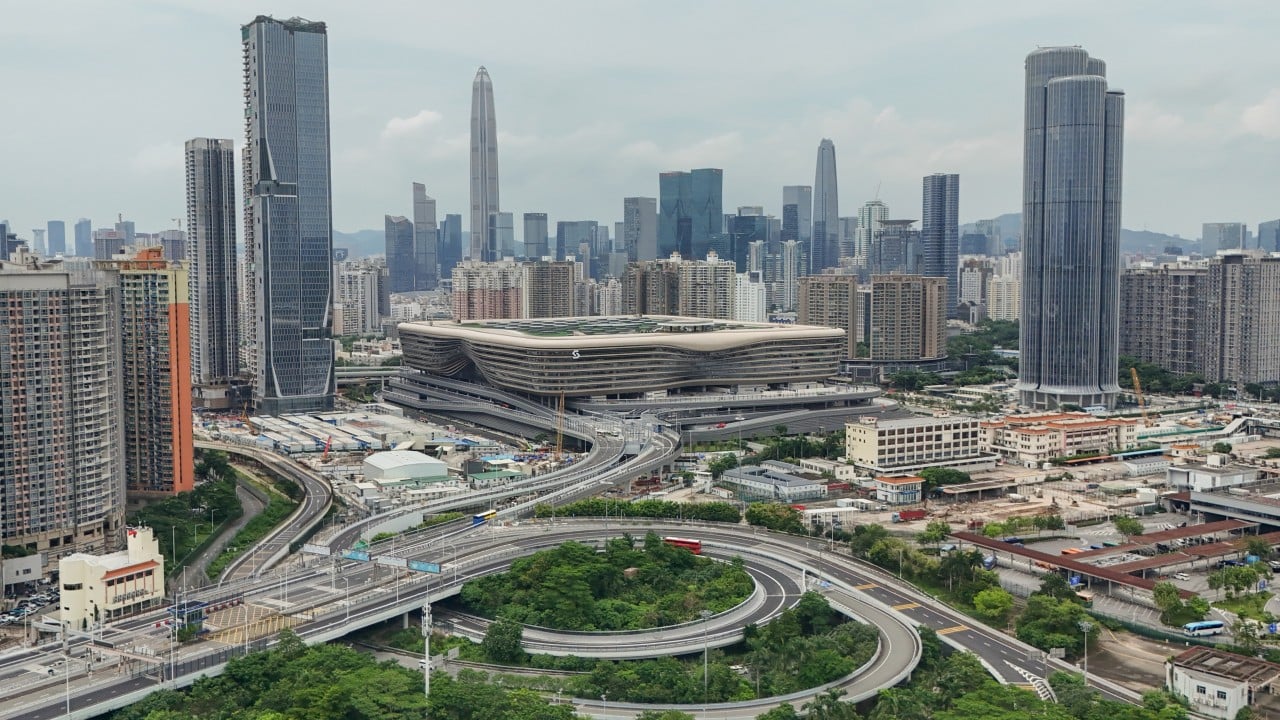
Thousands of residents packed the newly revamped Huanggang Port border crossing recently, treating a piece of municipal infrastructure like an amusement park ride. Headlines breathlessly reported on the glowing arrival halls, the high-throughput biometric gates, and the sheer speed of pedestrian clearance.
Media outlets framed this upgrade as a triumph of regional harmony. They treated faster passport stamps as the ultimate metric of progress. For a deeper dive into this area, we recommend: this related article.
That framing is pure administrative self-congratulation.
Faster processing at a land boundary does not mean borders are disappearing. It just means the state has optimized the tollbooth. When people celebrate a shorter queue at Huanggang, they are cheering for a more efficient cage. True integration does not look like ten thousand people rushing across a riverbank to eat dinner in Shenzhen and rushing back before midnight to save on rent. True integration makes the boundary invisible, irrelevant, and economically redundant. For broader background on the matter, in-depth analysis can be read at Travel + Leisure.
Right now, we are building bullet train tracks to run faster loops on a treadmill.
The Myth Of The Frictionless Commute
Let us look at the mechanics of what actually happens when a border crossing gets a multi-billion-dollar facelift. The state pours capital into facial recognition lanes, high-speed rail links, and multi-tiered immigration halls. Officials stand behind podiums and talk about regional cohesion.
Then reality sets in.
I have watched companies burn millions trying to leverage cross-border personnel models, assuming that a five-minute clearance time at Huanggang solves the fundamental friction of operating across two legal systems, two tax codes, and two distinct data regimes. It does not. A fast gate does not reconcile a mainland employment contract with a Hong Kong labor ordinance. It does not solve IP leakage when data crosses a firewall.
Tourists treating a customs facility like a Sunday outing miss the structural irony entirely. You are paying homage to the very checkpoint that divides your labor market, your capital flows, and your regulatory reality.
The lazy consensus in modern logistics and urban planning assumes that reducing physical friction equals economic fusion. That is false. Friction is not just found in the passport line. Friction lives in the structural divergence between two administrative systems operating under one national umbrella. Until we address the regulatory wall, the physical wall is just theater with better lighting.
What People Get Wrong About Greater Bay Area Mobility
If you ask common commentators about cross-border transit, they parrot a predictable set of talking points. They talk about housing affordability in Shenzhen driving workers south, or dining culture driving residents north. They treat the border as a leaky valve that needs better plumbing.
This view assumes that human movement between Hong Kong and Shenzhen is driven primarily by consumer arbitrage—cheaper hotpot, bigger apartments, lower service costs.
That is a superficial read of human capital.
Arbitrage is a temporary market inefficiency. It exists because of a price gradient. When you optimize border crossings to make consumer arbitrage easier, you create a transient population of commuters who spend their waking hours dodging institutional dissonance. You get workers living in one tax jurisdiction, earning in another, and consuming public services in a third, creating a logistical nightmare for municipal planners and long-term asset holders.
The real question nobody wants to ask is this: Why do we need a hard border checkpoint with passport control at all within a single sovereign state's primary metropolitan cluster?
If the goal is genuine economic agglomeration—competing directly with Tokyo, London, or New York—maintaining immigration and customs control between Hong Kong and Shenzhen is an anachronism. It is a domestic passport control system that penalizes the exact talent pool it claims to nurture.
The Economic Reality Check
Let us look at the numbers and the structural incentives.
When Huanggang Port processes tens of thousands of travelers a day, it generates a massive volume of transactional data. It tells bureaucrats that people like traveling. It does not tell them whether that travel creates sustainable, high-value economic output or just burns jet fuel and foot leather for weekend groceries.
Real economic integration requires three things:
- Mutual regulatory recognition of professional credentials.
- Unrestricted digital data flows without systemic latency.
- Total harmonization of corporate tax and legal liability frameworks.
A shiny new immigration hall achieves none of these. It simply moves bodies faster through a bureaucratic bottleneck. It is the architectural equivalent of putting racing tires on a tractor.
I have seen venture-backed startups try to split their engineering teams between Cyberport and Nanshan, assuming proximity and fast trains make up for the fact that their engineers cannot access the same cloud infrastructure or sign standardized cross-border equity agreements without hiring a small army of compliance lawyers. The bottleneck was never the queue at the turnstile. The bottleneck is the legal chasm between two legal systems pretending to operate as one market.
How To Navigate Cross-Border Realities
If you are a business owner, an investor, or a professional trying to operate across this boundary, stop buying into the hype of infrastructure tourism. Do not base your operational footprint on how fast you can clear customs on a Friday afternoon.
Instead, use this contrarian playbook:
- Assume the border will always exist on paper. Build your corporate structures assuming that data, currency, and labor do not move freely, no matter how many biometric gates are installed.
- Arbitrage talent, not cost of living. Moving your back-office staff to Shenzhen just to save on desk rent is a fool's errand if communication overhead and compliance friction eat your margin. Hire where the deep domain expertise sits, not where the rent is cheapest.
- Isolate your regulatory risk. Treat every cross-border transaction as an international export-import process until proven otherwise. Do not rely on verbal assurances of "special zone" exemptions.
The crowds touring Huanggang Port are celebrating the packaging, not the product. Until we have the courage to dismantle the administrative walls rather than just paint them, every new port expansion is just a monument to our own institutional inertia. Stop cheering for the queue. Start demanding the elimination of the line.