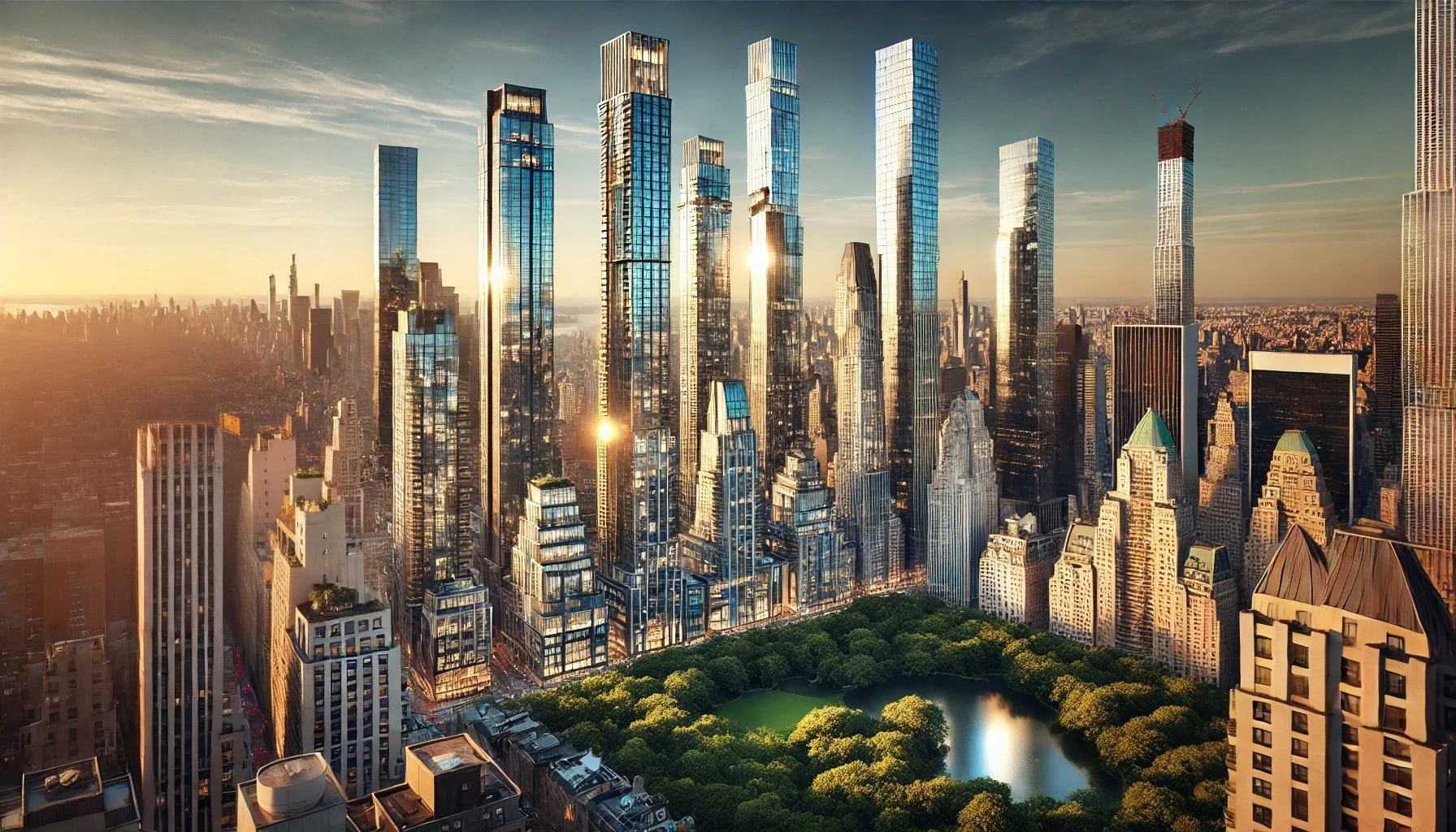
You’d think with the way people talk about the "Great Wealth Exodus," Manhattan would be a ghost town of empty penthouses. But honestly, if you walk down 57th Street—the infamous Billionaires’ Row—you aren't seeing a fire sale. You’re seeing a fortress.
So, let's get to the brass tacks. How many billionaires live in NYC right now, in early 2026?
Depending on which tracker you trust (and they all fight over the methodology), the number hovers between 109 and 112. That makes New York City the undisputed heavyweight champion of extreme wealth. It’s not even a close fight. For context, the next closest global rival is usually Hong Kong or Moscow, but New York beats them by a margin of nearly 40 people. That is a lot of private jets at Teterboro.
The 2026 Numbers: Why the Count Keeps Shifting
Tracking these people is kinda like trying to count pigeons in Bryant Park. They move. A lot. Forbes and Hurun constantly update their lists because a bad quarter on the Nasdaq can strip a "fintech bro" of his billionaire status by lunchtime.
As of the latest January 2026 data, the city’s billionaire population has actually shown some weird resilience. While there was a lot of noise about people moving to Florida or Texas for the tax breaks, the "structural gravity" of New York is hard to quit. You’ve got Michael Bloomberg still leading the pack with a net worth that has ballooned past $100 billion. Then there's Julia Koch, who holds down the fort with her family's massive industrial fortune.
Who are these people, anyway?
It’s not just old-school oil and gas anymore. The makeup of the city’s elite is changing.
- Hedge Fund Titans: Guys like Israel Englander and Stephen Schwarzman are still the bedrock.
- The Crypto Wave: Even after the various "crypto winters," founders who held on are still buying up Chelsea lofts.
- AI Newcomers: This is the big shift. In 2025 and 2026, we’ve seen a surge in AI-related wealth. New York is positioning itself as the "Applied AI" capital, focusing on how the tech actually makes money in finance and healthcare.
Why How Many Billionaires Live in NYC Matters for the Rest of Us
You might wonder why we should care. If you aren't shopping for $20 million condos, does the billionaire count affect your morning commute?
Basically, yes. New York’s tax base is ridiculously top-heavy. A tiny fraction of these residents provides a massive chunk of the city’s personal income tax revenue. When we ask how many billionaires live in NYC, we’re really asking about the city's budget for subways, parks, and schools.
The Citizens Budget Commission has been ringing alarm bells about the "hidden cost" of losing even a few of these high-earners. If five billionaires leave for Miami, that’s hundreds of millions of dollars in tax revenue that just... vanishes. It’s a delicate balance. The city needs their money, but the cost of living they drive up makes it hard for everyone else to stay.
The "Billionaire Row" Reality Check
If you want to see where this wealth lives, look at the skyline. Buildings like 220 Central Park South or Central Park Tower aren't just apartments; they’re safety deposit boxes in the sky.
Interestingly, we’ve seen a trend in 2026 where billionaires are actually buying more space but spending less time in it. It’s the "pied-à-terre" effect on steroids. They might officially reside in Florida for 183 days a year to dodge the state income tax, but they keep their primary social and business lives anchored in Manhattan. This makes the official count tricky—is a person "living" here if they only spend 120 nights a year at the Aman Residences?
The Top 5 Wealthiest New Yorkers (Early 2026 Estimates)
- Michael Bloomberg: ~$109 Billion (Media/Finance)
- Julia Koch & Family: ~$81 Billion (Diversified)
- Stephen Schwarzman: ~$52 Billion (Investments/Blackstone)
- Marilyn Simons: ~$32 Billion (Hedge Funds)
- Rupert Murdoch: ~$24 Billion (Media)
Is the "Exodus" Real?
Honestly, the "New York is over" narrative is a bit tired. While it’s true that New York’s share of the world’s millionaires has slipped slightly compared to places like Austin or Singapore, the billionaire tier is different.
Billionaires need a specific ecosystem. They need the best art galleries (Sotheby’s, Christie’s), the most sophisticated private banks, and a very specific type of social networking that happens at galas and high-end restaurants. You can't replicate the density of power found in a three-block radius of Midtown anywhere else on earth. Not yet, at least.
Actionable Insights for the Curious
If you're tracking this for business, investment, or just general "eat the rich" curiosity, here’s the deal:
- Follow the Real Estate: Watch the "super-prime" market (units over $20M). If those starts sitting on the market for 12+ months, it’s a sign the billionaire population is actually shrinking.
- Tax Policy: Keep an eye on any proposed "Wealth Taxes" in the NY State Legislature. History shows that whenever these get close to passing, the move-out rate spikes.
- AI Hub Status: Watch if venture capital continues to flow into NYC-based AI startups. This is where the next 20 billionaires will come from.
New York remains a city of extremes. It's a place where you can buy a $5 slice of pizza while a guy in a $5,000 suit walks past to go to his $50 million apartment. As long as NYC remains the world's financial lungs, it’s going to keep the top spot on the billionaire leaderboard.
To stay ahead of the curve, you should keep an eye on the quarterly wealth migration reports from firms like Henley & Partners. They offer a more granular look at where the "centi-millionaires"—the billionaires in waiting—are moving, which is usually the best leading indicator for where the big money will land next.