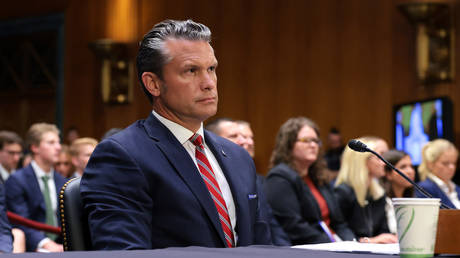
On November 10, 2026, House Republicans voted 211–204 to refer eight articles of impeachment against Defense Secretary Pete Hegseth to the House Judiciary Committee, effectively shelving the bid for the remainder of the 119th Congress. While major headlines framed the vote as a clean party-line victory for the Trump administration, the roll call tells a much messier story. Outgoing Republican Rep. Thomas Massie of Kentucky actually authored the resolution, and the procedural shield only held because 11 House Democrats missed the vote.
You don't need a degree in parliamentary procedure to see what happened here. House leadership didn't want an up-or-down vote on Hegseth's conduct in Iran, Venezuela, and Yemen on the permanent record. So they used a classic Capitol Hill maneuver—referral to committee—to bury H. Res. 1655 before the lame-duck session runs out.
How House Republicans Blocked the Hegseth Impeachment Bid
When Rep. Thomas Massie rose to a question of the privileges of the House on November 10, 2026, he forced leadership's hand. Under House rules, privileged resolutions must be addressed within two legislative days. Rather than let members vote directly on whether Hegseth committed high crimes and misdemeanors, California Republican Rep. Darrell Issa moved to refer the 34-page resolution to the House Judiciary Committee.
That motion carried 211–204 on Roll Call No. 317. Two hundred and ten Republicans joined independent Rep. Kevin Kiley of California to send the measure to committee. Massie was the lone Republican who voted against shelving his own resolution, siding with all 203 Democrats present on the floor.
Here's the detail most quick news briefs gloss over. Seven Republicans and 11 Democrats missed the roll call entirely. At one point during the vote, the tally sat deadlocked at 204–204. Because a tie defeats a motion to refer, the impeachment articles came within seconds of advancing to a direct floor vote. A handful of tardy Republicans trickled in to push the count to 211, while the missing Democrats never made it to the chamber.
The Democratic Absences That Saved Hegseth
If you're wondering why Democrats erupted at their own colleagues the next morning, look at the math. Had just eight of the 11 absent Democrats shown up, the motion to refer would have failed 211–212. Had all 11 voted, Massie and the Democrats would have carried the procedural vote 215–211.
The excuses from the missing lawmakers ranged from bad luck to scheduling conflicts:
- Traffic and security gridlock: Reps. Jonathan Jackson of Illinois and Laura Gillen of New York reported getting stuck in traffic, while Rep. Melanie Stansbury of New Mexico said a police motorcade blocked her car at an intersection.
- Medical and personal emergencies: Rep. Lou Correa of California was absent for a medical procedure, and Rep. Steve Horsford of Nevada cited a personal emergency.
- Travel out of Washington: Former House Speaker Nancy Pelosi had already flown back to San Francisco for a Veterans Day event.
Fellow Democrats didn't buy all of it. Massachusetts Rep. Stephen Lynch told reporters he doesn't make excuses for members skipping high-stakes floor votes, while North Carolina Representative-elect Richard Ojeda went on CNN to say his future colleagues should feel ashamed for missing a chance to remove Hegseth.
Inside H. Res. 1655 and the Eight Articles of Impeachment
Most coverage mentions that Massie targeted Hegseth over the war in Iran, yet H. Res. 1655 covers far more ground. According to the official text published by GovInfo, the resolution laid out eight specific constitutional and statutory charges.
First, Massie accused Hegseth of violating multiple sections of the War Powers Resolution of 1973. U.S. forces entered hostilities against Iran on February 28, 2026, without a congressional declaration of war or statutory authorization. Congress later passed S. Con. Res. 86—passing the House on June 3 and the Senate on June 23, 2026—ordering the withdrawal of U.S. forces. The resolution argued Hegseth ignored that directive and kept troops engaged well past the 60-day termination window and 30-day withdrawal period.
Second, Article IV charged Hegseth with ignoring laws designed to minimize civilian casualties. The text specifically cited the February 28, 2026, strike on the Shajarah Tayyebeh Elementary School in Minab, Hormozgan Province, Iran, which killed or injured more than 200 civilians. It also noted that the Pentagon failed to meet any of the 11 congressionally mandated civilian-harm mitigation objectives by the end of fiscal year 2025.
Third, Article V alleged extrajudicial killings in maritime narcotics operations. The resolution stated that Hegseth directed lethal strikes against suspected drug-smuggling vessels in the Caribbean Sea and Eastern Pacific Ocean that killed at least 243 people. It further alleged that commanders issued orders denying quarter and failing to rescue shipwrecked survivors after initial strikes.
The remaining articles accused Hegseth of retaliating against Democratic Senator Mark Kelly over protected speech, orchestrating Operation Absolute Resolve in January 2026 to seize Venezuelan President Nicolás Maduro and Cilia Flores without legal authority, and conducting Operation Rough Rider in Yemen without congressional approval.
Why Republicans Defended Hegseth Despite Internal Friction
It's easy to assume House Republicans unanimously love how the Pentagon has been run. They don't. Following the November 3, 2026, midterm elections—where voters handed Democrats majorities in both the House and Senate starting January 3, 2027—even Vice President JD Vance acknowledged that the war cost the GOP at the ballot box.
Still, 210 Republicans closed ranks. Why? Because impeachment carries a high constitutional bar, and GOP lawmakers drew a sharp line between bad policy and impeachable offenses.
- Policy disagreements aren't crimes: Rep. French Hill of Arkansas told reporters before the vote that poor job performance alone doesn't rise to high crimes and misdemeanors. Rep. Darrell Issa echoed that view on the floor, arguing Hegseth had committed no impeachable offenses.
- Loyalty to the administration: President Donald Trump called the vote an exoneration of a patriot and attacked Massie for forcing the issue. Speaking at Arlington National Cemetery on Veterans Day, Trump praised Hegseth for doing a fantastic job.
- Skepticism of a lame-duck spectacle: Hegseth dismissed the resolution at a Pentagon press conference as a political stunt over policy disputes. Several undecided Republicans, including Rep. Don Bacon of Nebraska, ultimately decided not to align with Massie's resolution.
Even if the House had impeached Hegseth on November 10, removal remained nearly impossible in 2026. Republicans hold a 53-seat majority in the Senate through the end of the year, and Senate Majority Leader John Thune showed zero appetite for holding a trial. Convicting a Cabinet official requires a two-thirds supermajority—67 senators—which simply doesn't exist.
Historical Context for Cabinet Impeachments
People often confuse impeaching a Cabinet secretary with impeaching a president, yet the constitutional mechanism is identical under Article II, Section 4. What makes the Hegseth push unusual is how rarely Congress uses this tool against department heads.
In the entire history of the United States, the House has only impeached two Cabinet secretaries. The first was Secretary of War William Belknap in 1876 over a kickback scheme involving trading post appointments; he resigned hours before the House voted, and the Senate later acquitted him. The second was Homeland Security Secretary Alejandro Mayorkas in February 2024, whom the Senate dismissed without a full trial two months later.
Had H. Res. 1655 passed, Hegseth would have become only the third Cabinet official impeached by the House—and the first Pentagon chief removed or tried over war powers disputes. Massie, who is leaving Congress in January 2027, warned his GOP colleagues that his resolution was actually a gentler version of what awaits the Pentagon once Democrats take the gavel.
What Happens When Democrats Take the House in January 2027
Referring H. Res. 1655 to the Judiciary Committee killed Massie's specific bill, since all pending legislation expires when the 119th Congress adjourns. It did not give Hegseth permanent immunity.
Starting January 3, 2027, Democrats will control the House floor, the committee chairs, and the subpoena power. House Minority Leader Hakeem Jeffries, who is widely expected to become Speaker, called the November 10 vote the beginning rather than the end. Rep. Adam Smith of Washington, who is in line to chair the House Armed Services Committee, noted that several Republicans who wouldn't touch an impeachment of Trump might quietly welcome scrutiny of Hegseth. Even Republican Senator Ted Cruz warned publicly that Hegseth faces an extremely high likelihood of impeachment if he doesn't resign or get replaced.
At the same time, Democratic leaders face a strategic dilemma. Voters handed them Congress largely because of frustration over inflation, housing costs, and foreign entanglements. Spending the first six months of 2027 on a Cabinet impeachment trial that still can't reach 67 votes in the Senate risks distracting from domestic bills. Instead, incoming committee chairs can launch aggressive oversight hearings, subpoena Pentagon targeting logs from the Minab strike and Caribbean maritime operations, and cut off funding for unauthorized military deployments.
If you want to track where this goes before January, watch three concrete indicators over the next few weeks:
- Massie's War Powers follow-up: Massie stated after the vote that he won't file another impeachment resolution, but he plans to force a floor vote on a war powers measure before leaving office.
- House Armed Services Committee transition: Watch whether Rep. Adam Smith announces formal document preservation notices to the Department of Defense regarding Iran, Venezuela, and Yemen before the new Congress convenes.
- White House Cabinet adjustments: Presidents frequently reshuffle their national security teams between a midterm loss and the swearing-in of an opposition Congress to avoid drawn-out subpoena battles.
You can read the full text of H. Res. 1655 on GovInfo or check the roll call vote breakdown via FastDemocracy to see exactly how your representative voted on November 10.
For a recap of how the floor debate and vote played out on Capitol Hill, watch the NBC News report on the rejected Hegseth impeachment effort. This clip summarizes the 211–204 procedural vote and outlines the specific military operations that triggered the resolution.