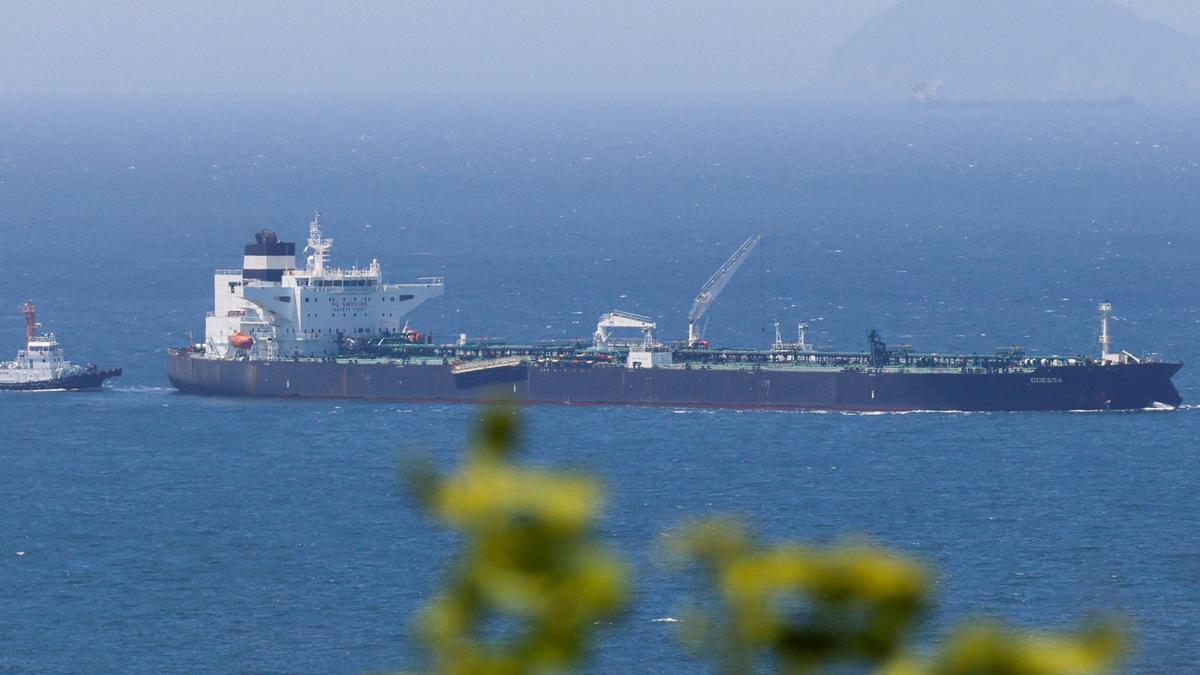
The arrival of a crude oil tanker in South Korean waters following a successful transit of the Strait of Hormuz is not merely a logistical milestone; it is a stress test of the Northeast Asian energy security architecture. South Korea relies on the Middle East for approximately 70% of its crude oil imports, creating a structural dependency that renders its industrial economy hyper-sensitive to the narrow 21-mile-wide chasm between Oman and Iran. To understand the significance of this transit, one must move beyond the surface-level news of a ship’s arrival and quantify the geopolitical risk premiums, maritime insurance structures, and storage logistics that dictate the viability of the Korean energy sector.
The Geopolitical Chokepoint as a Pricing Variable
The Strait of Hormuz functions as the primary valve for global energy markets, with roughly one-fifth of the world’s daily oil consumption passing through its waters. For South Korean refineries—primarily SK Innovation, GS Caltex, S-Oil, and Hyundai Oilbank—the arrival of a tanker signifies the successful navigation of three distinct risk layers:
- Kinetic Risk: The physical threat of seizure or drone strikes. While often sensationalized, the actual frequency of such events is low, yet the mere possibility triggers the "War Risk" surcharge in maritime insurance.
- Regulatory and Sanctions Friction: Compliance with international maritime law and unilateral sanctions regimes (primarily from the U.S. Treasury) requires rigorous vetting of cargo origins and ship-to-ship transfers.
- Hydrographic Constraints: The narrow shipping lanes (two miles wide in each direction) create a natural bottleneck where any disruption to the Traffic Separation Scheme (TSS) causes immediate downstream delays at the Port of Ulsan or Yeosu.
When a tanker arrives, it represents the expiration of these risks for that specific cargo, allowing the refiner to shift from a "risk-management" posture to a "processing-optimization" posture.
The Mechanics of the South Korean Strategic Buffer
South Korea’s ability to absorb shocks from the Middle East is governed by its Strategic Petroleum Reserve (SPR) and its commercial storage capacity. The state-run Korea National Oil Corp (KNOC) maintains a buffer that exceeds 90 days of net imports, fulfilling International Energy Agency (IEA) requirements. The arrival of a VLCC (Very Large Crude Carrier) typically carrying 2 million barrels of oil must be synchronized with these storage levels.
The cost function of this transit includes the Freight On Board (FOB) price, the Worldscale tanker rate, and the Insurance Premium. When tensions in the Strait of Hormuz rise, the insurance premium—specifically the Additional Premium (AP) for war risk—can spike by 100% or more within a 48-hour window. South Korean refiners mitigate this through long-term contracts (LTCs), which provide a hedge against spot-market volatility but leave them exposed to the physical reality of the chokepoint.
Strategic Diversification and the Limits of Geographic Arbitrage
Despite the successful arrival of Middle Eastern crude, the South Korean energy strategy is currently undergoing a structural pivot toward the Western Hemisphere. The "US Crude Arbitrage" is a primary driver of this shift. As US shale production remains high, the price spread between West Texas Intermediate (WTI) and Dubai crude often makes it economically viable to sail 15,000 miles from the Gulf of Mexico, bypassing the Strait of Hormuz entirely.
However, the chemical configuration of South Korean refineries limits the speed of this diversification. These facilities are specifically calibrated for "medium-sour" Middle Eastern grades. Switching to "light-sweet" US crude requires complex blending or costly retrofitting of desulfurization units. Therefore, the arrival of a tanker from the Persian Gulf remains an essential, albeit risky, requirement for the current refinery infrastructure.
Operational Volatility and the Insurance Bottleneck
The maritime insurance market, dominated by the London-based P&I Clubs (Protection and Indemnity), dictates the feasibility of the Hormuz-South Korea route. When a vessel enters a "Listed Area" as defined by the Joint War Committee (JWC), the shipowner must pay an additional premium for a specified period (usually 7 days).
This creates a high-stakes calculation for Korean logistics managers:
- Slow Steaming: Reducing speed to save fuel, which increases the time spent in high-risk zones and potentially increases the insurance window.
- Direct Routing: Minimizing time in the Strait, which increases fuel burn and strain on the vessel’s engines.
The arrival of the tanker indicates that the freight rate and insurance costs were successfully absorbed into the refiner’s margin. If these costs exceed the "Crack Spread"—the difference between the price of crude oil and the petroleum products extracted from it—the refinery operates at a loss despite the physical availability of the oil.
The Relationship Between Transit Success and Domestic Inflation
In South Korea, the energy-to-GDP correlation is tighter than in many other OECD nations due to the energy-intensive nature of its manufacturing sector (semiconductors, steel, and shipbuilding). The successful transit of crude oil is a deflationary event. Any disruption in the Strait of Hormuz translates directly to a rise in the Producer Price Index (PPI) within 14 to 21 days—the time it takes for oil to move from the refinery gate to the industrial consumer.
The South Korean government often utilizes the "Oil Price Stabilization Fund" to dampen the impact of transit-related price spikes. However, this is a fiscal bandage rather than a structural solution. The arrival of the vessel ensures that the "Just-in-Time" delivery model of the Korean industrial complex remains intact, preventing a cascading shutdown of downstream chemical production.
Structural Constraints of the Ulsan and Yeosu Hubs
Once the tanker clears the Strait of Hormuz and crosses the Indian Ocean and the South China Sea, it faces the final logistical hurdle: the offloading infrastructure at Ulsan or Yeosu. These ports are among the most efficient in the world, yet they operate at near-maximum capacity.
A VLCC arrival requires a Single Point Mooring (SPM) or a deep-water berth. If multiple tankers arrive simultaneously due to "bunching" caused by delays in the Middle East, the resulting demurrage charges (fees paid for delayed unloading) can erode the profit margin of the entire shipment. The arrival of a ship is therefore a victory of timing as much as it is a victory of navigation.
Strategic Play: The Shift to "Energy Security as a Service"
To insulate the economy from the inherent volatility of the Strait of Hormuz, South Korean stakeholders must move beyond simple diversification and toward a "fortress energy" model. This involves three specific tactical shifts:
- Joint Storage Agreements: Expanding the program where oil-producing nations (like the UAE or Saudi Arabia) store their crude in Korean tanks. This ensures that the oil is already "past the chokepoint" before it is even purchased by Korean refiners, effectively moving the risk of the Strait of Hormuz to the supplier.
- Refinery Re-tooling: Accelerating capital expenditure (CAPEX) for "Bottom of the Barrel" processing units that can handle a wider variety of crude grades, reducing the reliance on specific Middle Eastern chemical profiles.
- Atomic Integration: Increasing the baseload share of nuclear power to reduce the sensitivity of the power grid to LNG and oil prices, which are both tied to the same maritime chokepoints.
The arrival of a single tanker is a pulse check on a system that is currently functioning but remains structurally vulnerable. The long-term viability of the South Korean industrial model depends on reducing the "Hormuz Variable" from a catastrophic threat to a manageable logistical friction. The focus must now shift from celebrating successful transits to engineering an economy that is no longer dependent on them for survival.