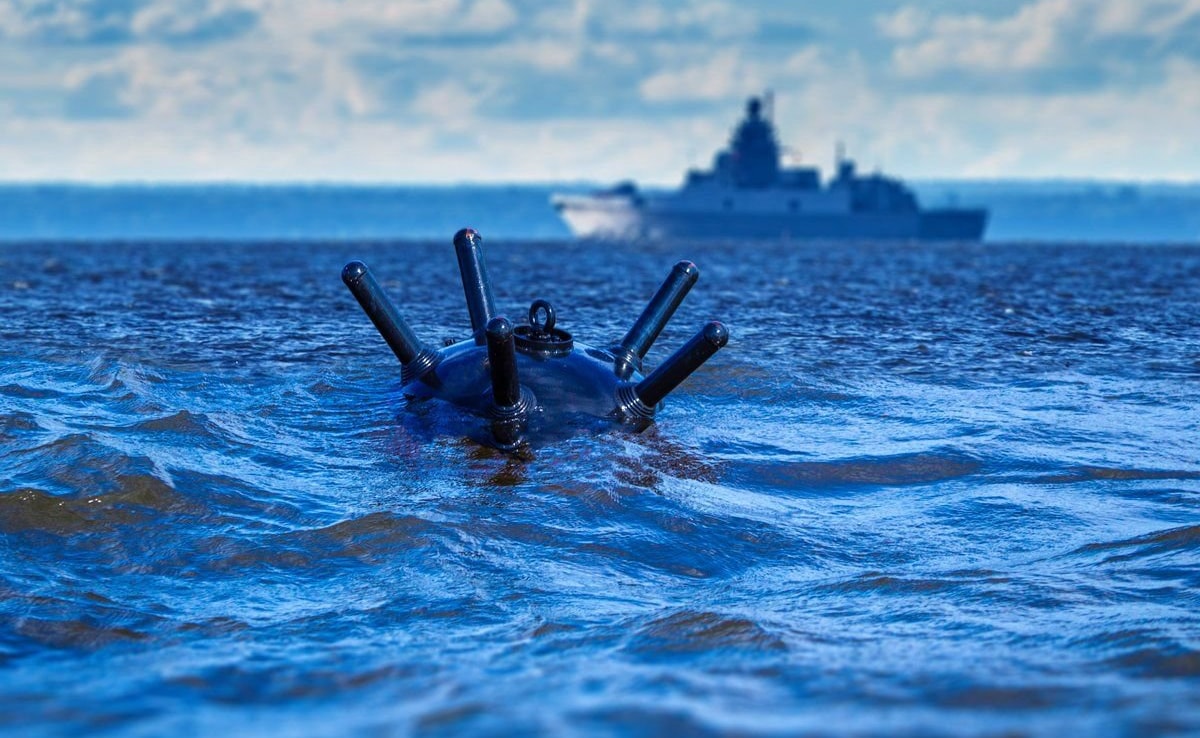
The Strait of Hormuz is officially "ready for business," or so the world was told in a flurry of digital declarations this Friday. Following a Pakistan-brokered ceasefire that paused seven weeks of brutal kinetic warfare between Israel, the U.S., and Iran, President Donald Trump announced that Tehran is working with American "help" to sweep the world’s most vital oil artery for mines. On the surface, it looks like a rare moment of de-escalation in a conflict that has already claimed over 5,000 lives.
But beneath the optimistic rhetoric lies a more jagged reality. While the price of crude plummeted 10% on the news, the maritime industry is not rushing back to the Persian Gulf. This is not a simple cleanup operation; it is a high-stakes standoff where the "cooperation" described by the White House looks more like a tactical concession by a wounded regime and a psychological victory lap by an American president who insists on a total "transactional" surrender.
The Ghost of the Traditional Lanes
For decades, the Strait of Hormuz has functioned as the throat of the global energy market. Nearly 20% of the world's oil and liquefied natural gas (LNG) passes through this 21-mile-wide chokepoint. When the war broke out on February 28, that flow stopped. Iran deployed its asymmetric toolkit, reportedly seeding the waters with a fraction of its estimated 6,000-mine arsenal.
The current "reopening" isn't a return to the status quo. Iran’s Foreign Minister, Abbas Araghchi, specified that commercial vessels must now use a "coordinated route" that swings north around Larak Island. This is a detour, not a restoration. The traditional shipping lanes, governed by the International Maritime Organization’s (IMO) traffic separation scheme, remain a graveyard of potential explosives.
The U.S. Naval Cooperation and Guidance for Shipping (NCAGS) has been blunt: the mine threat in the primary lanes is "not fully understood." In intelligence circles, that is code for "it’s a minefield." By forcing ships onto a specific, Iranian-monitored path, Tehran isn't just clearing mines; they are establishing a new protocol of control. They are trading the threat of an explosion for the reality of a checkpoint.
The Technology of Trustless Cooperation
Trump’s claim that the U.S. is "helping" clear these mines raises immediate technical and political questions. Traditionally, mine countermeasure (MCM) operations are slow, methodical, and incredibly dangerous. They involve specialized sonar, remotely operated vehicles (ROVs), and sometimes even trained marine mammals.
In the current climate of "trustless" cooperation, the "help" likely isn't American sailors standing shoulder-to-shoulder with the Islamic Revolutionary Guard Corps (IRGC). Instead, it’s a matter of data sharing and surveillance. The U.S. Fifth Fleet, stationed in Bahrain, possesses the world’s most advanced underwater mapping capabilities. If the U.S. is providing "help," it is likely via satellite intelligence and high-resolution acoustic data that points out "anomalies" to Iranian sweepers.
This creates a bizarre technical synergy. The U.S. identifies the targets; Iran does the dirty work of neutralising them.
However, the IRGC’s involvement makes the shipping industry nervous. The "coordinated route" requires every tanker to check in with the very same forces that were allegedly laying the mines weeks ago. For a Greek or Japanese tanker captain, this isn't security. It’s a protection racket.
The Blockade that Won't Die
The most significant friction point is the American naval blockade. Trump has been crystalline on this: the Strait is open for everyone except Iran. While commercial ships from Qatar, Saudi Arabia, and the UAE are being ushered through, Iranian ships and ports remain under a total U.S. lockdown.
"The naval blockade will remain in full force and effect as it pertains to Iran, only, until such time as our transaction with Iran is 100% complete," Trump posted.
This creates a logistical paradox. Iran is expected to clear the mines and manage the traffic for a waterway it cannot use for its own primary export. Tehran’s semiofficial news agencies, like Fars and Tasnim, are already bristling, calling the reopening a "strange silence" from the Supreme National Security Council and a "poor judgment" by the negotiating team. They argue that Araghchi has given Trump a "victory" without securing a reciprocal lift of the blockade.
The NATO Snub and the Paper Tiger
Perhaps the most telling aspect of this development is the geopolitical fallout among Western allies. While British Prime Minister Keir Starmer and French President Emmanuel Macron attempted to organize a "multinational mission" to assist in mine clearance, Trump effectively told them to stand down.
The President’s dismissal of NATO as a "Paper Tiger" isn't just campaign rhetoric; it is a fundamental shift in how maritime security is managed. By rejecting a multilateral force, Trump is ensuring that the U.S. remains the sole arbiter of who moves and who stays. If a ship wants to pass through Hormuz in 2026, it doesn't need a NATO escort. It needs a green light from Mar-a-Lago and a "coordinated" nod from an IRGC patrol boat.
This bilateral "help" is a fragile bridge. If the Lebanon ceasefire—currently the only thing holding this deal together—shivers or breaks, the mines will return. The technology to clear them is available, but the political will to keep them out of the water is tied to a "transaction" that is far from 100% complete.
The Strait is open, but the world is still holding its breath. One stray contact mine or one broken promise on a Truth Social post could send oil prices back into the stratosphere and the region back into the abyss.