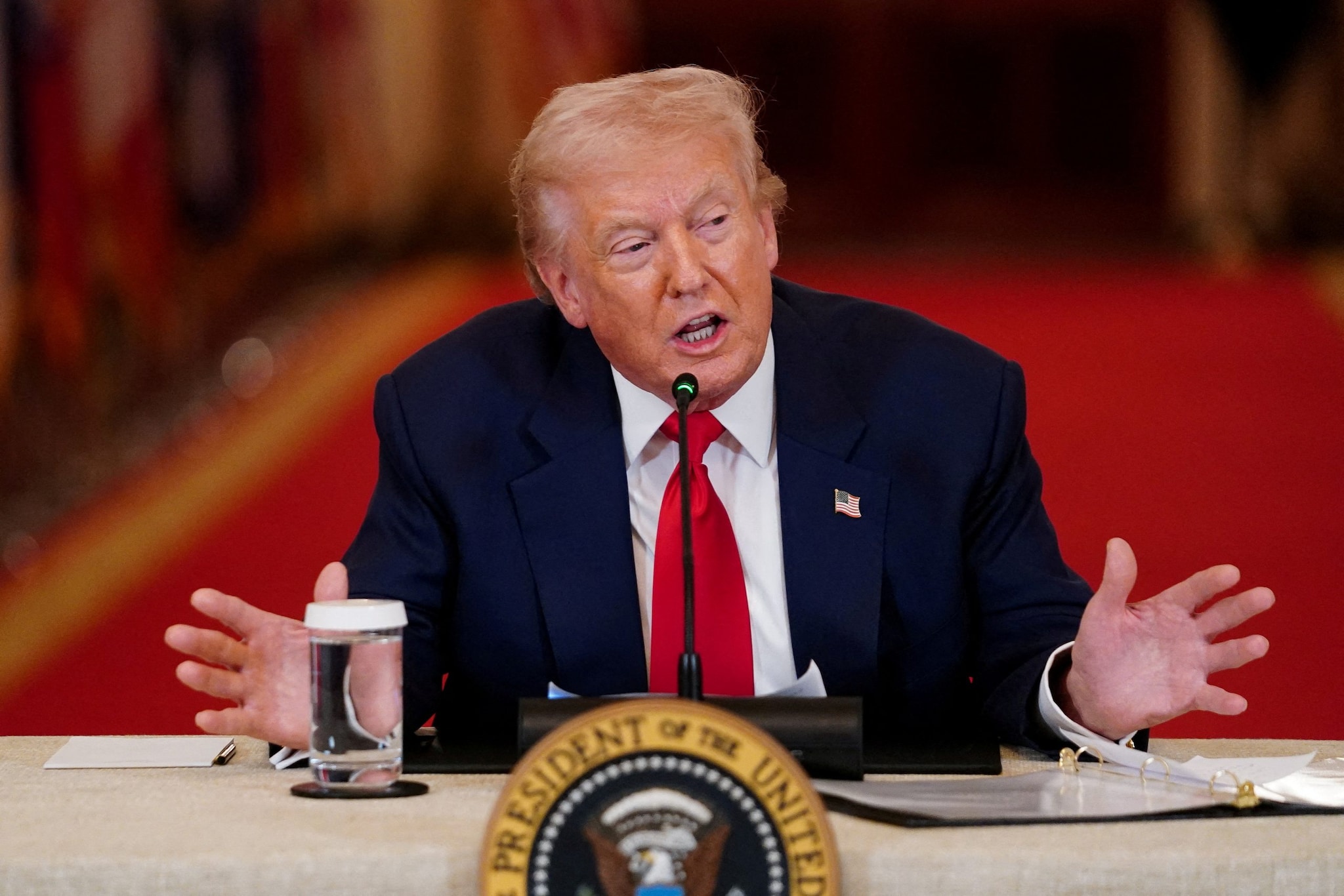
The global energy supply chain is currently being held together by little more than hope and a handful of aging destroyers. As the U.S.-Israeli war with Iran enters its third week, the Strait of Hormuz—the world’s most vital artery for crude oil—has become a graveyard for international cooperation. President Donald Trump has spent the last forty-eight hours publicly lambasting allies who, in his view, are happy to consume Middle Eastern oil but loath to bleed for it. The friction isn't just a diplomatic spat; it is a fundamental breakdown of the post-war maritime order.
Trump’s core grievance is simple: why should the United States shoulder the cost of policing a waterway where the primary beneficiaries are in Beijing, Tokyo, and Seoul? The numbers support his frustration. China receives roughly 90% of its oil through the strait, while the U.S. has reached a level of energy independence that makes the passage strategically secondary for its own domestic consumption. Yet, as the President noted aboard Air Force One, the "enthusiasm" for a multinational naval coalition is dangerously low.
The Cost of Staying Neutral
The silence from London, Paris, and Berlin is deafening. While the White House is pushing for a "Hormuz Coalition" to escort tankers through the twenty-mile-wide chokepoint, European powers are paralyzed by the fear of being "drawn into a wider war." This hesitation has real-world consequences. Since the blockade began on March 2, tanker traffic has plummeted by 70%. Over 150 vessels are currently anchored outside the strait, their captains unwilling to risk a $300 million hull against Iranian sea drones and limpet mines.
Insurance markets have already made their decision. War risk premiums have surged to historic highs, and many underwriters have simply pulled coverage for the Persian Gulf entirely. This is the "effective closure" of the strait. Even if the water is physically clear, the economic risk has turned the passage into a no-go zone.
The Asymmetric Math of Modern War
The reluctance of allies to send ships isn't just about politics; it’s about the brutal math of modern naval attrition. An Arleigh Burke-class destroyer costs $1.5 billion to build and millions more to operate. Iran is contesting the strait using "kamikaze" drones and shore-based missiles that cost less than a mid-sized sedan.
- The Drone Gap: A single $20,000 drone can force a billion-dollar ship to fire a $2 million interceptor missile.
- The Mine Menace: Iran’s inventory of thousands of sea mines, some sophisticated enough to distinguish between acoustic signatures, makes traditional escort missions a nightmare.
- GPS Jamming: Regional actors have begun massive electronic warfare campaigns, scrambling AIS signals and making navigation a guessing game for civilian crews.
Industry veterans know that a destroyer can only protect three or four tankers at a time. To truly "unblock" the strait, the coalition would need a fleet of nearly a hundred warships constantly cycling through the Gulf. No country, including the U.S., has the appetite for that level of sustained commitment in a high-threat environment.
The China Wildcard
Beijing finds itself in a bizarre strategic squeeze. While they are the most dependent on Hormuz oil, they have so far refused to join Trump’s coalition. Instead, they appear to be negotiating a private "safe passage" deal with Tehran. Reports indicate that Iran has offered to let Chinese-flagged vessels transit the blockade unmolested. This has led to a surreal situation where non-Chinese ships are reportedly broadcasting "CHINA OWNER_ALL CREW" on their transponders in a desperate attempt to avoid being targeted.
This "mercantile neutrality" infuriates the Trump administration. The White House view is that China is "free-riding" on the security the U.S. has provided for decades. If China secures its own energy flow while the rest of the world’s tankers are burning, the shift in global power will be permanent. Trump’s threat to NATO—that the alliance faces a "very bad future" if it doesn't step up—is an admission that the old model of American-guaranteed global trade is dead.
The Kharg Island Gamble
With diplomacy failing and allies wavering, the U.S. military is looking at more aggressive options. Over the weekend, strikes hit Iran’s Kharg Island, which handles 90% of the country’s crude exports. While the U.S. claims it didn't destroy the terminal, the message was clear: if the world can't have oil, Iran can't have revenue.
There is now talk in Washington about a physical seizure of Kharg Island to use as a bargaining chip or a forward operating base. This would require American boots on the ground, a move that would escalate the conflict from a naval blockade to a full-scale territorial war.
The Fallout in the Aisles
While the generals and politicians argue over naval assets, the average consumer is feeling the heat. In Bangkok and New Delhi, schools have closed to save energy. In the U.S., gas prices are flirting with $6 a gallon. This isn't just about the price of a fill-up; it’s about the cost of everything. From fertilizer to plastic, the global economy is built on cheap, reliable transit through that twenty-mile strip of water.
The "Hormuz Crisis" of 2026 is revealing a hard truth: the era of "free" maritime security is over. Countries that want the oil will soon have to provide their own steel to protect it. The President's demand for "enthusiasm" isn't a request for a favor; it’s a notice that the bill for the last seventy years of global protection has finally come due.
Would you like me to analyze the current positioning of the U.S. Fifth Fleet and the specific naval assets available to the proposed coalition?