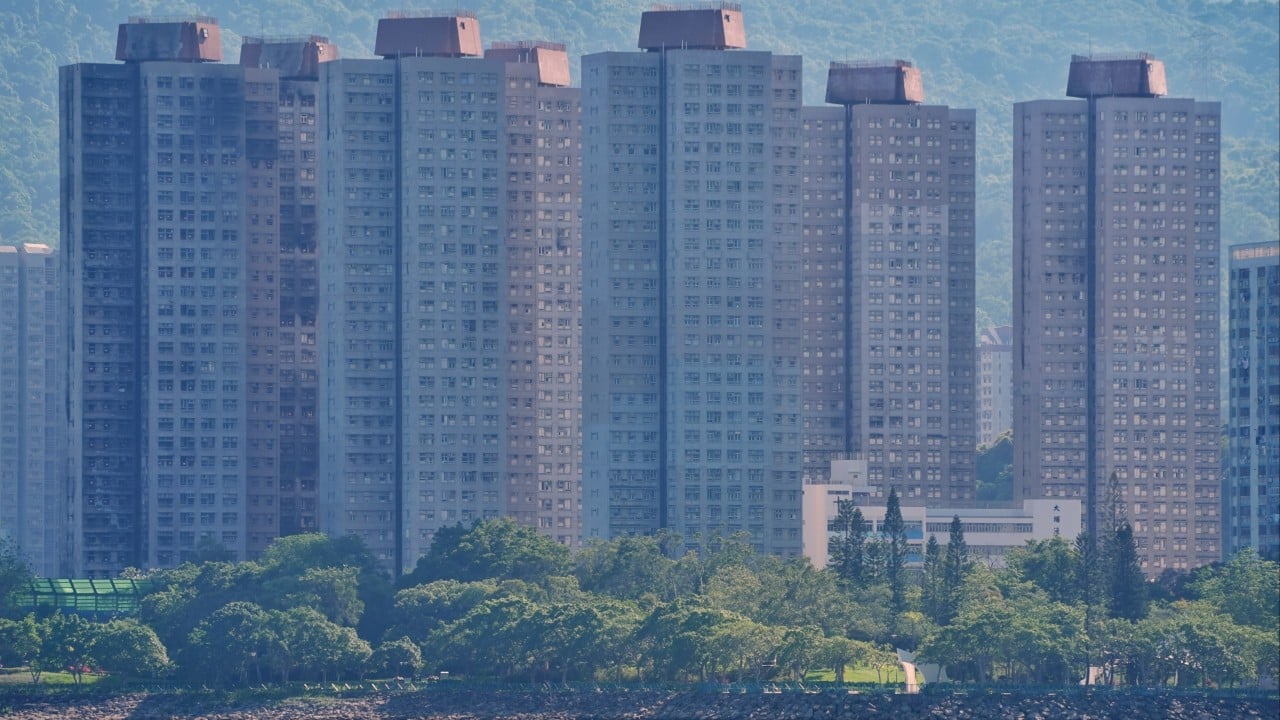
The Hong Kong government has officially triggered a massive buy-back operation at Wang Fuk Court, issuing formal offer letters to homeowners in a move that signals a hardening stance on the city's aging housing stock. This isn't a routine property transaction. It is a calculated intervention by the Housing Authority to reclaim units in an estate that has become a symbol of the structural and regulatory decay haunting the New Territories. For the residents of this Tai Po development, the letters represent the end of a years-long standoff between private ownership rights and the public interest.
While the surface narrative focuses on the relocation of families, the underlying reality is a desperate attempt to fix a systemic failure in the Home Ownership Scheme (HOS). The government is not buying these units back because it wants to be a landlord; it is doing so because the cost of maintaining the status quo has become politically and financially unbearable.
The Financial Mechanics of the Buy Back
The offer letters landing in mailboxes this week carry a price tag dictated by a complex formula that accounts for the original purchase price, adjusted for inflation and the current market value of comparable HOS flats. However, the math rarely favors the homeowner in the way a private market sale would. Because Wang Fuk Court units were sold with heavy subsidies, the government retains a significant stake in the "premium" value of the land.
When the Housing Authority moves to buy back these units, they are essentially foreclosing on a failed experiment. Owners are being offered a "fair" price, but in the context of Hong Kong’s brutal real estate market, "fair" often falls short of the capital required to buy an equivalent flat in the private sector. This creates a liquidity trap. Residents have the cash from the buy-back, but they lack the leverage to remain in the same neighborhood without taking on massive new debt.
The strategy here is clear. By consolidating ownership under the public umbrella, the government can bypass the bureaucratic nightmare of coordinating repairs with hundreds of individual owners. It is a shortcut to urban renewal that treats the homeowner as a temporary obstacle to be cleared.
Structural Decay and the High Cost of Neglect
Wang Fuk Court has long been a lightning rod for criticism regarding construction quality. For decades, reports of concrete spalling, water seepage, and failing infrastructure have plagued the blocks. In many cases, the cost of the necessary repairs exceeded the equity held by the aging population living inside. When the government issues these letters, they are acknowledging that the building has reached a point of no return.
The technical reality is that the cost of retrofitting these structures to modern safety standards is prohibitive. We are looking at a scenario where the Buildings Department and the Housing Authority have determined that demolition or a total gut-renovation is the only viable path forward. The buy-back letters are the first stage of a controlled demolition of a community.
The Problem with Fragmented Ownership
In typical private buildings, a compulsory sale threshold allows developers to force a buyout once they hit 80% ownership. In the HOS world, the government already holds the ultimate title to the land, but the individual units are a patchwork of legal rights. This fragmentation has historically paralyzed any attempt at large-scale renovation.
- Financial constraints: Most residents are retirees with limited liquid assets.
- Legal deadlock: Disputes over common area maintenance fees often end in the Small Claims Tribunal.
- Safety risks: Falling masonry has become a genuine public hazard in older New Territories estates.
By moving to buy back the entirety of the affected blocks, the government is effectively ending the legal gridlock. They are asserting that the right to a safe urban environment supersedes the individual’s right to hold onto a deteriorating asset.
A Warning Shot to Other HOS Estates
What is happening at Wang Fuk Court is not an isolated incident. It is a pilot program for a much larger initiative. Across Kowloon and the New Territories, dozens of HOS estates built in the late 1970s and early 1980s are approaching their expiration date. The buildings are tired, the pipes are rusting, and the electrical grids are overmatched by modern demand.
Investors and homeowners in other aging developments should be watching these buy-back offers with extreme caution. The "Wang Fuk Model" suggests that the government will not provide endless subsidies for repairs. Instead, they will wait until the situation is critical and then offer an exit ramp that prioritizes the vacancy of the building over the wealth preservation of the owner.
The precedent being set here is one of state-led gentrification. By reclaiming the land, the government can eventually redevelop the site into higher-density, modern housing that meets current "Green Building" standards. This allows the city to hit its housing targets without having to find new "greenfield" sites, which are increasingly rare and politically sensitive to develop.
The Human Cost of Urban Renewal
Numbers on a page don't capture the anxiety currently gripping the estate. For a 70-year-old resident who has lived in Tai Po for four decades, a buy-back offer is not an opportunity; it is a displacement. The transition from being a "homeowner" back to a "tenant" in public rental housing is a psychological blow that many find difficult to navigate.
The government’s relocation assistance is often touted as a "holistic" support package, but in practice, it is a logistical exercise in moving bodies from point A to point B. The social fabric of the estate—the wet markets, the local clinics, the neighbors who have aged together—is being shredded in the name of structural integrity.
There is also the question of the "sandwich class." These are the owners who don't quite qualify for public rental housing because their buy-back payout puts them over the asset limit, yet they don't have enough to buy a new flat. They are left in a financial no-man's-land, forced to rent in a market that has no sympathy for their plight.
Market Implications for the New Territories
The sudden withdrawal of hundreds of units from the Wang Fuk Court inventory will have a ripple effect on the local Tai Po property market. With fewer affordable options available, rent in the surrounding areas is expected to tick upward as displaced residents compete for a shrinking pool of low-cost housing.
Why Private Developers Are Watching
Private developers are closely monitoring the speed and efficiency of this buy-back process. If the government can successfully clear an entire estate without major legal challenges or social unrest, it provides a blueprint for future public-private partnerships. We may see a future where the government uses its "Land Resumption" powers to clear old HOS sites, only to auction the land off to private entities for high-end residential projects.
This would be a massive shift in Hong Kong’s housing policy. It would move the HOS from a "forever home" concept to a "term-limited" housing solution. The buy-back letters are the first physical evidence that the government is no longer willing to let aging assets sit on the books indefinitely.
The Legal Precedents at Play
Legal experts are currently dissecting the language of the offer letters to see if there is any room for negotiation. Historically, the Housing Authority has been rigid. The "take it or leave it" nature of these offers is a hallmark of Hong Kong’s executive-led government. Unlike the United States or the UK, where eminent domain battles can drag on for decades, the legal framework in Hong Kong is heavily weighted toward the state’s right to resume land for public purposes.
The homeowners at Wang Fuk Court have very little leverage. They can attempt to challenge the valuation through the Lands Tribunal, but the success rate for significantly higher payouts is statistically low. The government has already calculated the maximum they are willing to pay, and that figure is backed by a wall of civil servants and standardized assessment protocols.
Navigating the Bureaucracy of Displacement
For those receiving the letters, the next 90 days are critical. The documentation required to finalize the buy-back is extensive, involving original deeds, proof of premium status, and clear evidence of no outstanding debts on the property. Any delay in this process can result in a reduction of the "early bird" incentives often baked into these offers.
Homeowners need to act with professional precision. Engaging a solicitor who specializes in HOS transactions is no longer optional; it is a necessity to ensure that the final payout isn't clawed back by unforeseen administrative fees or penalties. The government’s priority is a clean break, and they will not hesitate to penalize those who obstruct the timeline.
The buy-back of Wang Fuk Court is the end of an era for Tai Po and a cold glimpse into the future of Hong Kong’s urban planning. The letters have been delivered, the clock is ticking, and the city’s skyline is about to change whether the residents are ready or not. Move your assets now or prepare to be moved by the state.