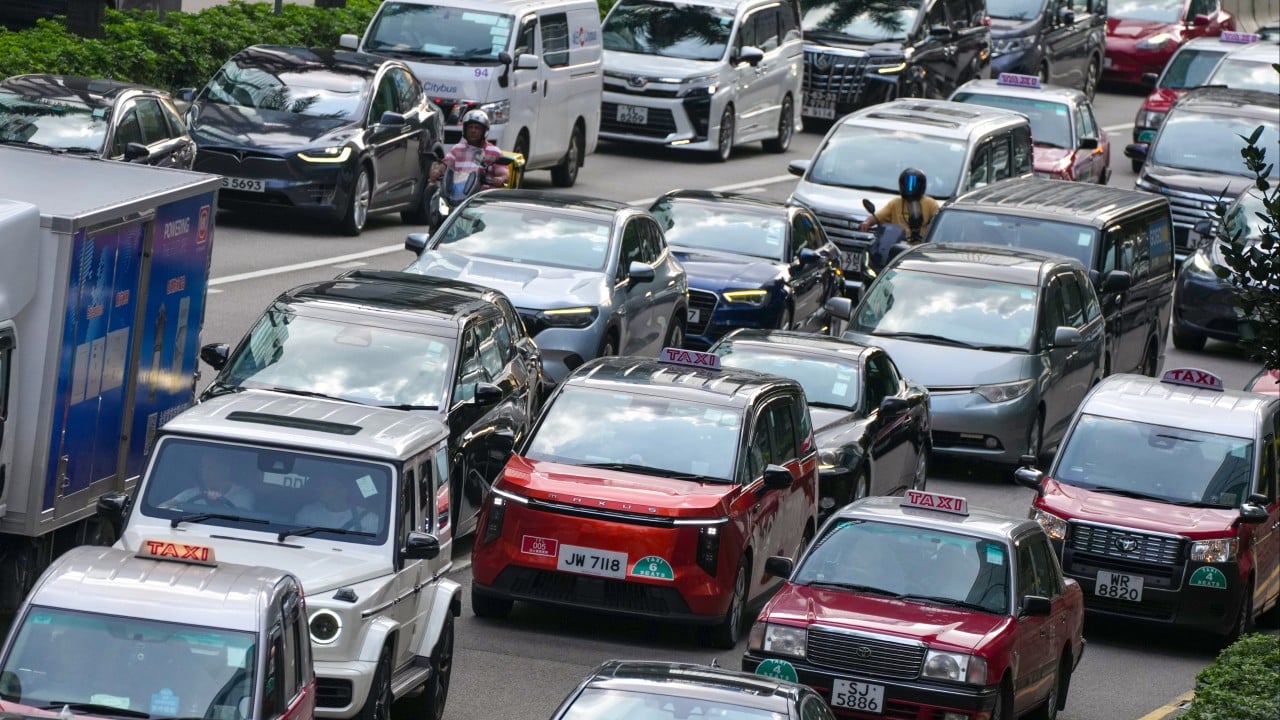
Everyone is popping champagne over a thousand drivers signing up for a new government-backed taxi and ride-hailing test. The headlines treat this pilot program like the second coming of urban mobility. More choice. Better technology. A bridge between traditional cabs and modern apps.
It is a comforting illusion. It is also completely useless.
I have spent years watching regional transport authorities try to code their way out of structural incompetence. I have seen municipal committees blow millions on proprietary software wrappers while ignoring the rotting foundation underneath. When a regulatory body tries to mandate digital transformation by slapping a pilot badge on old habits, you do not get innovation. You get digital paint peeling off rusted iron.
Hong Kong does not suffer from a lack of testing protocols or sign-up sheets. The city suffers from an entrenched cartel mentality wrapped in plastic seat covers and protected by statutory monopolies. A thousand drivers clicking "accept" on a new trial interface will not alter the fundamental economics of a medallion system designed to choke competition before it draws breath.
Let us dismantle the comforting fiction that a software patch can cure a structural disease.
The Lazy Consensus Of App-Centric Reform
The dominant narrative goes something like this: Traditional cabs lost ground to ride-hailing apps because they lacked smartphone integration. Therefore, if we give traditional drivers a proper app, create a dual-tier fleet system, and run a controlled test with a thousand participants, the market will magically self-correct.
This logic mistakes a symptom for the primary pathogen.
The decline of the urban taxi is not an interface problem. Passengers do not care whether a driver uses a handheld radio, a fragmented local booking app, or a sleek corporate dashboard if the core transaction remains hostile. They care about refusal of service during rush hour. They care about smell. They care about cash-only threats when digital payments are universal everywhere else in the metropolis.
When authorities introduce a pilot program with a thousand drivers, they are playing a numbers game designed to generate press releases, not customer satisfaction. A thousand cars in a dense, multi-million-population transport ecosystem is a rounding error. It is a statistical placebo. It lets bureaucrats point to a metric and declare that progress is underway while daily commuters continue to wave frantically at empty cabs that cruise right past them.
The Economics Of The Medallion Trap
To understand why this test is dead on arrival, look at the asset value itself. For decades, urban taxi licenses operated as high-yield financial instruments rather than operating permits. The price of a license ballooned into the millions, creating an artificial barrier to entry that forced owners to squeeze every drop of margin out of drivers, who in turn passed the misery down to the passenger.
Imagine a scenario where a driver leases a vehicle under crushing daily rental fees just to cover the cost of the medallion's legacy financing. That driver is not thinking about customer service metrics, UI navigation efficiency, or brand loyalty. That driver is thinking about survival. Every minute spent sitting in traffic or navigating a congested pick-up zone without an immediate cash payoff feels like a financial penalty.
When you introduce a new testing scheme into this pressure cooker without addressing the underlying asset inflation, you achieve nothing. You are simply giving desperate operators a second app to monitor while they work twelve-hour shifts just to break even.
Technology amplifies existing intent. If the underlying intent of the system is rent extraction and defensive gatekeeping, a shiny new testing platform will only accelerate the friction.
Dismantling The Dual-Fleet Delusion
The core proposal behind these recent tests usually involves creating a specialized sub-segment of "premium" taxis that meet higher standards. Cleaner interiors, mandatory digital payments, accountability ratings.
This approach contains a fatal contradiction. By walling off quality into a boutique tier, you explicitly admit that the baseline fleet is substandard. You create a two-tier caste system where standard passengers are tacitly told to expect garbage service, while those lucky enough to summon a "test fleet" vehicle get basic human decency.
A functional transportation market does not segregate baseline competence into a VIP category. Imagine a restaurant where basic food safety is sold as an expensive tier-two upgrade. You would shut the place down. Yet urban transit authorities routinely congratulate themselves for creating a tiny enclave of acceptable service within an ocean of institutional failure.
True reform requires abolishing the artificial scarcity of licenses entirely, opening the market to unconstrained competition, and holding all vehicles to a single, uncompromising standard of public accountability. If a vehicle cannot pass basic cleanliness and service metrics, it gets pulled from the road permanently. No pilot programs. No grace periods. No special software tiers.
What Real Market Correction Looks Like
Real change is ugly, disruptive, and fiercely resisted by entrenched interests. It requires political courage that no temporary committee possesses.
First, authorities must decouple the right to transport passengers from speculative asset ownership. When licenses cease to be traded like luxury real estate, the cost structure of the entire industry collapses back to earth. Drivers stop fighting for survival and start competing on merit.
Second, accountability must be enforced through economic consequence, not rating stars that drivers can game or reset. If a driver refuses a fare, their operating privileges should evaporate automatically via automated geofenced auditing.
Third, stop building bespoke municipal apps. The private sector solved dispatch routing years ago with superior mapping, dynamic pricing algorithms, and predictive demand modeling. Municipalities should focus on safety regulations, lane management, and accessibility standards, leaving software development to engineers who understand latency and user experience.
The current test program in Hong Kong is an exercise in political theater. It reassures the old guard that change will be slow enough for them to adapt their skimming strategies, and it gives regulators a talking point for the next budget review.
Stop celebrating trial runs that measure vanity metrics. Demand a system overhaul that treats transportation as a public utility rather than a protected mafia. Until then, keep cash in your pocket and expect to wave at empty cars.