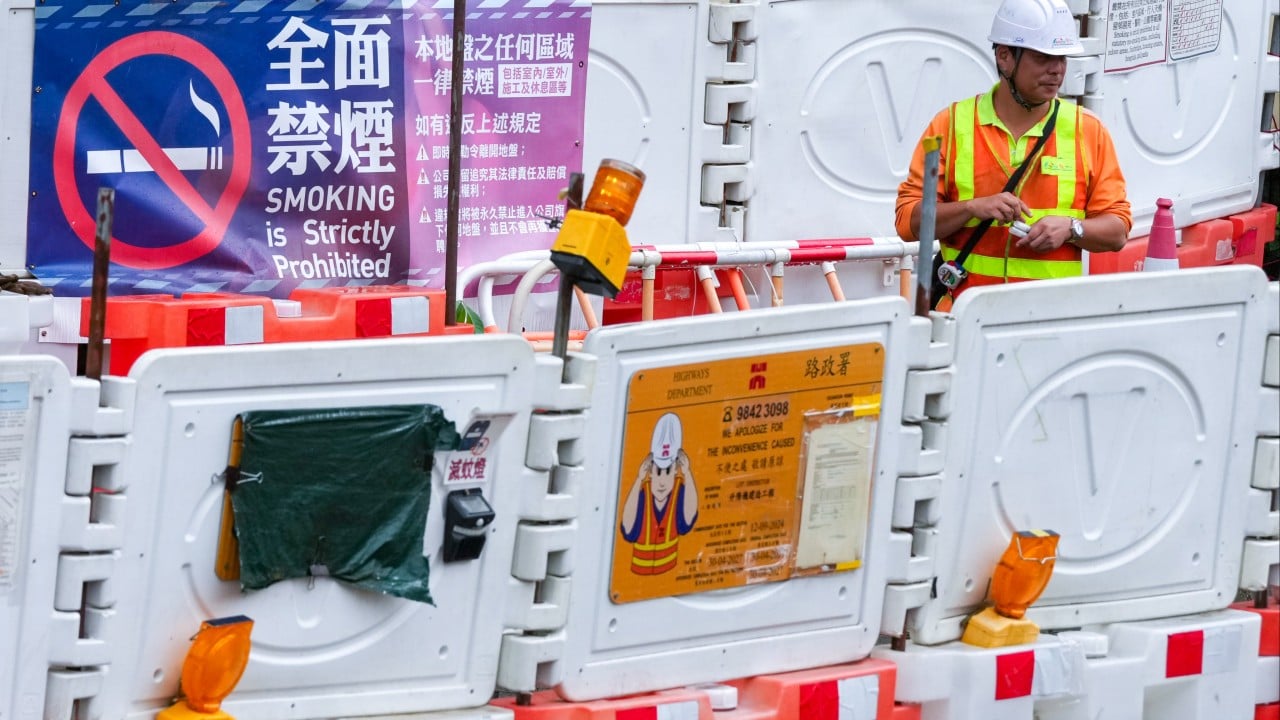
Twenty-one tickets in six days.
That is the headline flashing across local media outlets, celebrating the immediate crackdown on smoking across Hong Kong construction sites. Bureaucrats are popping champagne. Compliance officers are patting themselves on the back. The lazy consensus among public health advocates is that the heavy hand of the law has finally arrived to scrub the dust and tobacco smoke from our mega-projects. Meanwhile, you can read similar developments here: Why Resuming Mexican Cattle Imports is Only Half the Battle for High Beef Prices.
It is a comforting narrative. It is also completely detached from reality.
I have spent decades watching safety regulators chase symptoms while ignoring structural collapse. When you penalize a worker for lighting a cigarette behind a stack of drywall while ignoring the systemic pressures that drive him to it, you are not managing safety. You are managing PR. To understand the complete picture, we recommend the excellent analysis by The Economist.
Hong Kong construction sites operate under brutal deadlines, punishing heat, and a culture of performance over people. Pretending that a few hundred-dollar administrative fines will rewrite behavioral patterns etched into daily survival is institutional gaslighting. We are arguing about smoke while the foundation is sinking.
The Compliance Illusion
Let us look at the mechanics of what is actually happening on the ground.
When a site supervisor is squeezed by a main contractor to hit an impossible pouring schedule, safety protocols become flexible. Everyone knows this. The inspector walks the perimeter once a week, checks the clipboard, collects the easy violations, and files a report that makes a desk jockey in Admiralty feel productive.
Issuing twenty-one fines in less than a week proves one thing only: the enforcement mechanism is effective at catching low-hanging fruit. It catches the distracted laborer taking a quiet five minutes in a corner. It does not catch the systemic failure of risk management. It does not address why workers feel the need to escape the pressure cooker in the first place.
When you criminalize an outlet without altering the environment, you simply push the behavior underground. Workers do not quit smoking because of a site ban. They hide it better. They take higher risks in more dangerous, unventilated pockets of the structure to avoid detection.
You have traded a visible health hazard for an invisible safety catastrophe.
The Real Cost of Misplaced Focus
Let us talk about data and operational friction.
Every minute a site safety manager spends hunting for cigarette butts is a minute they are not inspecting scaffolding integrity, electrical grounding, or crane load calculations. Resources on a high-density, high-risk worksite are finite. Zero-sum allocation is a harsh mathematical truth of project management.
When the government dictates that tobacco enforcement shares top billing with structural load safety, priorities fracture.
I have seen projects blow millions on cosmetic compliance initiatives—poster campaigns, biometric turnstiles, and aggressive patrols—while basic subcontractor coordination fails on upper floors. The obsession with clean-slate optics creates an environment where workers learn to game the inspectors rather than communicate hazards. Trust erodes. When workers view management as an adversary handing out fines rather than a partner ensuring survival, safety culture dies.
What People Get Wrong About Workplace Habits
Critics love to point the finger at individual choices. They look at a construction worker with a cigarette and diagnose a personal moral failing or a lack of discipline.
This is backward.
Manual labor in a hyper-urban environment like Hong Kong is uniquely punishing. The physical toll, combined with astronomical living costs and chronic job insecurity, creates a baseline anxiety that management rarely addresses. Nicotine and caffeine are not luxuries on these sites; they are self-medication tools for endurance.
If you want to eradicate smoking on a construction site, banning it by decree is the least effective way to achieve it. You have to remove the triggers. You have to restructure shift lengths, improve ventilation in designated rest zones, and drop the toxic scheduling practices that turn human beings into machine parts.
Until you fix the pressure cooker, punishing the steam escaping from the valve is pure theater.
The Contractor Shell Game
Behind every penalized worker is a general contractor who checked the box on their ESG commitments and washed their hands of the culture underneath.
Main contractors love these broad legislative bans because it shifts the liability downward. If a worker gets caught smoking, the narrative becomes about rogue labor violating company policy, insulating the corporate suite from operational accountability. It is a brilliant legal shield.
The contract specifies a smoke-free zone, so the liability stays with the subcontractor or the individual. Meanwhile, the overarching schedule that incentivizes dangerous, hurried, high-stress labor remains completely unchallenged.
We are protecting corporate balance sheets under the guise of public health.
The Uncomfortable Truth About Enforcement
My contrarian approach has a downside, and I will own it openly: abandoning punitive measures for behavioral hazards feels chaotic. Regulators hate nuance because nuance is hard to measure on a spreadsheet. A fine is concrete. A culture shift is messy, slow, and resistant to quarterly reporting.
But real safety is messy.
If Hong Kong wants genuinely safe construction sites, lawmakers need to stop treating workers like insubordinate children and start treating site management like responsible operators of high-risk industrial zones. Stop measuring success by how many tickets you write in six days. Measure it by how many accidents you prevent in a year.
The next time you read about a record-breaking enforcement sweep, ask yourself whose problem is actually being solved, and who is still left holding the bag in the dark.