The intersection of escalating Middle Eastern kinetic conflict and the International Maritime Organization’s (IMO) 2023 Greenhouse Gas Strategy has created a pincer effect on Hong Kong’s maritime sector. While traditional analysis views regional instability and green transitions as separate risks, they are functionally linked through the Global Supply Chain Risk-Efficiency Frontier. As kinetic threats in the Red Sea and Persian Gulf force vessel diversions, the resulting increase in Ton-Miles (distance traveled multiplied by cargo weight) directly contradicts the emissions reduction targets required for Port of Hong Kong’s long-term viability.
Hong Kong’s status as a premier transshipment hub depends on its ability to decouple carbon intensity from operational throughput. The current geopolitical volatility acts as a stress test, revealing that "green" is no longer an environmental elective; it is a prerequisite for fuel security and regulatory compliance in a fragmented global market.
The Tri-Node Risk Framework of Hong Kong Shipping
To understand why a war in the Middle East accelerates the need for a green transition in East Asia, one must analyze the three specific nodes of vulnerability currently affecting the Hong Kong maritime ecosystem.
1. The Energy Volatility Multiplier
Hong Kong’s bunkering industry is historically reliant on fossil-derived Very Low Sulphur Fuel Oil (VLSFO). Geopolitical shocks in the Strait of Hormuz create immediate price spikes in crude, which translate to higher operational expenditures (OPEX) for fleets calling at Hong Kong. Transitioning to a diversified fuel mix—including green methanol, ammonia, and hydrogen—serves as a hedge against oil market volatility. By localizing or regionalizing the production of alternative fuels, Hong Kong reduces its "energy beta," or its sensitivity to external geopolitical shocks.
2. The Ton-Mile Paradox
When conflict necessitates the circumnavigation of the Cape of Good Hope, the average voyage length from Asia to Europe increases by approximately 3,000 to 3,500 nautical miles. This 30% to 40% increase in distance traveled leads to a linear increase in fuel consumption and CO2 emissions. For Hong Kong-based shipowners, this renders the Carbon Intensity Indicator (CII) ratings of their vessels nearly impossible to maintain without drastic measures. The "Green Transition" is the only mechanism available to absorb these "Geopolitical Ton-Miles" without incurring severe regulatory penalties or being barred from European Union ports under the EU Emissions Trading System (ETS).
3. The Port Competitiveness Decay
As Shenzhen and Singapore aggressively build out green bunkering infrastructure, Hong Kong faces a "stranded asset" risk. If the port cannot provide the zero-carbon fuels required by the next generation of dual-fuel vessels, it will be bypassed by the major alliances (2M, Ocean Alliance, THE Alliance). The urgency is driven by the fact that vessel procurement cycles are 20-25 years; a ship ordered today must be "green-ready" to be viable in 2045.
Quantifying the Decarbonization Cost Function
The transition requires a massive reallocation of capital, structured around the Total Cost of Ownership (TCO) for green vessels. This isn't merely about the price of a ship; it is an optimization problem involving three variables:
- CAPEX Premium: Building a methanol-capable or ammonia-ready vessel currently carries a 15% to 25% premium over traditional internal combustion engine (ICE) vessels.
- Energy Density Deficit: Green fuels generally have lower energy density than HFO (Heavy Fuel Oil). For instance, liquid hydrogen requires roughly 4.3 times the volume of fuel oil for the same energy output. This reduces the "revenue-earning space" (cargo capacity) of the ship.
- The Carbon Tax Offset: Under the EU ETS and the upcoming IMO global carbon levy, the cost of "doing nothing" is rising. The financial model for Hong Kong shipping must now include a shadow price of carbon, currently fluctuating between $60 and $100 per ton of CO2.
The logic dictates that as geopolitical instability keeps oil prices high, the "Green-Grey Price Gap" narrows. When VLSFO is expensive, the relative cost of green methanol becomes more palatable, accelerating the Return on Investment (ROI) for fleet renewal.
Structural Bottlenecks in the Hong Kong Ecosystem
Despite the strategic necessity, Hong Kong faces specific structural impediments that differ from those in Singapore or Rotterdam.
Land Constraints and Storage Hazards
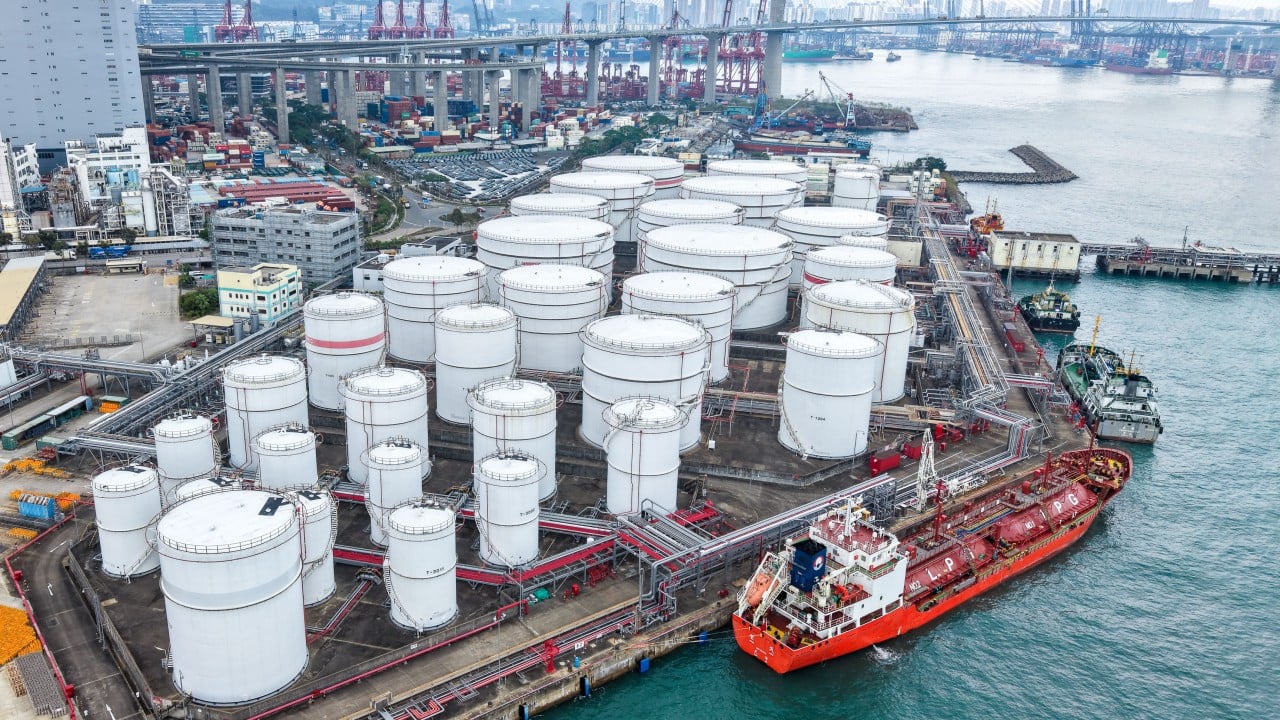
The storage of ammonia and hydrogen requires significant safety buffers due to toxicity and flammability. Hong Kong’s hyper-dense urban geography makes the siting of green fuel storage tanks a complex engineering and political challenge. Unlike Singapore’s Jurong Island, Hong Kong lacks a dedicated, isolated petrochemical zone of sufficient scale.
Regulatory Lag
The Marine Department (MarDep) must establish standards for ship-to-ship (STS) bunkering of alternative fuels. Without a clear legal framework for the handling of cryogenic or toxic fuels within Hong Kong waters, international shipowners will choose more "permissive" ports for their refueling needs.
The Financial Intermediary Gap
While Hong Kong is a global financial center, the "Green Shipping Finance" sector is still nascent. There is a lack of standardized "Green Bonds" specifically tailored to the retrofitting of existing mid-aged fleets. Most financing is currently directed toward newbuilds, leaving the bulk of the current fleet—which will still be operating in 2030—at risk of becoming "sub-prime" maritime assets.
The Strategic Playbook for Hong Kong’s Maritime Authority
The transition cannot be left to market forces alone, as the "First Mover Disadvantage" (high initial costs for early adopters) is too great. A structured, three-phase intervention is required.
Phase I: The Green Bunkering Sandbox
Hong Kong must immediately designate specific zones for the pilot testing of methanol and ammonia bunkering. This includes creating "Green Corridors" with primary trading partners like the Port of Los Angeles and Port of Shanghai. These corridors provide a guaranteed demand signal for green fuels, allowing fuel providers to invest in infrastructure with reduced market risk.
Phase II: Infrastructure Hybridization
Given the land constraints, Hong Kong should explore offshore bunkering platforms or "bunker barges" as the primary delivery mechanism for alternative fuels. This bypasses the need for massive onshore storage in sensitive areas. Furthermore, the integration of shore power (Cold Ironing) must be mandated for all berths to reduce localized emissions and improve the CII ratings of visiting ships during their port stay.
Phase III: Digital Twin Integration for Carbon Accounting
The efficiency of a port is no longer measured solely by TEU (Twenty-foot Equivalent Unit) throughput, but by Carbon per TEU. Hong Kong must deploy a port-wide digital twin that tracks the carbon footprint of every vessel from the moment it enters the Vessel Traffic Service (VTS) zone. This data allows for "Green Tiered" port dues—discounting fees for high-efficiency vessels and surcharging high-emitters.
The Geopolitical Inevitability
The volatility in the Middle East is not a temporary distraction from the green transition; it is a catalyst. Every day a ship is forced to take the long route around Africa, the economic case for highly efficient, fuel-flexible vessels grows stronger.
Hong Kong’s maritime sector stands at a bifurcation point. If it maintains its reliance on traditional bunker fuels and legacy infrastructure, it will find itself marginalized as a "high-carbon" hub in a "low-carbon" global economy. If it leverages its financial depth to underwrite the green transition, it can transform from a transshipment stop into a critical node of the zero-carbon value chain.
The move toward green shipping is a defensive necessity against a world where energy security can no longer be guaranteed by the free flow of oil through the world’s chokepoints. Strategic survival now requires the aggressive adoption of a multi-fuel, high-efficiency operational model that minimizes exposure to the whims of regional conflict.
Establish a "Maritime Decarbonization Fund" funded by a minor levy on high-carbon bunker sales to subsidize the CAPEX of local tug and ferry electrification. This creates a domestic "proof of concept" and builds the technical expertise required for large-scale international bunkering operations. Priority must be given to the immediate drafting of safety protocols for methanol ship-to-ship transfers to capture the 2027-2030 delivery wave of dual-fuel container ships.