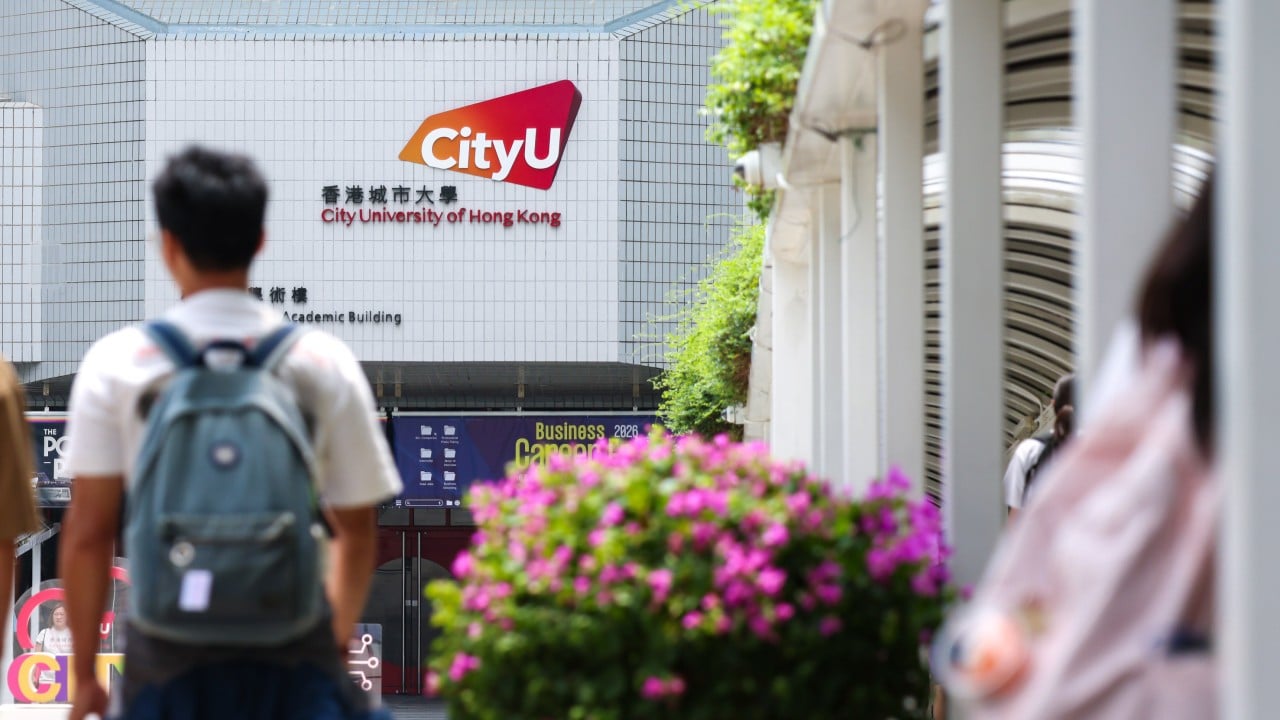
Hong Kong spends billions of public dollars subsidizing some of the best higher education on the planet, only to watch thousands of freshly minted graduates pack their bags for London, Singapore, and Toronto every single summer. It's an expensive leak. You wouldn't build a world-class bakery and then give away all your bread to the shop across the street, yet that's basically what the city's higher education pipeline has been doing for years.
The numbers tell a blunt story. According to the University Grants Committee, Hong Kong consistently places five of its eight publicly funded universities inside the global top 100 across major international rankings like QS and Times Higher Education. The University of Hong Kong (HKU), the Chinese University of Hong Kong (CUHK), and the Hong Kong University of Science and Technology (HKUST) attract brilliant researchers and ambitious students from across mainland China, Southeast Asia, and the West. Getting a degree here carries serious weight. Keeping those degree holders in the city once the graduation gowns come off is a completely different problem.
The Strange Math of Hong Kong's Higher Education Subsidy
If you look closely at how the system works, the contradiction jumps right off the page. Hong Kong taxpayers heavily subsidize undergraduate and research postgraduate places through the University Grants Committee. Even for non-local students, tuition fees in Hong Kong remain noticeably lower than comparable programs in the United States, the United Kingdom, or Australia.
The policy logic behind this spending is straightforward. You invest public money in training smart people because those graduates will eventually build companies, pay income taxes, staff hospitals, and drive innovation inside the local economy. When they stay, the return on investment is massive. When they leave six months after convocation, Hong Kong effectively subsidizes the workforce of its direct economic competitors.
And leave they do. Over the past several years, emigration waves paired with sluggish local entry-level wages have pushed both local and international graduates toward other financial hubs. While the Hong Kong government has rolled out aggressive schemes like the Top Talent Pass Scheme (TTPS) to import mid-career professionals from abroad, recruiters on the ground often point out a glaring blind spot. Importing strangers who have zero connection to the city is much harder than convincing a 22-year-old who already spent four years in Kennedy Town or Sha Tin to stick around.
Why Graduates Walk Away From a City They Already Know
Ask a graduating student at HKUST or City University why they're looking at jobs in Singapore or Shenzhen instead of Central, and you rarely hear a single complaint. You hear three or four overlapping pressures that stack up fast.
First, there's the entry-level salary wall. Starting pay for fresh graduates in Hong Kong has barely budged in real terms over the last decade outside of elite investment banking or quantitative trading desks. Meanwhile, rent hasn't gotten any friendlier. Trying to rent even a tiny subdivided studio on Hong Kong Island while making HK$18,000 to HK$22,000 a month feels like running on a treadmill set to an incline. Graduates do the math, look at starting packages in neighboring tech hubs or Western cities, and realize their disposable income goes further elsewhere.
Second, the job market itself leans too heavily toward traditional sectors. Finance, real estate, legal services, and logistics still dominate the local corporate ladder. If you just earned a degree in biomedical engineering, clean energy, or artificial intelligence from a top-ranked Hong Kong lab, where do you actually go? The city has spent heavily on research grants and science parks, especially at Hong Kong Science and Technology Parks Corporation (HKSTP), yet the private-sector mid-market remains thin. Too many STEM graduates discover that their best career path requires relocating to Shenzhen, Shanghai, or the Bay Area just to find enough employers competing for their skills.
Third, international students face friction that policy announcements often gloss over. The Immigration Arrangements for Non-local Graduates (IANG) visa lets non-local graduates stay for up to 24 months without a job offer to look for work. On paper, that's generous. In practice, non-Chinese-speaking graduates from India, Southeast Asia, or Europe frequently hit a wall during interviews because local employers still require fluent Cantonese or Mandarin for roles that shouldn't strictly need it. If you're an international student who loves living in Hong Kong, speaks English fluently, holds a data science degree from HKU, and still gets rejected from dozens of local firms over language requirements, you eventually stop applying and book a flight home.
What the Top Talent Pass Scheme Gets Right and Where It Falls Short
Credit where it's due. When Chief Executive John Lee introduced the Top Talent Pass Scheme in late 2022, the administration moved with rare speed to plug demographic holes left by an aging population and post-2020 departures. Tens of thousands of applications were approved within the first year, bringing in high earners and graduates from the world's top 100 universities.
Here's the catch, though. Approval numbers aren't retention numbers.
Bringing someone into Hong Kong on a two-year visa is only step one. Many TTPS arrivals have struggled to find local jobs matching their previous salaries or skill sets, especially if they come from mainland tech giants or Western consulting firms that don't have direct equivalents in Hong Kong's economy. Others use the visa primarily to secure educational options for their children while keeping their primary business operations across the border.
Compare that profile with a student who just finished a four-year bachelor's degree or a PhD at a Hong Kong university. That graduate already understands the MTR system. They have local friends. They know how the city operates, they've already adapted to the pace of life, and they don't need relocation hand-holding. Ignoring or under-investing in the retention of locally trained graduates while spending massive political capital recruiting external talent gets the priority order completely backward.
The Quiet Drain From University Research Labs
The problem hits hardest at the postgraduate level. Hong Kong's universities punch way above their weight in academic publishing and patents, largely thanks to PhD candidates and postdoctoral researchers recruited through fellowships like the Hong Kong PhD Fellowship Scheme.
Watch what happens when those PhDs finish their dissertations.
A bright doctoral researcher spends four years in a Kowloon lab developing new battery materials or machine-learning diagnostics. They publish in top journals. Their supervisor wants them to stay and commercialize the work. Then reality sets in:
- Academic tenure-track jobs at local universities are scarce and intensely competitive.
- Local venture capital firms tend to be conservative compared to investors in Beijing, Singapore, or Silicon Valley, preferring proven business models over deep-tech hardware bets.
- Housing costs eat up a massive chunk of a junior researcher's stipend or early-career salary.
So the researcher takes a postdoc at ETH Zurich, joins a biotech startup in Boston, or gets recruited by a corporate R&D center in Guangdong. Hong Kong pays for the research phase—the slowest, riskiest, least profitable part of the innovation cycle—and another jurisdiction captures the patents, the startups, and the high-paying jobs that follow.
How Hong Kong Can Actually Keep Its Own Graduates
Fixing a talent leak doesn't happen through slogans or another round of promotional videos. It requires changing the everyday math for a 22-year-old or 28-year-old deciding where to sign their first real employment contract.
Tie Visa Extensions and Housing Support Directly to Local Hiring
The IANG visa gives non-local graduates two years to look for work, which is a solid start, but the government can go further by offering targeted rental subsidies or tax rebates during a graduate's first three years of full-time employment in priority industries. Even a modest housing allowance of HK$4,000 to HK$5,000 a month for fresh graduates working in accredited STEM, healthcare, or green-tech firms would completely change their monthly cash flow. Unlike broad cash handouts, tying the benefit directly to verified local employment ensures taxpayers only pay when the graduate actively contributes to the local economy.
Force Real Industry-University Bridges Before Graduation Year
Waiting until May of senior year to introduce students to local employers is way too late. By then, the sharpest students already have offers from multinational firms abroad. Hong Kong's universities and trade bodies need mandatory, credit-bearing co-op programs modeled on systems like the University of Waterloo in Canada. When students spend two or three full semesters embedded inside local companies before they graduate, two things happen: employers stop complaining that fresh grads lack practical skills, and students build real professional roots in the city that make leaving much harder.
Open Corporate Doors for Non-Chinese-Speaking Graduates
If Hong Kong wants to call itself Asia's world city, its corporate hiring practices have to match the branding. Local chambers of commerce and major employers in finance, logistics, consulting, and technology should actively audit entry-level job descriptions to strip out unnecessary Cantonese or Mandarin requirements where English is the actual working language. When international students see clear, realistic career tracks after graduation, word spreads fast across campus networks from Kuala Lumpur to Seoul, turning Hong Kong's universities into genuine long-term immigration pipelines rather than temporary four-year stopovers.
De-Risk Deep-Tech Spinouts From Campus Labs
University professors and PhD graduates shouldn't have to mortgage their futures to turn a lab breakthrough into a company. While programs like the Research, Academic and Industry Sectors One-plus (RAISe+) Scheme have started pushing matching funds toward university research teams, early-stage founders still need faster access to wet-lab space, simpler intellectual property licensing from university tech-transfer offices, and streamlined procurement rules that let government departments become early customers for local startups.
Stop Treating Retention as an Afterthought
Hong Kong already solved the hardest part of the talent equation. Building globally respected universities takes decades of institutional discipline, academic freedom, and sustained funding, and the city pulled it off. Few places in Asia can match the concentration of research talent sitting across Pok Fu Lam, Clear Water Bay, and Hung Hom right now.
That advantage only pays off if the bridge between campus and career actually holds weight. Policymakers, university administrators, and local business leaders need to sit down with graduating cohorts before they book one-way tickets out of Chek Lap Kok, look honestly at why starting salaries, housing costs, and hiring barriers push them away, and fix the bottlenecks on the ground. Keep the graduates you already trained, and half of Hong Kong's talent shortage disappears on its own.