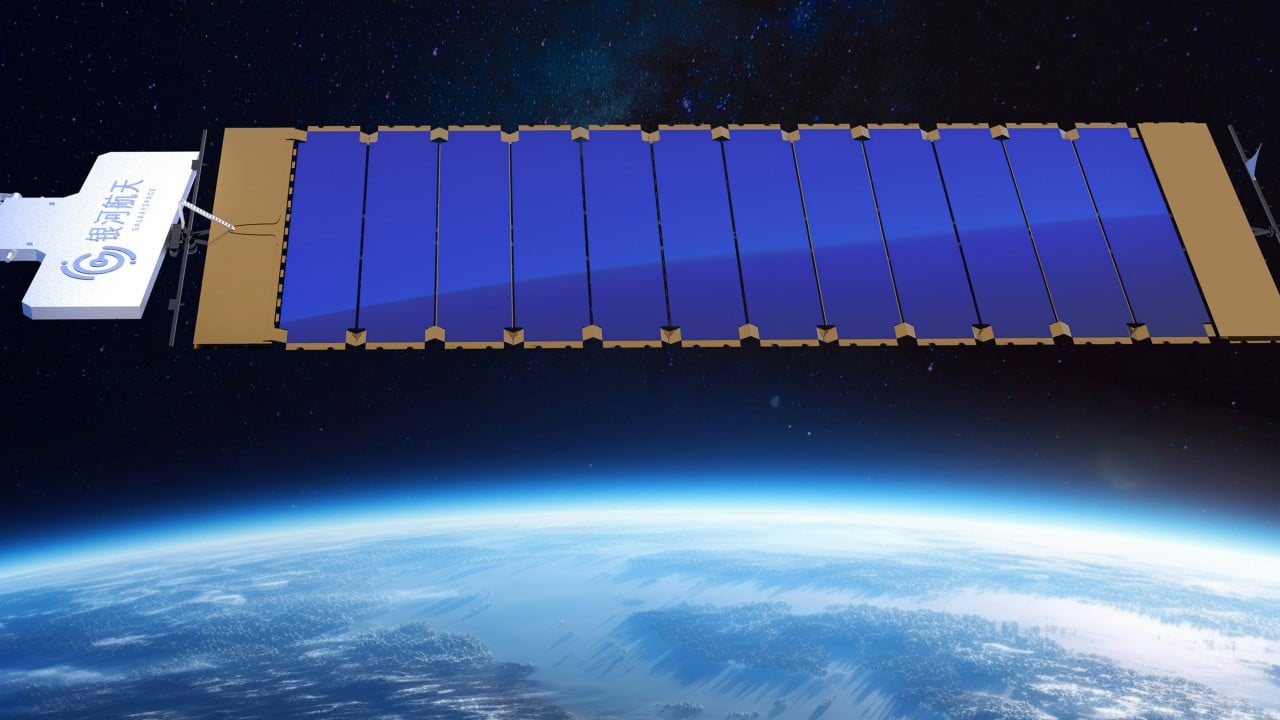
Hong Kong is positioning itself as the primary insurance hub for mainland China’s rapidly expanding commercial space sector, aiming to capture underwriting revenue from high-stakes rocket launches and satellite constellations. Beijing’s push to rival Western aerospace giants has created an unprecedented demand for risk mitigation. Hong Kong wants that business. However, the city faces steep structural hurdles, including a severe shortage of specialized aerospace underwriters and intense competition from established international markets like London. To succeed, the city must move beyond rhetoric and rapidly build a technical regulatory framework capable of evaluating space-grade liabilities.
The Space Race Funding Vacuum
Space exploration is inherently volatile. Rockets explode, satellites fail to separate, and orbital debris presents a constant kinetic threat to multi-million-dollar assets. Historically, state-backed space programs in China relied on government absorption of loss or state-owned insurers to handle the financial fallout. The emergence of private Chinese launch providers changes the math entirely.
Commercial startups cannot operate on state guarantees. They need private capital, and private capital demands insurance.
Hong Kong's financial regulators see this shift as a lifeline for the city's traditional insurance market, which has struggled to find new growth engines. By offering specialized maritime and aerospace policies tailored to mainland rocketry, the city hopes to anchor itself to the Greater Bay Area’s technology supply chain.
Yet, the enthusiasm from local officials ignores a fundamental reality. Underwriting a orbital launch is not like insuring a container ship. It requires deep, highly technical data on propulsion systems, telemetry, and materials science. Right now, that data stays tightly locked behind national security walls in Beijing, leaving Hong Kong insurers in a difficult position.
Technical Barriers and the Data Wall
To understand why this expansion is stalling, look at how space insurance actually works. A typical policy relies on decades of historical launch data. Underwriters calculate premiums based on the track record of specific rocket configurations, engine types, and component manufacturers.
Launch Risk Assessment Formula (Conceptual)
Premium Rate = (Historical Failure Rate + Environmental Risk Factor) * Asset Valuation
If a commercial launch provider uses a new, unproven liquid-oxygen methane engine, the risk profile spikes.
Herein lies the friction point. Mainland aerospace companies operate under strict military and civil dual-use classifications. A startup based in Shenzhen or Wuhan cannot simply hand over its proprietary engineering blueprints or component defect logs to an insurance broker in Hong Kong without triggering state secrecy laws.
Without this granular data, local underwriters cannot price risk accurately. If they price it too low to attract mainland clients, a single catastrophic launch failure could wipe out their capital reserves. If they price it too high to protect themselves, mainland aerospace firms will simply bypass Hong Kong entirely, opting to self-insure or rely on state-directed syndicates.
The London Shadow
Hong Kong is not operating in a vacuum. Lloyd’s of London has dominated aviation and space insurance for decades. Western syndicates possess the collective capital and historical knowledge to absorb massive losses.
For a hypothetical example, if a communications satellite fails to reach its geostationary orbit, a Western syndicate can absorb a $200 million payout because that risk is spread across hundreds of global syndicates. Hong Kong’s domestic insurance market currently lacks that level of syndication. Local firms are relatively small and risk-averse, meaning they must rely heavily on international reinsurance markets to offload the very policies they want to write.
This creates a paradoxical loop. If Hong Kong insurers must pass the majority of their space risk to reinsurers in London or Zurich, the city becomes a mere middleman rather than a true financial hub for the space economy.
Geopolitical Realities and Export Controls
The broader space sector is tied directly to global geopolitics. International space insurance frequently involves multinational satellite payloads. A rocket launched from a Chinese facility might carry a payload manufactured with components from various global suppliers.
This introduces severe regulatory friction. Strict export control regimes, such as the United States' International Traffic in Arms Regulations (ITAR), strictly limit the transfer of space technology to China. While Hong Kong operates under a distinct legal system, its integration into the mainland's economic orbit makes Western satellite manufacturers hesitant to utilize any financial or insurance mechanisms tied to the region.
The target market for Hong Kong insurers is therefore restricted almost exclusively to domestic Chinese hardware and payloads from nations participating in the Belt and Road Initiative. This narrows the addressable market significantly, forcing the city to compete intensely for a limited pool of capital.
Building the Technical Infrastructure From Scratch
If the city wants to move past the marketing phase, it must establish a dedicated aerospace risk laboratory.
This means hiring literal rocket scientists, not just financial analysts. The Insurance Authority must create a framework that allows for secure, classified data rooms where mainland launch providers can share technical specifications with vetted underwriters without violating national security laws.
The Talent Deficit
The lack of human capital is glaring. You can count the number of qualified space insurance underwriters in the Asia-Pacific region on two hands. Most are based in Singapore or Tokyo, serving established regional satellite operators.
Hong Kong cannot simply pivot its property and casualty underwriters to space tech overnight. A miscalculated stress tolerance on a carbon-fiber fuel tank is not the same as a flawed actuarial model for a commercial real estate portfolio. The financial consequences of an orbital anomaly are immediate, total, and non-negotiable.
The Reality of the Domestic Alternative
While Hong Kong strategizes, mainland China is not waiting around. State-owned entities like China Re and People’s Insurance Company of China (PICC) already handle the bulk of domestic aerospace risk. These giants have direct access to state military-civil data and possess massive balance sheets backed by Beijing.
Commercial launch startups often prefer these state-backed options because the approval processes are aligned with national strategic goals rather than purely commercial profit margins. Hong Kong must prove it can offer cheaper capital or better risk-distribution mechanisms than state-directed domestic syndicates. It has yet to make that case convincingly.
The window of opportunity is closing. As mainland commercial launch cadences accelerate toward thousands of satellites annually, the financial infrastructure will solidify. If Hong Kong cannot resolve its data-sharing bottlenecks and import the necessary technical expertise within the next twenty-four months, it will be left watching the commercial space boom from the ground.