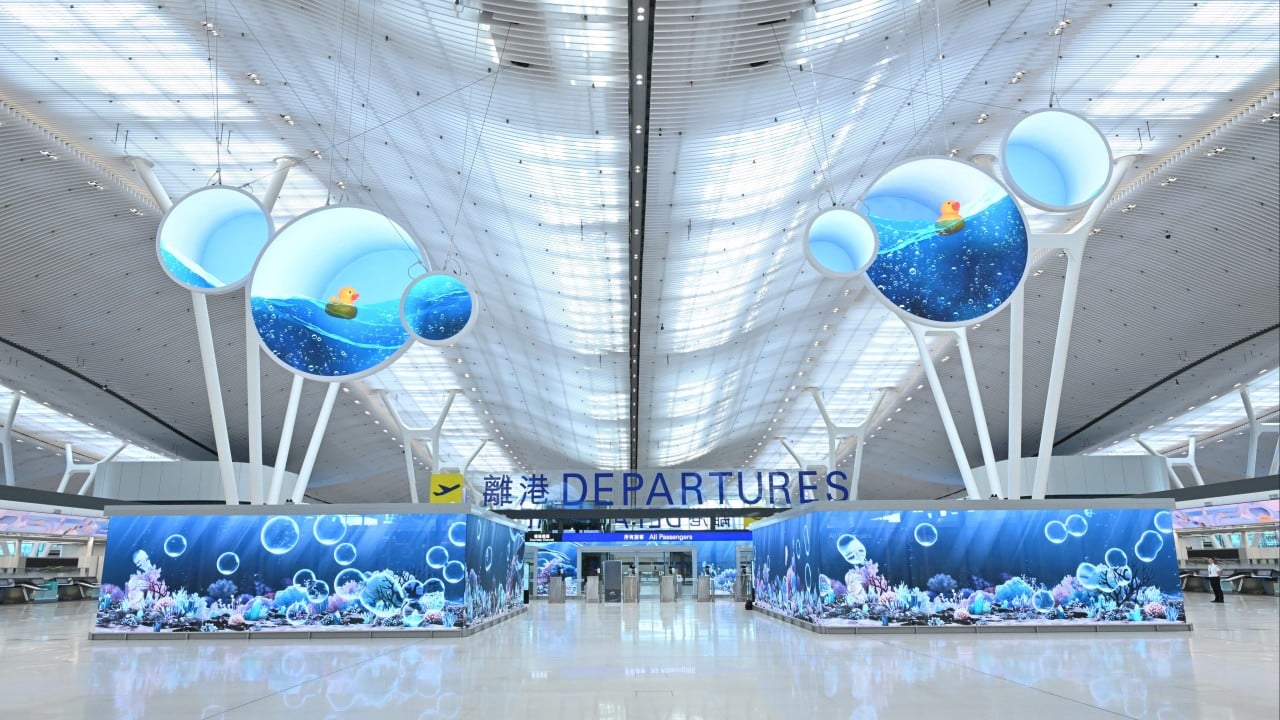
The aviation herd loves a shiny new concrete box. Mention Hong Kong International Airport's expanded Terminal Two project, and aviation journalists lose their minds over architectural curves, biometric boarding gates, and handling capacity projections that look gorgeous in a corporate slide deck. The lazy consensus is simple: bigger infrastructure equals better economic gravity.
I have watched airport authorities blow billions on expansion vanity projects while ignoring the fundamental physics of passenger throughput. Terminal Two is a monument to pre-pandemic hubris wrapped in steel and glass. We are told this multi-billion dollar concrete expansion represents the golden age of Asian transit dominance. Don't forget to check out our recent article on this related article.
They are wrong. Building more square footage to solve a routing problem is like buying a wider belt to cure a bad diet.
The Flawed Logic of Megahub Expansion
Let us look at the structural assumptions driving this project. The entire expansion hinges on the idea that physical terminal size dictates passenger preference. That theory died the day low-cost carriers decoupled from legacy hub-and-spoke models and point-to-point travel became the default behavior for regional flyers. If you want more about the context of this, AFAR offers an informative breakdown.
When you build a massive processing footprint, you lock yourself into fixed capital costs that demand heavy traffic volume to break even. But volume without yield is a slow bleed. I have spent years auditing airport operational efficiencies across major Asian hubs, and the data tells a brutal story: bigger terminals do not reduce friction. They multiply it.
Consider the walking distances alone. When an airport expands horizontally or vertically to accommodate millions of forecasted annual travelers, the human cost shifts entirely to the passenger. You get automated people movers that break down, endless security queues shoehorned into aesthetic atriums, and retail spaces designed to trap you rather than serve you.
The aviation industry suffers from a chronic obsession with capacity metrics over velocity metrics. An airport should be treated as a high-speed pipeline, not a suburban shopping mall with runways attached.
The Myth of the Integrated Border
Proponents of the Terminal Two overhaul point heavily to the cross-border integration features, designed to funnel mainland Chinese travelers straight into the heart of the international departures hall. Sounds smart on paper.
In reality, it creates a systemic choke point. When you merge high-volume land border transit systems directly with international aviation security parameters, you introduce complex jurisdictional friction points. A single regulatory hiccup or immigration bottleneck at the land-to-air interface cascades backward into the rail links and highway approaches.
I've seen airport operators treat baggage handling and security checkpoints as isolated engineering problems. They fix the belt speed here, they add an extra lane there. They refuse to look at the system holistically—wait, let me rephrase that before the corporate jargon police arrest me. They refuse to look at the entire operational chain as a single, fragile organism.
If your arrival processing cannot match your departure capacity, your shiny new terminal is just an expensive parking lot for frustrated bodies.
What They Should Have Built Instead
If the Airport Authority of Hong Kong wanted to secure its crown against surging competition from Singapore Changi or Shenzhen Bao'an, they should have doubled down on invisible infrastructure.
Instead of pouring capital into a massive architectural monument, the smart money goes toward decentralized processing, off-site bag drop facilities in downtown Kowloon and Shenzhen, and predictive machine-learning models that dynamically reallocate security staff before queues even form.
The future belongs to airports that make themselves disappear from the passenger experience. You do not achieve that by building a second terminal the size of a small principality. You achieve it by shrinking the footprint of friction.
Every dollar spent on marble flooring and duty-free real estate is a dollar stolen from digital agility.
Stop cheering for concrete. Start demanding speed.


