The air inside the hotel was thick with the scent of expensive floor wax and the low, rhythmic hum of a professional event coming together. For the volunteers, it was a day of frantic coordination—the kind of high-stakes logistics that defines the periphery of power. They were moving chairs, syncing schedules, and ensuring that the grand ballroom looked exactly as the world expects it to look when a President is involved.
But one volunteer felt a chill that had nothing to do with the air conditioning. Discover more on a similar issue: this related article.
The suspicion didn't start with a bang. It started with a shadow in a space that should have been empty. In the labyrinthine back-of-house areas of the Washington Hilton, there are rooms that exist only for a moment—makeshift storage hubs, temporary staging areas, the architectural equivalent of a deep breath before a plunge. One man had decided to claim one of these voids for himself.
He wasn't a guest. He wasn't staff. He was a ghost in the machinery, and he was working with his hands. Further reporting by USA Today delves into similar views on this issue.
The Anatomy of a Threat
Consider the mechanical precision required to transform a collection of parts into a weapon. It is a cold, calculated ritual. When the volunteer stumbled upon the "makeshift room," the intruder wasn't just sitting there. He was assembling.
The witness saw what no one in a secured perimeter ever wants to see: the distinct, elongated silhouette of a "long weapon."
It is one thing to read about a security breach in a police report. It is another entirely to be the person who locks eyes with a man standing over a rifle in a broom closet. The volunteer didn't see a "threat actor" or a "statistical anomaly." They saw a man who had successfully bypassed the invisible layers of protection that we believe surround the most powerful office on earth.
Fear has a specific weight. It sits in the gut like lead. The volunteer turned. They didn't walk; they ran. They ran toward the ballroom, toward the light, toward the authorities who were supposed to have already prevented this from happening.
The Fragility of the Perimeter
We live under the comforting illusion that security is a solid wall. We see the earpieces, the dark suits, the magnetometers, and we assume the barrier is impenetrable. But security is actually a series of overlapping circles, and the spaces between those circles are where reality happens.
In this instance, the intruder found a gap in the Hilton’s internal geography. By claiming a small, unremarkable room, he turned a public space into a private workshop of violence. He understood that in a busy hotel, a man with a purpose and a closed door is often left alone.
He had the weapon. He had the proximity. He had the time.
The "long weapon" mentioned by the witness suggests a terrifying level of intent. A handgun is a tool of concealment, often used in the heat of a moment. A long gun is a tool of precision. It is a weapon that demands assembly, calibration, and a clear line of sight. It is the weapon of someone who has thought about the geometry of the room, the distance to the podium, and the exact second when the doors would open.
The Human Sensor
Technology failed that day. The cameras didn't stop him. The sensors didn't flag the components of his rifle. The only thing that worked was the most ancient security system in existence: human intuition.
The volunteer noticed the "makeshift room" was being used improperly. They noticed the man’s posture. They noticed the metal.
There is a psychological phenomenon where witnesses often second-guess their own eyes in the presence of extreme danger. They tell themselves it must be a camera tripod. They tell themselves it’s a piece of stage equipment. But this volunteer didn’t hesitate. The sight of the man putting the pieces together—the "long weapon" taking shape in the dim light—triggered an immediate, visceral response.
"Put it together," the volunteer later recounted. That phrase is the heartbeat of the incident. It describes the assembly of the gun, yes, but it also describes the realization in the witness's mind. The pieces of the puzzle clicked into place at the same moment the bolt clicked into the receiver.
The Invisible Stakes
Imagine the ballroom at that moment. The podium is set. The seal is being polished. Somewhere, a motorcade is preparing to move. The people inside the ballroom are checking their watches, thinking about their speeches, or wondering when lunch will be served. They are completely unaware that a few hundred feet away, a man is finishing a task that would change the course of history.
The stakes of security are often invisible until they are failed. We only talk about the "makeshift room" because someone walked in on it. If that volunteer had taken a different hallway, or if the door had been locked from the inside, the story we would be telling today would not be about a "volunteer recall." It would be a national tragedy.
The intruder’s ability to "run towards the ballroom" or stay near it underscores a terrifying reality of modern protection: the "lone wolf" doesn't need to break down the front door. They just need to find a corner where no one is looking.
The Aftermath of a Close Call
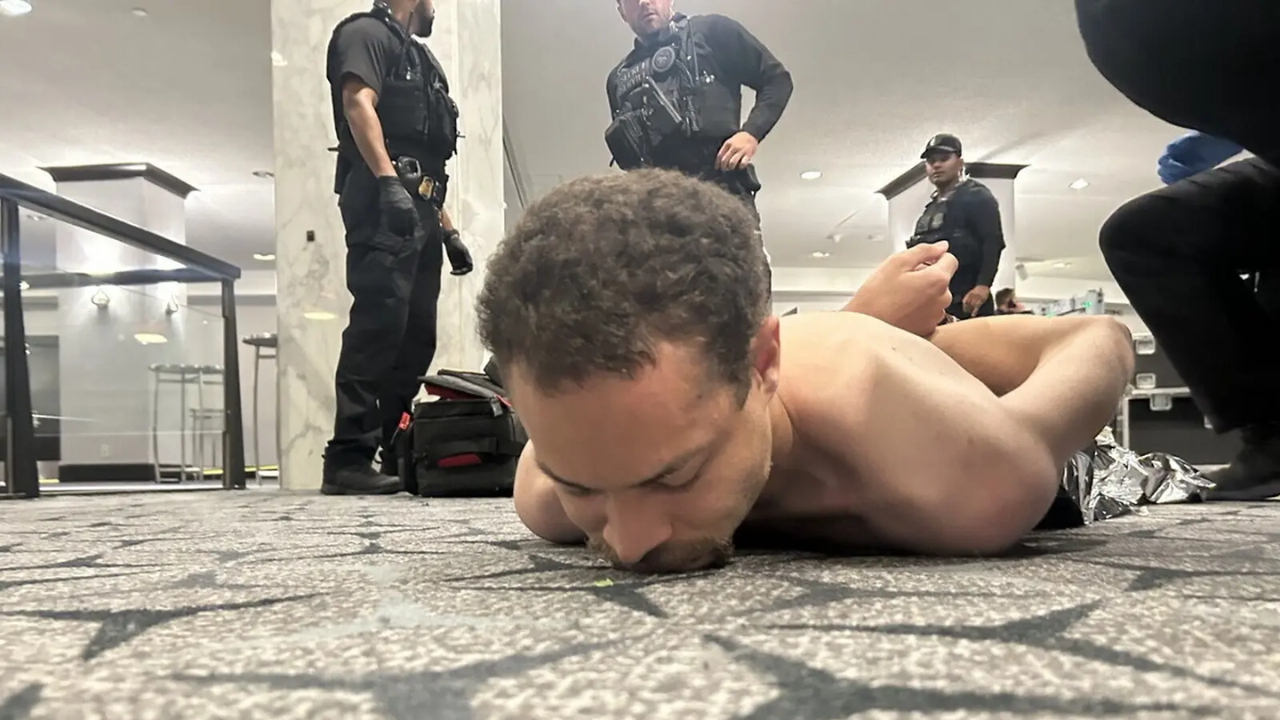
When the volunteer reached the authorities, the gears of the state finally began to grind. The response was swift, but the damage to our collective sense of safety was already done. The fact that a gunman could assemble a rifle within the same building where the President was scheduled to appear is a failure that defies easy explanation.
It forces us to look at the people we often overlook—the volunteers, the janitors, the temporary staff. They are the true eyes and ears of the world. In this case, the safety of the Commander in Chief rested not on a billion-dollar satellite or a tactical team, but on the courage of a person who saw something wrong and chose not to look away.
The man in the room wasn't just building a weapon. He was building a catastrophe. He was methodical. He was quiet. He was almost successful.
The "makeshift room" is now just a storage space again. The Hilton will continue to host galas and conferences. But for those who were there, the silence of those back hallways will never feel the same. They know how easy it is for the darkness to find a place to sit, to wait, and to put its pieces together.
The image that remains is of the volunteer’s feet hitting the carpeted floor, sprinting toward a ballroom full of people who had no idea how close the shadow had come. It is the sound of a heartbeat racing against the mechanical click of a rifle being readied in the dark.