In the glittering, temperature-controlled gold souks of Dubai and the high-rise trading floors of Hong Kong, a bar of gold is a beautiful, sterile thing. It is cold to the touch. It has no smell, no memory, and no blood on it.
But thousands of miles away, in the dry, dust-choked expanse of Sudan, that same gold is hot. It smells of diesel, sweat, and cheap explosives.
For the average consumer, gold is an anniversary band or a safe-haven asset. For the people of Sudan, it is the fuel powering a war machine that has torn their country apart since April 2023. When we talk about geopolitical conflicts, we often focus on the politics, the generals, and the troop movements. We miss the economic engine humming quietly in the background. In Sudan, that engine is made of solid gold.
The UK government stepped directly into this shadow economy, launching a sweeping package of sanctions designed to choke off the illicit gold pipelines funding both sides of the country’s brutal civil war.
But to understand why these sanctions matter, we have to look past the bureaucratic language of asset freezes and travel bans. We have to look at how a metal buried deep in the African earth becomes a drone strike on a crowded market in El Obeid.
The Parallel Worlds of Abu Dharr
To understand how conflict gold is monetized, consider a hypothetical composite character we will call "Amir."
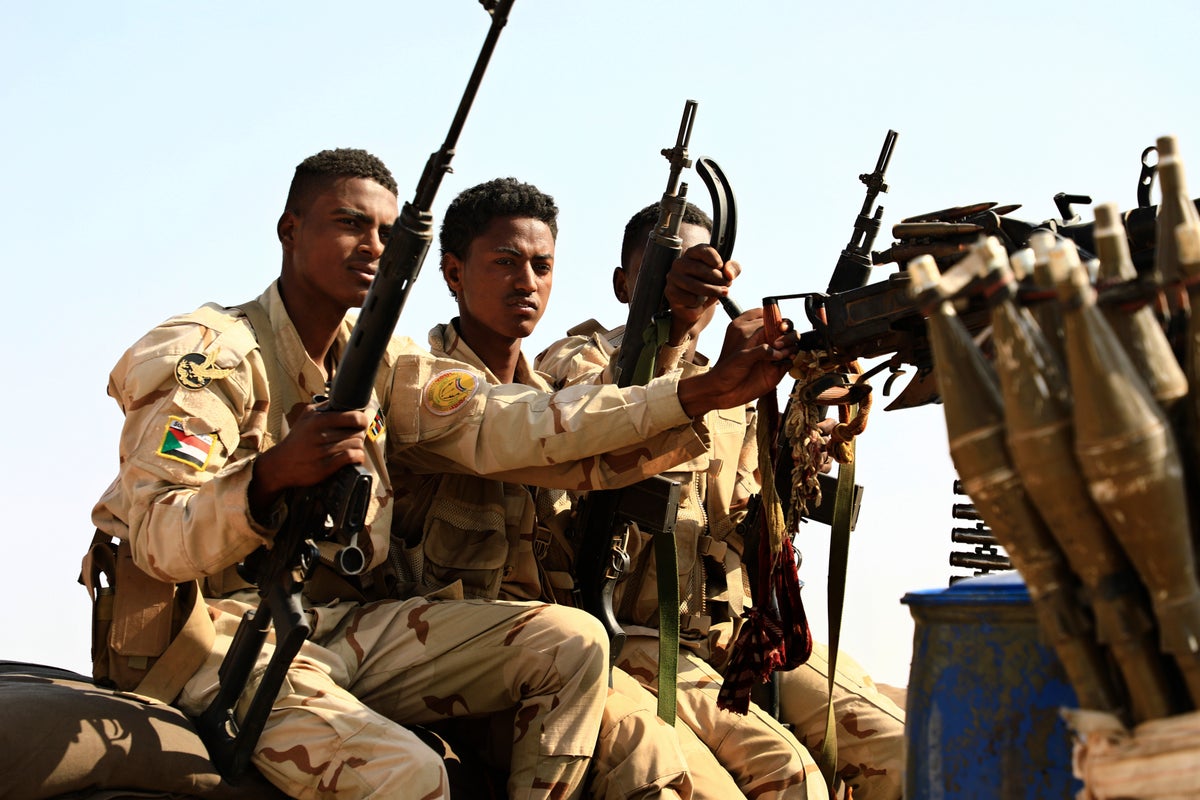
Amir is an artisanal miner in northern Sudan. He spends twelve hours a day in a hand-dug pit, breathing in toxic mercury vapor to separate tiny flecks of yellow metal from the gray dirt. He does not care about the geopolitical rivalry between the regular army, the Sudanese Armed Forces (SAF), and the paramilitary Rapid Support Forces (RSF). He just wants to buy flour for his family.
When Amir sells his tiny button of gold to a local middleman, he receives a fraction of its global value. The middleman sells it to a regional buyer, who smuggles it across the border.
Now consider the real-world counterpart operating at the other end of this chain: Abu Dharr Abdul Nabi Habiballa Ahmmed.
Abu Dharr is not digging in the mud. According to British authorities, he is a key financier and procurement facilitator for the RSF, operating from the comfortable safety of Dubai. The UK government suspects Abu Dharr of running an intricate web of real estate, holding companies, and gold trading entities designed to wash Sudanese gold and turn it into hard currency.
Once Amir’s gold is smuggled out of Sudan, it enters these corporate networks. It is melted down, refined, and stamped with a stamp of legitimacy. It becomes "clean."
Once sold on the legal international market, that gold is converted into US dollars or UAE dirhams. That cash is then used to buy modern weapons, fuel, and supplies. The loop is completed when those weapons are shipped back to Sudan, ending up in the hands of fighters who terrorize the very region where Amir dug the gold in the first place.
This is not a minor leakage. It is a massive, parallel financial system.
While official, declared gold exports from Sudan were worth roughly $1.5 billion in 2024 and 2025, the UK government estimates that the actual value of the gold leaving the country is several times higher. Billions of dollars in unregistered, untaxed gold are smuggled out every single year. It is the ultimate war chest.
Boardrooms and Battlefields
The UK's sanctions target eleven specific individuals and entities linked to these networks. The list is telling because it targets both sides of the conflict. This is not a war where one side is clean and the other is dirty; both are feeding at the same trough.
Among the targets are three state-owned mining companies. The Omdurman Mining Company and Sudamin are suspected of generating gold revenues to support the SAF's war effort. Meanwhile, Ariab Mining Company is accused of playing both sides, channeling gold revenues to both the SAF and the RSF depending on who controls which territory.
Further down the chain, the UK has targeted companies like Portex Trade Limited, a Sudanese firm based in Hong Kong suspected of helping the SAF purchase military equipment while evading existing sanctions.
This is where the true complexity of modern conflict lies. The war in Sudan is not just being fought by young men with Kalashnikovs in the streets of Khartoum or El Obeid. It is being enabled by lawyers, accountants, and logistics managers in glass towers in the United Arab Emirates and China.
By freezing the assets of these middlemen and banning UK businesses from dealing with them, the British government is attempting to make the trade of Sudanese gold too toxic to handle. If you cannot easily clear the money through Dubai or Hong Kong, the gold loses its utility as a weapon of war.
The Precipice of El Obeid
The timing of these sanctions is not accidental. It comes at a moment of desperate humanitarian urgency.
For months, international observers have watched with growing dread as the RSF builds up its forces around El Obeid, a strategic hub in central Sudan. The city is already under siege, its half a million residents suffering from severe shortages of water, food, and medicine.
We have seen this play out before. Last year, the city of El Fasher was subjected to a brutal siege that left thousands dead and led UN investigators to warn of potential genocidal violence. El Obeid is standing on the edge of that same cliff.
Foreign Secretary Yvette Cooper has called for a UN arms embargo to be extended to cover the area surrounding El Obeid. But an arms embargo only works if the factions cannot afford to buy weapons on the black market. As long as the gold keeps flowing, the guns will keep arriving.
Sanctions are often criticized as being a slow, blunt instrument. They do not stop bullets in mid-air. They do not feed a starving child in a refugee camp tomorrow morning.
But what they do is increase the friction of violence. They make it harder, more expensive, and more complicated for warlords to buy the tools of destruction. They force the enablers in Dubai and Hong Kong to choose between their lucrative access to the global financial system and their shadow deals with Sudanese militias.
The shiny gold ring on a finger or the bullion stored in a vault might seem entirely disconnected from a humanitarian catastrophe in East Africa. But the global supply chain is intimate, fragile, and deeply connected. When we trace the money back to its source, we find that the true price of Sudan’s gold is being paid in human lives.