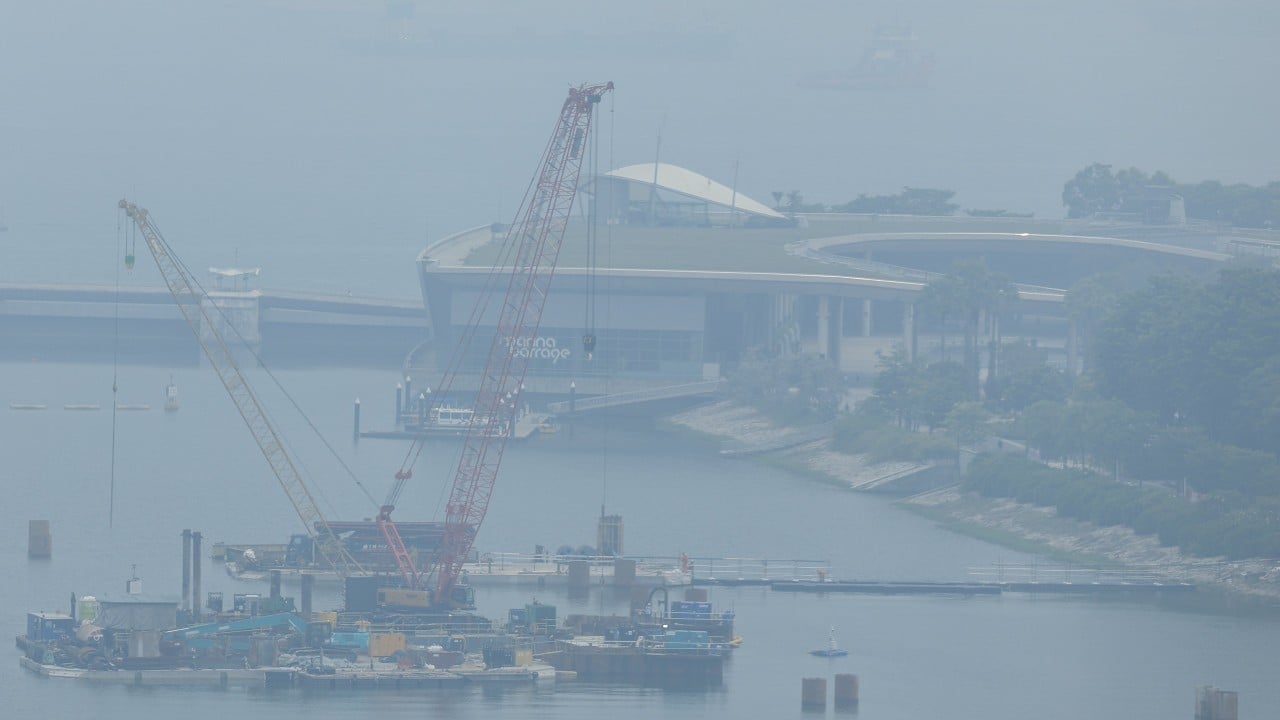
Blaming transboundary smoke for a slow quarter in Singapore is lazy. Lazy analysis. Lazy leadership.
Every time seasonal winds carry particulate matter across the Malacca Strait and push the 24-hour Pollutant Standards Index (PSI) into unhealthy territory, the same predictable panic fills business coverage. Headlines ask if the calendar is doomed. Organizers cancel outdoor stages. Sponsors hedge. Executives start talking about "clouded outlooks" as if bad air arrived out of nowhere like a freak meteor strike.
That is the wrong diagnosis. Transboundary smoke in Southeast Asia is recurring, seasonal, and observable through satellite tracking and wind-pattern forecasting. Calling a recurring seasonal event an unpredictable shock is an excuse for brittle planning. When a haze episode disrupts a conference, festival, concert, or trade show in Singapore, the smoke is the trigger. Fragile venue design, rigid contract structures, and lazy risk assumptions are the real failures.
Singapore has spent decades building an extraordinary reputation as a high-trust business and live-entertainment hub. Clean streets. Predictable governance. World-class aviation connectivity through Changi Airport. High-spending regional and global delegates. Because so much else works smoothly, event planners often treat indoor-outdoor friction, air filtration limits, and last-minute crowd shifts as afterthoughts. Then smoky skies hit, and suddenly a "cloudy outlook" becomes the scapegoat for poor operational architecture.
Why Conventional Haze Coverage Gets the Economics Backward
Standard commentary treats air-quality spikes like a single, uniform demand collapse across every event format. A headline goes up. Foot traffic supposedly dries up. Budgets vanish.
Reality is far messier.
When air quality deteriorates in Singapore, attendees do not behave like robots following a single script. A corporate buyer flying in for a high-stakes B2B summit has very different incentives from a casual weekend festivalgoer or an outdoor sports participant. Canceling a multi-million-dollar enterprise forum because outdoor terrace drinks feel unpleasant is a commercial choice, not an unavoidable law of nature. Conversely, holding a marathon or an open-air concert at peak particulate levels carries real public-health and reputational risk.
Lumping all live events into one basket obscures where money actually leaks. Outdoor and semi-outdoor formats take the direct hit when visibility drops, throats scratch, and health advisories tighten. Purpose-built indoor venues with modern HVAC systems and particulate filtration often face a very different reality—provided logistics, transit, and attendee confidence are managed well.
I have watched event teams burn six-figure deposits on knee-jerk cancellations because nobody defined objective operational thresholds ahead of time. Panic spreads faster than smoke. Once one organizer pulls the plug without a clear trigger, nervous sponsors and jittery vendors start asking for refunds or credits, turning a manageable operational adjustment into a self-inflicted financial wound.
Precision Matters When Everyone Panics Over "Haze"
Before talking about event survival, get the terminology straight. People toss the word "haze" around like a single weather condition. In Singapore, air quality reporting tracks specific metrics—most notably the Pollutant Standards Index (PSI) and fine particulate matter ($\text{PM}_{2.5}$), measured in micrograms per cubic meter ($\mu\text{g}/\text{m}^3$).
There is a massive operational difference between transient smoky smell, elevated PSI readings, and sustained unhealthy concentrations. Confusing casual discomfort with clinical hazard leads to terrible decisions. High-efficiency particulate air (HEPA) filtration and Minimum Efficiency Reporting Value (MERV) ratings matter deeply inside enclosed halls, yet plenty of organizers have no idea what air-exchange rates or filtration standards their contracted venues actually run during an air-quality spike.
Another common misconception is that indoor air automatically equals safe, comfortable air. Older buildings, leaky loading bays, high-turnover exhibition halls with constant door openings, and poorly maintained air handlers can struggle if outdoor air intake is not properly filtered or recirculated according to building engineering specs. Assuming "indoors equals immunity" is how organizers get blindsided when delegates complain about stuffy rooms or eye irritation despite staying out of the street.
Asking the Wrong Question About Singapore's Events Economy
Most coverage asks a comforting, passive question: How hard will the haze hit Singapore's events economy?
That question frames event organizers as helpless passengers waiting for wind direction to change. A sharper question is: Why are so many high-value events still built on single-point weather and air-quality assumptions in a climate where seasonal smoke is a known risk?
Consider the core questions people actually type into search bars when smoke rolls in:
"Should we postpone or cancel our event in Singapore during bad haze?"
Usually, no—not as a reflex. Canceling outright is the most expensive, reputation-damaging move on the board, especially for international B2B events where flights, hotel blocks, speaker schedules, and regulatory clearances are already locked in.
The smarter move is tiered contingency execution tied to official Singapore government health advisories and pre-agreed thresholds. Shift outdoor receptions indoors. Move panel breaks inside. Shorten exposed transit segments between buildings. Provide clear, calm communication explaining filtration, indoor comfort, and health precautions so attendees feel protected rather than kept in the dark. Full cancellation should be a high-bar last resort for outdoor-dependent formats when advisories explicitly warn against strenuous or prolonged exposure—not a panic button pressed at the first whiff of smoke.
"Do delegates and tourists still travel when air quality drops?"
Some casual leisure travelers hesitate, especially families or outdoor-focused visitors. High-intent business delegates, exhibitors, and dedicated fans behave differently when given certainty. People travel through tough conditions all the time if the value of showing up outweighs the hassle—and if the organizer shows competence.
What kills attendance isn't just bad air; it's ambiguity. If an organizer sends vague updates, ignores air-quality questions, or leaves attendees guessing whether sessions are moving indoors, people stay home or skip days. Clear, decisive operational pivots preserve attendance far better than wishful thinking.
"How can event organizers protect budgets without over-insuring?"
Standard event insurance policies often contain exclusions or strict triggers around weather, pollution, or government advisories. Buying generic coverage and assuming you are bulletproof is a fast way to lose money when a claim gets disputed.
Real protection starts in contract drafting before a single dollar is spent on marketing. Build force majeure and "material disruption" clauses with clear, objective triggers rather than vague "acts of nature" language. Negotiate venue swap rights (moving from open courtyard or rooftop to enclosed ballroom or hall) at locked-in rates. Structure vendor payments around milestones rather than front-loading non-refundable deposits where possible.
Thought Experiment: Two Summits, Same Smoky Week
Imagine a scenario where two competing industry summits take place in Singapore during the exact same week of elevated PSI readings.
Summit A relies on a grand outdoor networking terrace, open-air evening showcases, and a venue contract with zero room-reallocation flexibility. When air quality worsens on day one, leadership freezes. They issue a late-night notice moving drinks indoors without checking capacity, leaving half the crowd crammed into an undersized foyer while sponsors fume about lost visibility. By day two, rumors of cancellation circulate online, walk-ins drop, and post-event surveys tank.
Summit B anticipated the seasonal risk months earlier. Their contract includes pre-cleared indoor backup spaces with verified particulate filtration. Their run-of-show has a pre-written "Amber/Red Air Protocol" that shifts outdoor activations into enclosed pavilions within two hours of a threshold trigger, supplies complimentary masks and hydration stations without making the room feel like a hospital ward, and gives sponsors guaranteed indoor branding placement. Delegates walk in, see calm execution, get their networking done, and leave praising the team's composure.
Same city. Same smoke. Completely different commercial outcome.
The Heavy Hitters' Playbook vs. Amateur Improvisation
Look at how seasoned operators in global MICE (Meetings, Incentives, Conferences, and Exhibitions) hubs—whether dealing with wildfires, extreme heat, typhoons, or seasonal smoke—handle volatility. Heavy hitters in the industry, from major international convention operators and global trade-show producers to seasoned hospitality executives in Singapore, treat environmental disruption as an engineering and contracting problem, not a PR miracle.
They audit venue mechanical capabilities early. They map pedestrian flows so attendees aren't baking or breathing heavy particulates along long uncovered walkways. They brief MC teams and moderators so stage messaging stays steady, factual, and grounded in official guidance.
Amateurs treat contingency planning as paperwork to file and forget. When conditions shift, they improvise in public. Worse, they blame external forces for internal lack of preparation—turning a seasonal operational test into a narrative about a broken market.
Where This Contrarian Playbook Can Burn You
Going against the panic consensus has real downsides, and pretending otherwise would be dishonest.
First, pushing ahead with an event when air quality is genuinely hazardous can backfire badly. If health authorities issue strong warnings for vulnerable groups or general populations and an organizer insists on running business as usual just to save margin, attendees and partners can view that stubbornness as reckless. Commercial grit is not the same thing as ignoring public health.
Second, building flexible contracts and redundant indoor options is not free. Venues with prime indoor space charge for it. Legal review of custom disruption clauses takes time and money. If three straight seasons pass with mild or zero smoke disruption, a CFO may look at those contingency provisions and question the upfront cost.
Third, over-engineering every minor fluctuation creates operational fatigue. If your team triggers "emergency protocols" every time readings tick up slightly, people stop taking alerts seriously when conditions actually warrant action. Thresholds have to be disciplined, objective, and rare enough to command attention.
Practical Moves That Actually Work
Skip the hand-wringing and tighten your execution:
- Audit indoor air specs before signing: Ask venues concrete questions about filtration grades, fresh-air intake controls, and indoor air-quality monitoring—not vague assurances that "the AC works great."
- Write objective triggers into contracts: Define exact PSI or advisory thresholds that unlock indoor space swaps, schedule adjustments, or vendor rescheduling without weeks of haggling.
- Design hybrid indoor-outdoor footprints: Never make a flagship keynote, main sponsor activation, or core networking block 100% dependent on an exposed outdoor space with no equivalent indoor twin.
- Pre-build your comms kit: Draft calm, transparent attendee and sponsor updates in advance so you communicate in hours, not days, when conditions shift.
- Separate signal from noise: Track official Singapore government advisories and air-quality indices rather than reacting to social media alarmism or unverified rumors.
Seasonal smoke will keep testing Singapore's events calendar whenever regional winds align. Let the fearful hand-wringers write about a "cloudy outlook"—build events tough enough to run cleanly anyway.