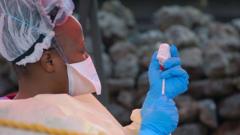
Panic shouldn't be your first reaction when you hear about Ebola, but vigilance is non-negotiable. The Democratic Republic of the Congo (DRC) is once again grappling with a deadly flare-up. Health officials in the eastern provinces have confirmed that 65 people have died in this latest wave. It’s a grim reminder that this virus hasn't gone away. While the world often looks toward the next big pandemic, the DRC is stuck in a cycle of containment and grief. This isn't just another statistic. It's a localized crisis with global implications.
Ebola isn't a mystery anymore. We know how it spreads. We have vaccines. Yet, people are still dying in dozens. You have to ask why. The answer isn't just biological; it's deeply political and logistical. When an outbreak hits eastern Congo, it's hitting one of the most complex conflict zones on the planet.
Why This Outbreak Is Different
Most news reports give you the death toll and move on. They don't tell you about the "red zones." In eastern DRC, dozens of armed groups operate near the very villages where the virus is spreading. This makes contact tracing—the bread and butter of stopping Ebola—nearly impossible. Imagine trying to track down every person who attended a funeral while avoiding crossfire. That’s the reality for local health workers.
This current spike of 65 deaths didn't happen overnight. It’s the result of a slow burn in rural communities where trust in outside authority is thin. When government teams show up in hazmat suits, people get scared. Sometimes they hide their sick. This is a fatal mistake, but it's a human one.
The virus involved is the Zaire ebolavirus strain. It’s the most lethal version. We're talking about a pathogen that can have a fatality rate of up to 90% if left untreated. In this specific outbreak, the mortality rate is hovering around 50%, which tells us that some people are getting to clinics, but many aren't.
The Logistics of Tracking a Killer
Stopping Ebola requires a very specific set of actions that must happen simultaneously. If you miss one step, the virus wins.
- Safe Burials: Ebola remains highly contagious even after the patient dies. Traditional funeral rites that involve touching the body are major "super-spreader" events.
- Ring Vaccination: This involves vaccinating everyone who came into contact with an infected person, plus all their contacts. It’s a literal ring of protection.
- Point of Entry Screening: This means checking temperatures at every border crossing and marketplace.
The World Health Organization (WHO) and Médecins Sans Frontières (MSF) are on the ground, but they’re stretched thin. The 65 deaths reported are likely an undercount. In remote forests, deaths often go unrecorded. Families bury their loved ones quietly to avoid the stigma or the perceived "interference" of health officials.
Modern Tools vs Ancient Fear
We have Ervebo now. It’s a highly effective vaccine that changed the game a few years ago. But a vaccine is useless if you can't get it into an arm. Cold chain storage is a nightmare in the DRC. The vaccine needs to be kept at ultra-low temperatures, often around -60°C to -80°C. In a region with no reliable electricity and crumbling roads, that’s a massive feat of engineering.
Health teams use solar-powered fridges and motorbikes to transport these precious vials. It's a race against the clock. If the fridge fails, the doses are ruined. If a bridge is washed out, the village remains unprotected. It's easy to sit in a city and wonder why they haven't "fixed" Ebola yet. Try doing it in a jungle with a broken motorbike and a cooling unit that’s beeping its last breath.
Beyond the Numbers
The 65 people who died were parents, children, and breadwinners. When Ebola hits a village, the economy stops. Markets close. People stop traveling. The hunger that follows can be just as deadly as the fever.
We also need to talk about "Ebola survivors." Even if you live, the road back is brutal. Many survivors face long-term health issues like joint pain, vision loss, and extreme fatigue. Then there’s the social death. Neighbors might refuse to talk to you. Shopkeepers might refuse to take your money. The trauma lingers long after the virus is cleared from the blood.
What You Need to Watch For
If you’re monitoring this situation from afar, don't just look at the death toll. Look at the "geographic spread." As long as the virus stays in rural eastern DRC, it’s a localized tragedy. If it hits a major transit hub like Butembo or crosses the border into Uganda or Rwanda, we're looking at a different beast entirely.
The international community's response has been reactive rather than proactive. We wait for the body count to rise before releasing the big funds. That’s a losing strategy. Prevention is cheaper than a massive emergency response.
Immediate Actions and Realities
Right now, the priority is community engagement. You can't force people to be healthy. You have to talk to the village elders. You have to use local radio stations to explain how the vaccine works in the local language.
Don't buy into the "miracle cure" myths you see on social media. There is no silver bullet. There is only the hard, grinding work of public health.
If you want to stay informed or help, focus on organizations that have a permanent presence in the DRC. They don't just fly in when the cameras are rolling; they're there when the news cycle moves on.
- Monitor official updates from the DRC Ministry of Public Health.
- Support groups like MSF (Doctors Without Borders) that handle the front-line clinical care.
- Advocate for sustained funding for the WHO’s health emergencies program.
The situation is serious. 65 lives are gone, and many more are at risk. It's time to pay attention before the numbers climb higher.