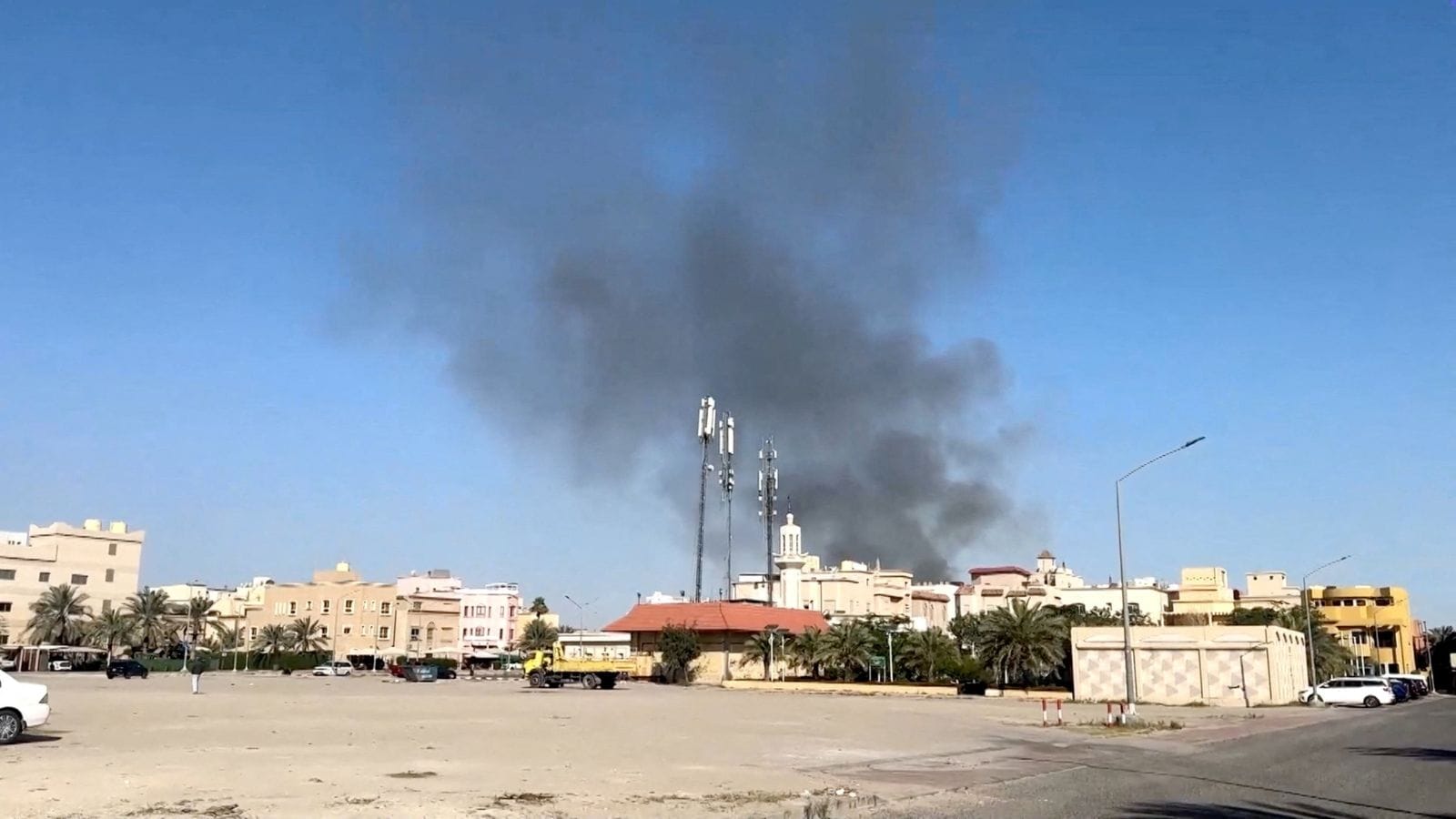
When an attack hits a commercial ship in the Strait of Hormuz, the headlines usually obsess over oil prices. Brent crude spikes two percent, cable news anchors talk about global supply chains, and insurance underwriters in London start sweating.
Meanwhile, a family in Mumbai, Kochi, or Dehradun gets a phone call nobody ever wants to receive. An Indian national is missing after a strike on a merchant vessel, and suddenly the geopolitical chess match turns into a frantic, bureaucratic nightmare for regular people. You might also find this connected article useful: When the Dark Fiber Goes Silent Inside an NSA Classified Network Outage.
I've followed maritime security and Indian seafarer welfare cases across the Persian Gulf for years, and there's a massive gap between what news reports tell you and what actually happens behind the scenes. Most articles give you three paragraphs of wire-service copy—vessel name, flag state, vague mention of "search and rescue operations"—and move on. They miss the human reality, the legal maze of international shipping, and why Indian sailors end up on the front lines of Middle Eastern conflicts in the first place.
Why Indian Sailors Are Always in the Line of Fire
If you look at almost any major commercial shipping incident in the Persian Gulf or the Red Sea over the past decade, you'll notice a pattern. Whether it's a seized tanker, a drone strike, or a limpet mine attack, Indian crew members are almost always aboard. As extensively documented in latest coverage by USA Today, the implications are worth noting.
That isn't a coincidence. India is one of the largest suppliers of maritime labor on the planet. According to the Directorate General of Shipping (DG Shipping) and global BIMCO/ICS workforce reports, Indian seafarers make up roughly 10 to 12 percent of the entire global merchant navy workforce. We're talking about more than 250,000 active Indian officers and ratings sailing the world's oceans at any given moment.
They keep global trade moving. Literally.
When a ship transits the Strait of Hormuz—that narrow, 21-nautical-mile chokepoint between Oman and Iran—nearly a fifth of the world's petroleum passes through the water beneath their boots. Because shipping companies rely heavily on Indian officers for navigation and engineering, and Indian ratings for deck and engine-room operations, any strike on commercial shipping in that corridor disproportionately puts Indian lives at risk.
The Reality of Maritime Attacks in the Strait of Hormuz
Let's clear up a common misconception right away. When people hear "attack on a commercial vessel," they often picture a naval battle with warships firing back.
Merchant ships don't fight back. They can't.
Commercial tankers, bulk carriers, and container ships are giant, slow-moving floating warehouses packed with flammable cargo or heavy machinery. They carry zero offensive weapons. When a drone, anti-ship missile, or fast-attack craft strikes a merchant vessel in the Strait of Hormuz, the crew's only real defense is speed, evasive maneuvering, and retreating into a citadel—a reinforced safe room deep inside the hull designed to keep pirates out, not withstand high-explosive warheads.
If an explosion hits the engine room or the accommodation block while someone is on watch, things go bad fast.
- Smoke and fire spread in seconds: Modern ship superstructures are compact, and burning fuel or electrical wiring creates toxic smoke that disorients even veteran sailors.
- Communications get knocked out: A direct hit near the bridge can sever satellite links, leaving the crew unable to broadcast a clear distress signal beyond basic emergency beacons.
- Overboard scenarios are brutal: If a blast throws a crew member into the water at night, strong tidal currents in the Strait of Hormuz can pull a person miles away from the vessel's last known coordinates before a rescue boat even launches.
Search and rescue in those waters is also politically messy. The Strait of Hormuz sits right between rival naval powers. Coordinating a search between Omani coast guard vessels, Iranian naval units, coalition warships in the area, and nearby merchant ships takes diplomatic backchannels that move much slower than ocean currents.
What Actually Happens When a Crew Member Goes Missing
When an Indian national goes missing after a maritime attack, the clock starts ticking on several fronts at once. Families back home often think the Indian Navy or the shipping company immediately knows everything. Honestly, the first 48 hours are usually chaos.
The Shipowner and the Flag State
Every commercial ship is a legal island governed by its flag state—places like Panama, Liberia, the Marshall Islands, or Malta. Under international maritime law, specifically the United Nations Convention on the Law of the Sea (UNCLOS), the flag state and the ship's master bear primary responsibility for reporting the incident and initiating search protocols.
The ship's captain must log the exact coordinates, wind speed, sea state, and last known sighting of the missing sailor. Nearby vessels are legally obligated under the SOLAS (Safety of Life at Sea) convention to divert and assist in the search if they can do so safely.
India's Diplomatic and Maritime Response
Once the shipping company or the local Maritime Rescue Coordination Centre (MRCC) confirms an Indian citizen is unaccounted for, New Delhi steps in. This isn't handled by just one office. It triggers a chain reaction across:
- The Ministry of External Affairs (MEA): Indian embassies in Muscat, Abu Dhabi, or Tehran immediately open channels with local port authorities and naval command centers to push for sustained search operations.
- DG Shipping in Mumbai: As the statutory body overseeing Indian seafarers, DG Shipping demands incident reports from the Recruitment and Placement Services License (RPSL) agency that hired the sailor.
- The Indian Navy: When Indian naval warships are deployed in the Gulf of Oman or the Persian Gulf under operations like Op Sankalp, they frequently assist with aerial reconnaissance or surface search patterns if authorized to enter the specific zone.
Here's the frustrating part for families. Information gets filtered through multiple layers—the ship's captain, the technical manager in Singapore or Dubai, the crewing agent in Mumbai, and the embassy. By the time a family gets an update, it's often hours old and stripped of concrete detail because companies are terrified of legal liability.
The Legal and Financial Battle Families Face Next
Nobody likes talking about paperwork while a search is still underway, yet this is where families get burned the most. If you have a relative sailing on international waters, understanding how maritime compensation and missing-person rules work can save a family from financial ruin.
Under the Maritime Labour Convention (MLC), 2006, shipowners are strictly required to carry financial security—essentially specialized P&I (Protection and Indemnity) insurance—to cover death, long-term disability, or disappearance at sea.
The "Presumed Lost" Trap
When a sailor goes missing after an attack and no body is recovered, families fall into a painful legal limbo. Under standard Indian civil law, declaring a missing person dead normally takes seven years. You can't wait seven years to pay a mortgage or put kids through school.
Maritime contracts signed through legitimate RPSL-licensed agencies have specific clauses for disappearance at sea. Typically, if an official search concludes without finding the seafarer and a formal inquiry confirms the person went missing during a maritime incident, compensation under the employment contract (often governed by NMB India or ITF collective bargaining agreements) is triggered without waiting seven years.
Still, there are traps:
- Unregistered Manning Agents: If a sailor took a shortcut and joined a vessel through an unlicensed agent without an official CDC (Continuous Discharge Certificate) entry or proper RPSL contract, the shipowner might try to dodge payouts.
- War Risk Exclusions: Not all standard contracts automatically include enhanced war-risk zone bonuses unless the vessel officially declared entry into a High-Risk Area (HRA) or warlike operations zone designated by the International Bargaining Forum (IBF). When a ship enters the Strait of Hormuz during heightened military tension, crew members are generally entitled to double basic wages for the transit duration and doubled compensation payouts if killed or injured in an attack. Companies sometimes try to skirt these designations to save on insurance premiums.
- Slow Documentation: Without certified copies of the captain's logbook, the MRCC search closure report, and the embassy's official incident note, Indian banks and insurers will freeze claims indefinitely.
How Seafarers and Families Can Protect Themselves Right Now
You can't stop geopolitical flare-ups in the Persian Gulf. Tankers will keep transiting Hormuz because the global economy doesn't have an off switch. What sailors and their families can control is how prepared they are before the ship ever drops its mooring lines.
If you're an Indian seafarer—or you have a spouse, parent, or sibling working at sea—take these concrete steps before the next contract starts:
- Verify the RPSL number every single time: Never board a foreign-flagged vessel unless the recruitment agency's license is active on the official DG Shipping website. Keep a digital copy of the signed Seafarer Employment Agreement (SEA) at home, not just on a laptop sitting in a ship cabin that could burn or sink.
- Check the Warlike Operations Area clauses: Before transiting the Strait of Hormuz, the Persian Gulf, or the Red Sea, ask the master or union representative whether the vessel is covered under current IBF war-risk agreements. You have the right to know if you're sailing into a designated conflict zone and what coverage applies.
- Keep a physical "Emergency File" with next of kin: Leave a folder at home containing the sailor's passport copy, CDC number, INDOS number, the ship's IMO number, the P&I club details, and direct phone numbers for the DG Shipping 24x7 helpline and the ITF (International Transport Workers' Federation) inspectorate in India.
- Demand direct communication channels: Don't rely solely on the local crewing agent for updates during a crisis. Contact the Indian Embassy in the nearest coastal state (such as the Embassy of India in Muscat or Abu Dhabi) and register the case directly with the MEA's MADAD portal so diplomatic pressure is officially logged from hour one.
Geopolitical analysts will keep treating attacks in the Strait of Hormuz as data points on an oil chart. For the Indian maritime community, every single one of those incidents has a name, a hometown, and a family waiting by the phone—and knowing how the system works is the only leverage they have when things go wrong.