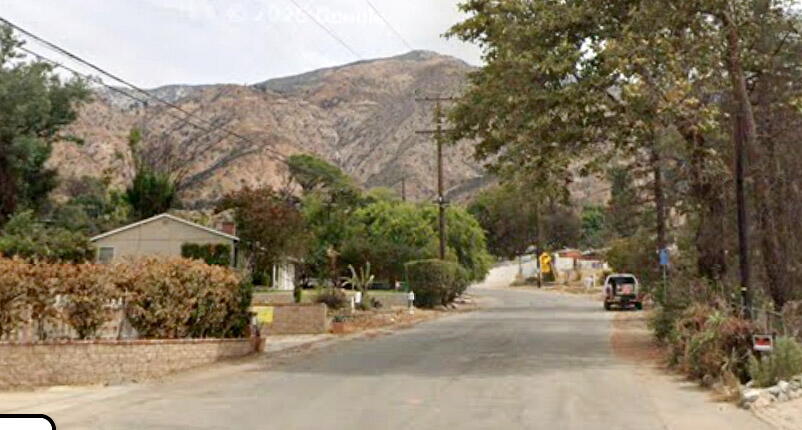
When homicide detectives respond to the discovery of human remains near a residential property in Altadena, California, the investigation immediately triggers a multi-agency forensic protocol led by the Los Angeles County Sheriff’s Department Homicide Bureau and the Los Angeles County Department of Medical Examiner. Because Altadena sits as an unincorporated community nestled against the San Gabriel Mountains, these cases bypass municipal police departments entirely, placing jurisdiction directly in the hands of county investigators who must navigate dense suburban neighborhoods, sprawling canyon interfaces, and complex environmental variables to establish identity, cause of death, and potential criminal liability.
A brief wire report announcing that remains have been located near a home leaves the public with more questions than answers. In the immediate aftermath of such a discovery, law enforcement releases minimal detail—often just a block number, a general timeframe, and confirmation that homicide investigators are on scene. Yet behind the yellow crime scene tape, a highly technical, methodical process unfolds. Understanding how these investigations operate reveals why definitive answers often take weeks or months, and why the geography of Altadena itself frequently complicates the search for truth. Recently making waves in related news: What Happens When Paradise Burns Before Dawn.
The Jurisdictional Reality of Unincorporated Altadena
Unlike neighboring Pasadena, which maintains its own municipal police force, Altadena is an unincorporated area of Los Angeles County. That distinction matters enormously when a major crime or suspicious death occurs. Patrol deputies from the Altadena Sheriff’s Station are typically the first to arrive when a resident, utility worker, or landscaper reports suspicious remains. Once a deputy visually confirms the presence of human bones or a body, the scene is frozen.
Local station deputies do not conduct the investigation. Under Los Angeles County Sheriff’s Department (LASD) policy, all unexplained deaths, suspected homicides, and discoveries of skeletal remains fall under the purview of the specialized Homicide Bureau, headquartered miles away in Commerce. This centralization brings elite investigative resources to a local neighborhood, yet it also introduces an immediate delay between the initial 911 call and the arrival of lead detectives, forensic identification specialists, and coroner investigators. Further insights regarding the matter are explored by The Washington Post.
During those initial hours, securing the perimeter becomes the primary objective. In a residential setting, this means restricting access to driveways, adjacent yards, and sometimes entire blocks. Neighbors suddenly find themselves unable to move their cars or walk their dogs while deputies establish a sterile command post.
Securing the Perimeter and Environmental Exposure
Altadena’s topography presents unique challenges that standard urban crime scenes rarely involve. The community transitions rapidly from flat, tree-lined suburban streets to steep foothills, washes, and heavy chaparral bordering the Angeles National Forest. When remains are found near a home—whether in a backyard, an overgrown side lot, or an adjacent ravine—investigators must contend with steep terrain, dense brush, and local wildlife.
Scavenging animals, including coyotes, raccoons, and birds of prey, frequently scatter remains across wide areas. What begins as a localized discovery behind a garage or near a fence line can quickly expand into a grid search spanning hundreds of yards. Detectives often call in search-and-rescue volunteers or specialized cadaver dogs to sweep the surrounding brush, ensuring no critical skeletal elements or personal effects are missed before the scene is released.
How Forensic Teams Process Residential Remains
Once the LASD Scientific Services Bureau and investigators from the Medical Examiner’s office arrive, the focus shifts from containment to meticulous documentation. Every millimeter of soil and vegetation around the remains holds potential evidence.
Crime scene investigators begin by photographing the area from multiple angles before anything is touched. They use laser scanning or photogrammetry to create a three-dimensional map of the scene, recording the exact spatial relationship between bones, clothing fibers, soil disturbances, and nearby structures. If the remains are partially buried or obscured by yard waste, forensic anthropologists are often brought directly to the property to oversee the excavation.
Excavating human remains requires archaeological precision. Using trowels, brushes, and fine screens rather than shovels, specialists carefully remove layers of dirt to preserve tool marks, insect activity, and trace evidence. Sifting the surrounding soil through fine mesh screens can recover tiny items—a dental filling, a shell casing, a button, or a fragment of jewelry—that would otherwise vanish into the earth.
Determining the Postmortem Interval
One of the first questions detectives ask the Medical Examiner is simple. How long have these remains been here?
Answering that question is notoriously difficult. In Southern California’s Mediterranean climate, the rate of decomposition fluctuates wildly depending on microclimates. Remains left in a shaded, damp ravine decompose at a completely different pace than those exposed to direct sunlight on dry, decomposed granite soil.
Forensic pathologists and anthropologists examine several indicators to estimate the postmortem interval:
- Soft Tissue Preservation: If soft tissue remains, investigators look at stages of decomposition, mummification, or adipocere formation, which occurs in moist environments.
- Entomological Evidence: Forensic entomologists collect blowflies, beetles, and larvae from the remains and surrounding soil. Because insects colonize a body in predictable waves, their developmental stages offer a biological clock for the time of death.
- Botanical Clues: Roots growing through clothing or skeletal cavities can provide a minimum timeframe, as botanists can count annual growth rings in woody roots to determine how many seasons have passed since the body was deposited.
- Weathering and Bleaching: Sun-bleached bones with longitudinal cracking indicate prolonged surface exposure, whereas dark, soil-stained bones suggest burial or heavy leaf-litter coverage.
Even with these tools, estimates frequently span weeks, months, or even years. That ambiguity directly impacts how detectives canvass the neighborhood. Asking a resident if they saw anything unusual last Tuesday yields concrete memories; asking if they noticed anything strange over the past two summers rarely produces actionable leads.
The Slow Science of Identification
Public speculation often assumes that DNA testing provides instant identification, much like on television dramas. Reality moves far more slowly. When remains are skeletonized or heavily decomposed, visual identification is impossible, and standard fingerprinting cannot be performed.
The Medical Examiner’s office relies on a hierarchy of scientific methods to establish a positive identification, starting with the fastest and least destructive options before moving to complex genetic extraction.
| Identification Method | Typical Turnaround | Primary Requirements | Key Limitations |
|---|---|---|---|
| Forensic Odontology | Days to 2 weeks | Intact teeth or jawbone; antemortem dental X-rays | Requires a suspected identity to locate dental records |
| Surgical Implants | Days to 1 week | Serial numbers on pacemakers, joint replacements, or plates | Only applicable if the decedent had specific medical hardware |
| Nuclear DNA Profiling | Weeks to several months | Marrow from long bones or intact teeth; reference samples | Degraded by heat, moisture, and soil acidity |
| Mitochondrial DNA | Several months | Any viable bone fragment; maternal relative reference | Shows maternal lineage rather than unique individual identity |
Forensic odontology—comparing postmortem dental X-rays against records from a missing person’s dentist—remains one of the most reliable and rapid methods available. Similarly, modern orthopedic implants and pacemakers carry unique serial numbers etched directly into the metal, allowing investigators to trace the device back to the specific hospital and patient within days.
When dental records and medical hardware are absent, forensic scientists turn to DNA. Extracting viable genetic material from weathered bone requires pulverizing a small sample, demineralizing it with chemicals, and purifying the remaining DNA strands. That profile is then uploaded to the Combined DNA Index System (CODIS), where it is compared against missing persons databases and reference samples provided by families of the missing. If no match exists in the system, the case can stall until investigative genealogy or new missing person reports bridge the gap.
Why Homicide Detectives Handle Non-Criminal Deaths
A common point of confusion in local news coverage stems from the involvement of homicide detectives. Seeing the headline that homicide investigators are on scene naturally leads neighbors to assume a murder has occurred. In Los Angeles County, that assumption is premature.
LASD protocol mandates that the Homicide Bureau respond to all unattended deaths where the cause is not immediately obvious, as well as every discovery of skeletal remains. Until the Medical Examiner conducts an autopsy or anthropological examination, nobody at the scene can definitively state whether a person died from foul play, suicide, an accidental overdose, or natural causes after wandering into an isolated area.
Altadena’s proximity to popular hiking trails in the San Gabriel Mountains means the area occasionally sees cases involving lost hikers or individuals experiencing medical emergencies or mental health crises who stray off established paths and into residential buffer zones. Furthermore, unhoused individuals sometimes seek shelter in dense backyard vegetation, abandoned structures, or dry washes, where an untreated medical condition or exposure can prove fatal without anyone noticing for months.
Distinguishing Trauma From Postmortem Damage
During the examination at the Medical Examiner’s facility in Boyle Heights, forensic pathologists and anthropologists look closely at the bones for signs of perimortem trauma—injuries that occurred at or around the time of death.
Gunshot wounds leave distinct beveling patterns on bone, while sharp-force trauma from a knife or blade creates characteristic V-shaped kerfs or nicks along ribs and vertebrae. Blunt-force trauma produces radiating fracture lines that behave differently in fresh, living bone than in dry, brittle bone.
The challenge lies in separating true perimortem violence from postmortem taphonomy, which encompasses everything that happens to a body after death. Rodents gnawing on bones leave parallel grooves that can superficially resemble tool marks to an untrained eye. Heavy machinery used in brush clearance, shifting rocks during winter rainstorms, and the weight of collapsing soil can all fracture bones long after death. Forensic anthropologists use high-powered microscopy to examine the edges of every fracture, checking whether the bone bent before breaking—a sign of fresh tissue—or snapped cleanly like dry wood.
The Impact on Neighborhoods and Property Owners
For the homeowners and neighbors living near the discovery site, the investigative process brings sudden, unsettling disruption. In most cases, the current residents of a property where remains are found have no connection to the death, particularly when the remains have been there for years or were deposited along an unfenced perimeter bordering a canyon or alley.
Yet the presence of investigators brings intense local scrutiny. Reporters gather at the edge of the yellow tape, drones occasionally buzz overhead, and neighborhood social media groups fill with rumors ranging from cold-case cartel hits to historical burial sites.
Property owners must navigate practical realities while detectives work. Law enforcement has the legal authority to secure a crime scene for as long as necessary to collect evidence, though detectives generally work quickly to clear residential yards once excavation and photography conclude. Once the Medical Examiner removes the remains and investigators lift the tape, the responsibility for restoring any disturbed landscaping or soil falls back on the homeowner.
Navigating the Information Vacuum
In the days following a discovery, the silence from official channels often frustrates the community. The LASD Information Bureau typically issues a brief press release asking anyone with information to call the Homicide Bureau, while the Medical Examiner’s online case portal lists the decedent as "John Doe" or "Jane Doe" with the cause of death marked "Deferred."
A deferred status does not mean investigators are stumped. It simply means the pathologist is waiting on toxicology screens, histology slides, or anthropological reports before signing a death certificate. Rushing a determination before all laboratory work concludes risks compromising a future criminal prosecution or misclassifying a homicide as an accident.
Detectives also deliberately withhold specific details—such as the exact location on the property, the state of dress, or specific items found nearby—as holdback evidence. If the case turns out to be a homicide, those unpublished details become essential for verifying confessions or separating genuine witnesses from false tips.
Tracking the Investigation Beyond the Initial Headline
For residents, journalists, and observers trying to follow a case after the news vans leave Altadena, the paper trail moves from street-level reporting to public records databases. Watching a few specific institutional touchpoints provides a much clearer picture of how the investigation progresses than relying on neighborhood rumor mills.
- The Los Angeles County Medical Examiner Case Search: Once a case number is assigned, the Medical Examiner’s public database updates when an identification is confirmed and when the cause and manner of death are finalized. A shift from "Deferred" to "Homicide," "Accident," "Suicide," or "Undetermined" marks the most critical turning point in the investigation.
- The National Missing and Unidentified Persons System (NamUs): If local DNA and dental comparisons fail to identify the remains, the Medical Examiner uploads biological profiles, clothing descriptions, and dental charts to NamUs, allowing families and law enforcement agencies nationwide to cross-reference cold missing-person files.
- LASD Homicide Bureau Bulletins: When a death is officially ruled a homicide and a victim is identified, detectives frequently release photographs of the victim or details about their last known whereabouts to generate targeted leads from the public.
Until those forensic milestones are reached, the scene near an Altadena home remains an open question—a quiet patch of suburban earth suddenly transformed into a complex puzzle of biology, geography, and criminal investigation.