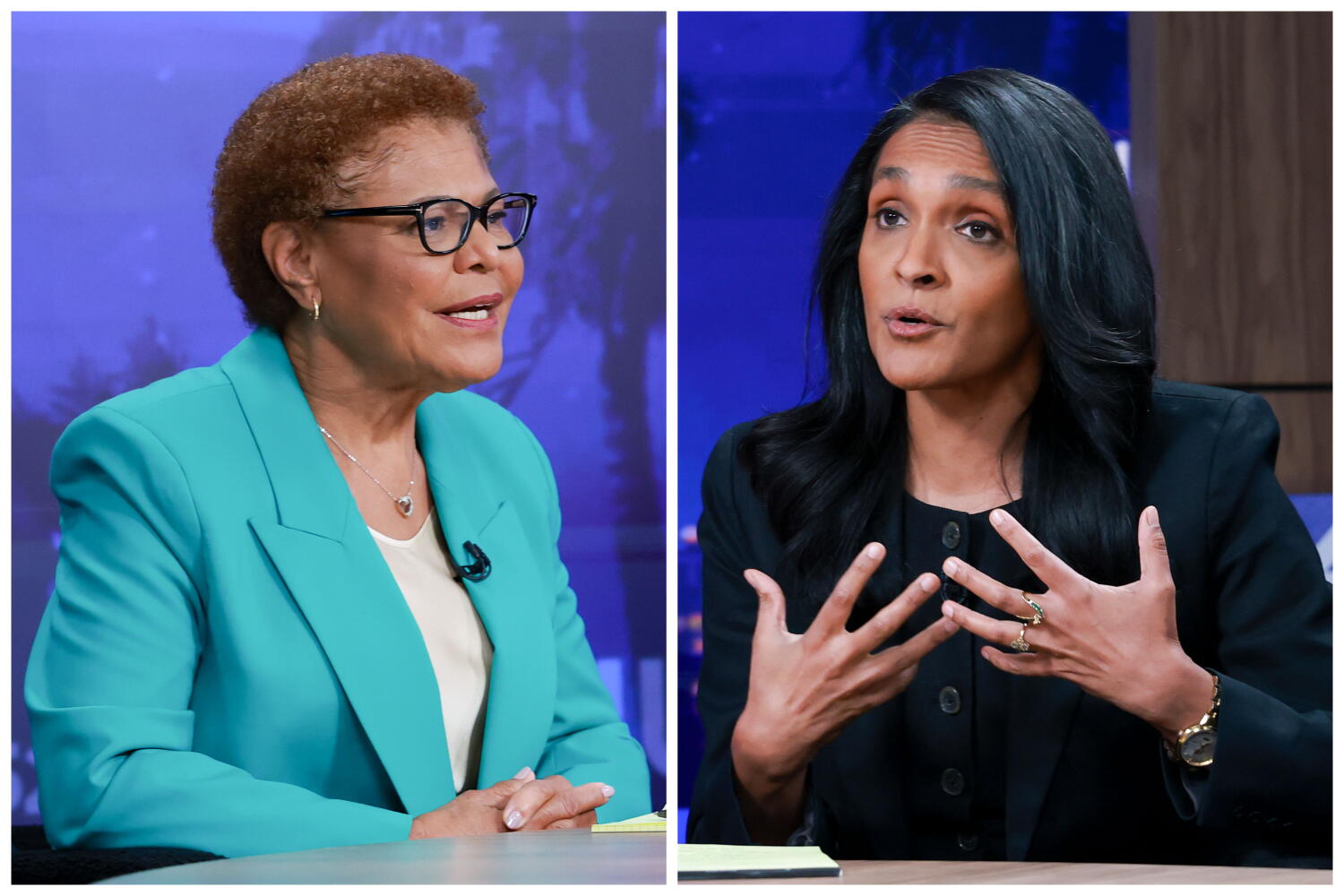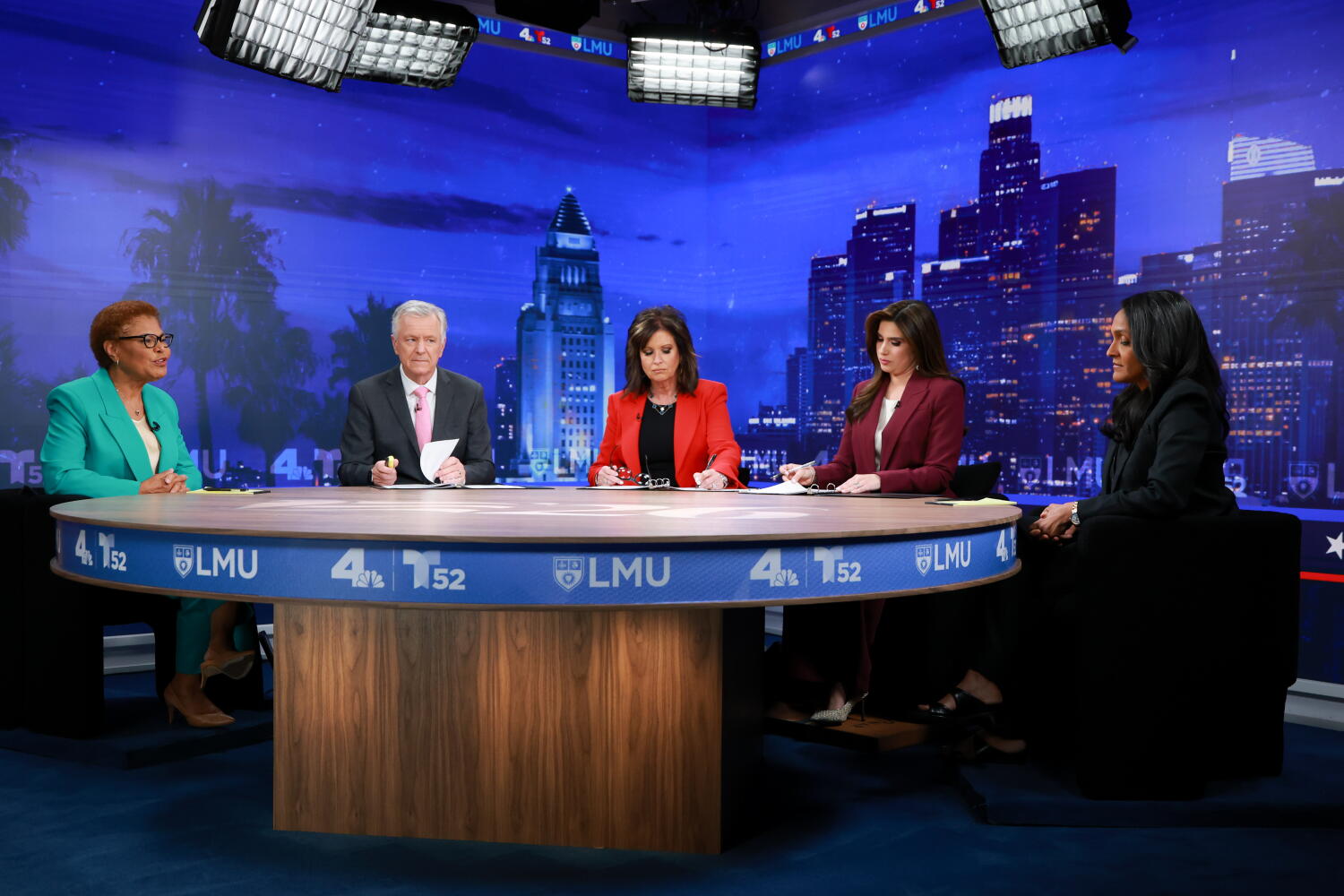
Under the harsh studio lights of Los Angeles television, two women who once stood on the same side of city politics locked eyes across a stage.
Minutes earlier, the talk had sounded like any other municipal debate. Potholes. Transit lines. Police budgets. The routine machinery of a city stretching from the Pacific surf to the San Fernando Valley. Then the tone shifted. A sharp question about leadership before the 2028 Olympics. A pointed warning about readiness. Suddenly, the debate stopped being a checklist of policy proposals and turned into a reckoning between former friends who had become wary rivals.
Watch enough of these debates, and you start to notice what the transcripts miss.
You do not just hear Mayor Karen Bass and City Councilmember Nithya Raman trading arguments over public safety, homelessness, and city hall performance. You hear two different theories of time colliding. Bass carries decades of electoral history—Assembly, Congress, City Hall—alongside the weight of an incumbent who has spent nearly four years inside the seat. Raman brings the urgency of a challenger who entered the race late, backed by younger voters and progressive organizers impatient with slow institutional change.
I have sat in enough living rooms and community halls in Los Angeles to know what happens after the cameras cut. People do not argue about city budgets in the abstract. They argue because a rent increase just swallowed half a paycheck, or because a bus line runs right past a door that feels farther from opportunity than it should, or because walking down a cracked sidewalk at dusk makes a parent's stomach tighten.
The Fault Line Beneath the Stage
Consider a hypothetical scenario to make the stakes tangible. Imagine a renter named Elena living in a garden apartment near Mid-City. She has lived in Los Angeles long enough to remember when a two-bedroom felt achievable on two steady incomes. Now she watches her grocery bill climb while traffic crawls along every major artery. When she tunes into a mayoral debate, she is not looking for political theater. She is trying to figure out who actually understands what it costs to stay put in this city.
Now place another hypothetical character across town in Silver Lake: Marcus, a graphic designer in his late twenties who came of age watching protests fill the streets and housing costs outpace every raise. To Marcus, waiting another four years for incremental promises feels like asking a thirsty person to wait for rain next season.
Elena and Marcus are fictional stand-ins, yet the tension between them reflects real polling and real shifts in the 2026 Los Angeles mayor's race. Surveys pointed to a generational divide: older, more established residents leaning more toward Bass and her union and institutional coalitions, while younger voters gravitated heavily toward Raman. Columnists analyzing the debates noted how rare it was to see such sharp friction between former political allies—two leaders who had once supported each other in prior campaigns before clashing over who should steer the city forward.
Why does a falling-out between former allies hit harder than a clash between lifelong enemies?
Because betrayal carries memory. When two people have shared a coalition, every disagreement carries an unspoken history: We used to agree on the problem. How did we end up seeing such different cures?
Experience Versus Impatience
In the debate exchanges examined by political columnists, Bass leaned on steadiness, public safety, and institutional experience. When a mayor has been in office for nearly four years, every new idea invites a fair question from voters: Why now? Proposals for better data on police shootings, expanded traffic cameras, or improved park childcare sound reasonable on paper, yet voters inevitably measure promises against the record already on the board.
Raman, by contrast, framed the race around urgency and basic city services—sidewalks, streets, transit, and housing affordability. When pressed on high-stakes choices like police leadership ahead of the 2028 Olympics, she faced scrutiny over whether big-picture vision could translate into crisp, immediate decisions.
Here is a metaphor for what voters weigh in moments like this: governing a city of nearly four million people is like steering a heavy cargo ship through fog. One captain argues that changing the helm mid-channel risks throwing everyone overboard; the other argues that staying the current course guarantees running aground. Neither argument is purely foolish. Both carry real risks.
I have to admit something honest here: watching a city wrestle with housing costs, homelessness, and public safety can leave even seasoned observers feeling exhausted and uncertain. There are no magic levers a mayor can pull on day one to erase decades of underbuilding or sudden spikes in the cost of living. Any candidate who claims otherwise is selling a story rather than a plan.
What Columnists Catch—and What Voters Decide
Political columnists dissecting a debate often focus on style—who sounded sharper, who landed a zinger, who looked rattled under follow-up questions. Those details matter in the moment. A single biting line can dominate morning radio and group chats for days.
Yet elections in Los Angeles rarely turn on debate style alone. Turnout rules, mail-in ballots, union ground games, and neighborhood loyalty shape the final tally just as much as anything said under television lights. In the 2026 contest, the race moved from a crowded primary—where Bass led first-round voting ahead of Raman and challenger Spencer Pratt—to a tense November runoff in which Raman ultimately defeated Bass.
Look closely at why that shift happened, and you see a broader pattern in big-city politics. Voters grow restless when everyday life feels harder despite years of speeches about progress. At the same time, voters hesitate when a challenger's vision feels untested against the messy realities of city hall budgets and bureaucratic inertia. The tug-of-war between memory and hope is rarely neat.
A dry live-chat transcript gives you play-by-play reactions from pundits typing in real time. That format has its place—it captures quick impressions while the adrenaline is fresh. Still, a live chat can blur the human stakes underneath the banter. Behind every talking point about police staffing, transit corridors, or zoning is a family deciding whether to stay in Los Angeles or pack up for somewhere cheaper.
Evening falls fast over Los Angeles once the Santa Ana wind dies down, turning palm silhouettes dark against a bruised orange sky while headlights stretch mile after mile down the freeway.
Analysis of the Los Angeles mayor race the day after Election Day
This video offers post-debate and post-election commentary from political analysts on the 2026 Los Angeles mayoral race between Karen Bass and Nithya Raman.