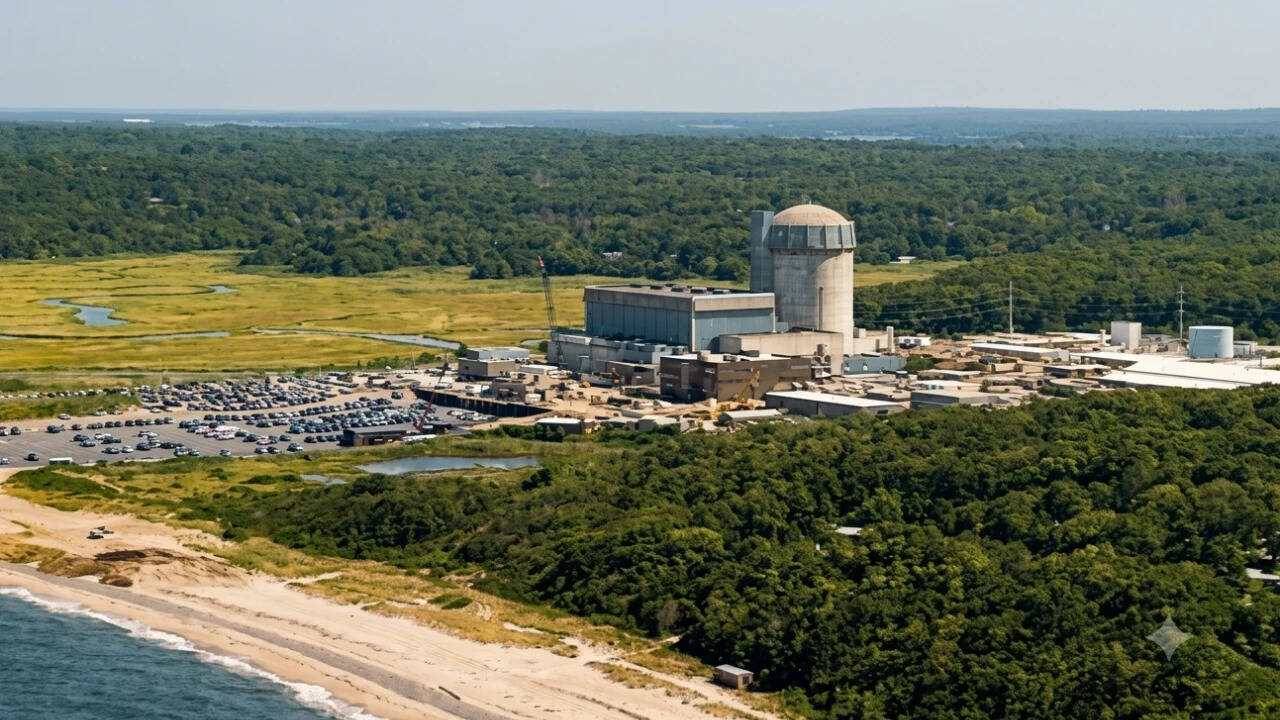
Chain link does something strange to a memory. After forty years of looking at security cameras and razor wire along a stretch of water, a neighbor stops seeing trees and starts seeing a perimeter.
That is the quiet shift behind New York agreeing to pay $28.25 million for land surrounding a retired nuclear power plant so the public can eventually walk, hike, and reach the shore again. On paper, a real estate deal of $28.25 million reads like a line item in a budget hearing. A number. A signature. A press release that leaves most readers scrolling past before they hit the third paragraph.
Yet numbers rarely hold the weight of what actually changed hands. A shoreline is not just dirt and deeds. It is where a town breathes when summer humidity hangs heavy over the valley, where a teenager learns the rhythm of tidal water, where an older resident sits on a bench watching ospreys dive while traffic hums a mile away.
For decades, land buffering heavy industrial energy infrastructure sat in a state of suspended animation. Closed off not always because every inch was radioactive—often because security buffers, utility easements, and liability walls stretched far wider than the reactor buildings themselves. Reclaiming that ground takes money, patience, and a willingness to argue over every acre.
The Fence That Outlived Its Purpose
Walk down any older river corridor in the Northeast and you feel the tug-of-war between utility and beauty. Rivers were working highways long before they were scenic overlooks. Mills, rail lines, quarries, and power stations claimed prime waterfront because water cooled turbines and moved freight.
When a nuclear plant shuts down permanently, the hum stops, yet the boundaries linger. Decommissioning is slow, methodical work that spans years and sometimes decades, governed by strict federal and state oversight. Even as fuel is moved to dry storage casks and structures are dismantled or prepared for long-term care, surrounding parcels can remain locked inside utility holdings or state-managed buffers.
To make this concrete, consider a hypothetical resident named Clara—a fictional character invented here to trace a very real human dilemma. Clara grew up ten miles upriver, fishing for striped bass with her grandfather before high-security fencing became standard across energy sites after 2001. To Clara, the closed gates never felt like a personal insult when the plant was running and lighting millions of homes. Once the reactors went dark, though, the locked trails started to feel like a door left shut in a house everyone else had already moved out of.
That feeling is easy to dismiss if you live far from industrial coastlines. Easy to wave away as nostalgia. Still, ask anyone who has watched a neighborhood lose access to woods or water: exclusion changes how people relate to the place they call home.
Here is a metaphor that helps make sense of what happens when public land is locked behind industrial buffers: treat a town's shoreline like a shared kitchen table. For years, one family member—say, the person paying the electric bill—needed half the table for heavy machinery and blueprints. Even after the machinery is gone, leaving stacks of old folders across the wood keeps everyone else eating on the floor. Clearing the table costs effort, and someone has to decide what stays and what goes.
Why $28.25 Million Is Only the Opening Bid
Spend enough time around environmental remediation and land conservation and you learn one hard truth early. Buying the dirt is rarely the finish line.
I have stood along former industrial riverfronts where the weeds were knee-high and the chain link had rusted through at the bottom, listening to engineers talk about soil sampling, stormwater runoff, old access roads, and perimeter walls that had to come down carefully. You smell damp earth, crushed gravel, and river silt. You hear distant cicadas and the low thrum of a passing barge. Everything looks peaceful enough to bring a picnic blanket, yet beneath your boots sits decades of industrial history that cannot simply be wished away.
When a state commits $28.25 million toward acquiring land around an abandoned nuclear site for public access, two questions immediately collide in the minds of skeptical taxpayers. First, is the land genuinely safe and practical for ordinary people to visit? Second, what will it cost next to build trails, parking, signage, and ongoing maintenance so the space does not turn into an neglected patch of brush?
Those doubts are fair. Honestly, if someone told me a former nuclear buffer zone was opening to hikers tomorrow, my first instinct would not be blind applause. I would ask who tested the soil, where the boundaries of active decommissioning sit, how emergency access works, and whether the state has budgeted for upkeep five and ten years down the road. Trust in these projects is earned through transparency, not slogans.
Consider what happens next when a government buys buffer land without a clear operational plan: a ribbon gets cut once, a handful of photos run in the local paper, and then overgrown paths and overflowing trash cans sour the goodwill before families ever make a habit of going there. Good land policy requires follow-through long after the check clears.
Safety, Stigma, and the Quiet Math of Risk
Nuclear power carries a heavier emotional shadow than almost any other way we boil water to spin a turbine. Mention radiation and people do not reach for a slide rule first; they reach for fear, cold-war movies, or headlines from half a world away.
Yet risk in land reuse is not a vibe. It is a set of specific engineering and regulatory boundaries. At a retired nuclear plant, the active reactor containment and spent fuel management areas remain tightly controlled, monitored, and regulated under strict federal standards, while buffer parcels around the perimeter often consist of woods, fields, transmission corridors, or shoreline that served as security zones or future expansion land.
Think of it like a house with a locked basement workshop. You do not need to let guests wander into the workshop where power tools and chemicals are stored to invite friends onto the front porch and into the backyard garden. You keep the workshop locked and secured, and you make sure the yard is clean, graded, and safe for footsteps.
Stigma still lingers, of course. Some residents will wonder whether walking near a decommissioned plant carries hidden hazards. Others will worry about traffic on quiet two-lane roads or whether new visitors will leave litter behind. Both concerns deserve straight answers grounded in environmental assessments and clear public notices rather than brushed-off dismissals.
But the real problem lies elsewhere: when fear and apathy go unanswered, they leave prime ecological and recreational land trapped in limbo—too quiet to serve the public, too expensive to ignore.
What Public Access Actually Gives Back
Why go to all the trouble and expense of opening land next to a closed nuclear facility when there are already parks across the state?
Because geography is stubborn. People do not live evenly across a map, and access to open space along major waterways is often uneven, fragmented by private estates, rail lines, and old industrial footprints. Every mile of connected trail or preserved shoreline adds up to real quality of life for nearby towns.
Imagine another hypothetical figure—this time a fictional local high school biology teacher named Mateo. Mateo spends half his spring trying to get students excited about watershed ecology using textbooks and indoor slides. Put those same teenagers on a river bank with binoculars, a water-testing kit, and a real view of how tidal marshes filter runoff, and suddenly a textbook chapter turns into something they can touch.
Public access also reshapes local economies in quiet, durable ways. Hikers, paddlers, birdwatchers, and weekend visitors stop at local bakeries, hardware stores, and cafes. They do not require a massive convention center to spend twenty dollars on lunch and gas. Over years, accessible green space and waterfront trails often help smaller river communities attract younger families and remote workers who care deeply about outdoor life.
There is also a deeper civic message tucked inside a deal like this. Turning land tied to a shuttered power plant into public space signals a transition—from extraction and containment toward shared stewardship. It says this place still has a future beyond the machines that once defined it.
The Long Work Between Deal and Trail
Anyone hoping for instant transformation should brace for patience. Turning acquired buffer land into a welcoming park or trail network takes surveys, environmental reviews, engineering plans, permits, and construction crews. Fences come down in stages. Brush gets cleared. Bridges and overlooks get designed to handle heavy rain and winter freeze-thaw cycles without washing out.
Along the way, community voices matter. Local officials, conservation groups, neighbors, and outdoor enthusiasts rarely agree on every detail from day one. Some want rustic footpaths left almost wild; others want paved paths that strollers and wheelchairs can navigate easily. Some push for boat launches; others want quiet zones to protect nesting birds.
Friction in those conversations is not a sign of failure. It is proof that people care enough to picture themselves there.
And if the state pairs its $28.25 million land purchase with honest communication, thorough site checks, and steady maintenance funding, the investment can pay dividends for generations—long after today's political debates fade into old newsprint.
One day, a child will walk down a wooded path toward the water without knowing—or needing to know—every line of the real estate contract that made the path possible, stopping only because sunlight is dancing across the river and a heron just lifted off the reeds.