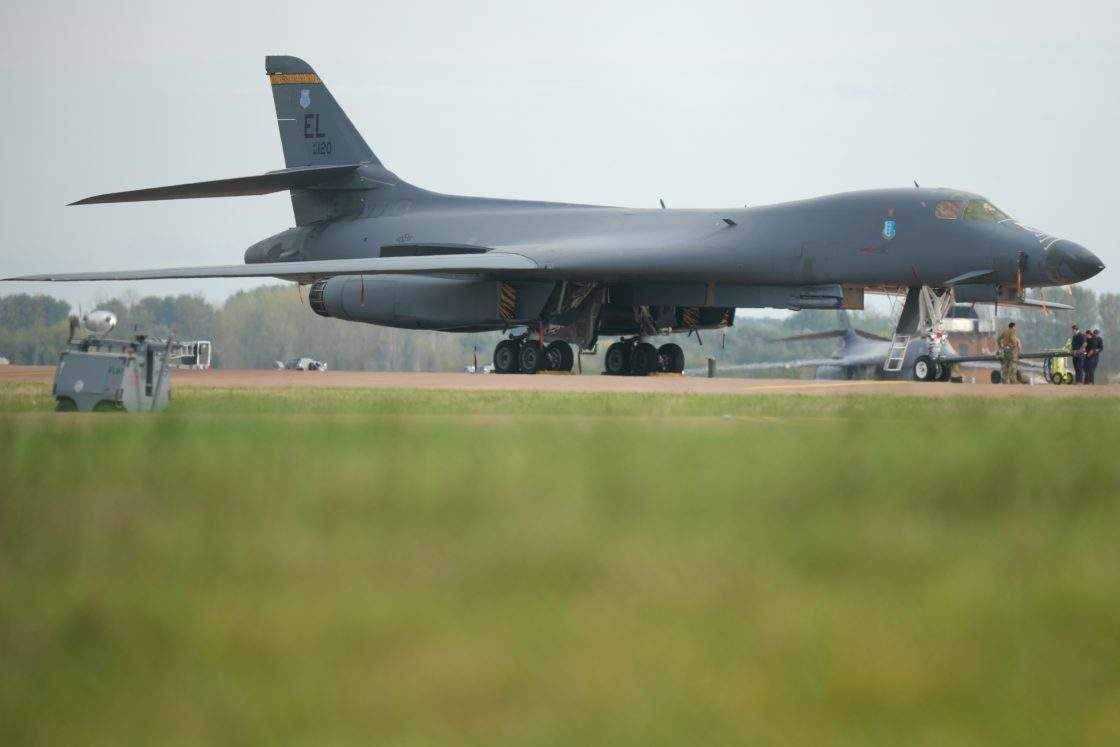
Cold.
The rain on the eastern border does not fall in clean sheets; it hangs in the air like wet wool, smelling of pine resin, diesel exhaust, and peat moss from the bogs just a few kilometers east. If you stand beside a gravel track in northeastern Poland or along a quiet stretch of the Estonian highway, you can almost hear the hum of a distant generator and wonder what a map in Brussels really means when your kids are asleep two rooms down the hall.
Maps are tidy. War is not.
For years, NATO’s military planning lived inside a quieter, more forgiving assumption: if a crisis ever flared along the alliance’s eastern edge, allied forces could rely on reinforcement after the fact, arriving in waves from across the Atlantic or western Europe while local units held space. Russia’s full-scale invasion of Ukraine in 2022 shattered that patience. Suddenly, speed and depth were no longer abstract staff-college debates. They were questions of survival before a single reinforcement convoy even cleared a port.
Out of that reckoning came a sharper, three-stage logic often summarized in defense circles as block, blunt, break.
To understand what those three words actually mean—and why they feel so urgent to the people living inside the frame—let us step into a hypothetical scenario grounded in real geography and real military doctrine. Picture a fictional town we will call Karsky, sitting near the Suwalki gap, where Poland meets Lithuania and Belarus and Russia’s Kaliningrad exclave press close around a narrow corridor of forests, lakes, and two-lane roads.
The Quiet Line Before the Storm
Tomasz is a hypothetical civil-defense coordinator in Karsky with grease under his fingernails and a stack of laminated maps in the trunk of his estate wagon. At forty-four, he knows every culvert that floods in April, every timber bridge that groans under a heavy grain truck, and every cellar in town that holds water when the frost leaves the ground.
When people outside the region read about NATO’s new Russia war plan, they often picture a single dramatic clash of armored divisions on an open plain. Tomasz thinks about bridges. A sixty-ton main battle tank or a heavy recovery vehicle does not care about diplomatic communiqués; it cares about load ratings, soft shoulders, and narrow bottlenecks where a stalled truck can snarl a column for hours.
That is why the shift in NATO defense planning matters so much on the ground. Under its regional defense plans—approved at the 2023 Vilnius summit and continually refined since—the alliance moved away from piecemeal contingency thinking toward comprehensive, region-specific war plans tied directly to force posture, logistics, and command readiness. Instead of treating eastern deterrence as a tripwire meant mostly to summon help later, planners have been building toward denial by punishment: stopping an incursion right at the threshold, degrading the attacker’s momentum and supply lines, and striking deep enough to rob Moscow of the ability to sustain a prolonged campaign.
Consider what happens next if deterrence fails and a border crisis erupts in the middle of the night.
Stage One: Block at the Threshold
Start with block.
In plain terms, blocking means refusing to hand over territory easily at the start of a fight. For decades, commentators debated whether the Baltic states could be held in the opening days of a sudden Russian push. Modern NATO doctrine answers that doubt by pushing readiness, forward-deployed multinational battle groups, air and missile defense, intelligence, and pre-positioned equipment closer to the frontier—backed by new rotational and high-readiness force models designed to move tens of thousands of troops within days rather than weeks.
Think of block as setting a heavy iron gate across a narrow canyon before the first wagon reaches the pass. You do not need to win the entire war in the first six hours, and honestly, no serious planner pretends a small frontier unit can do everything alone against a massed force. What you must do is deny a quick fait accompli—preventing an adversary from grabbing a strip of land, digging in, and daring the rest of the alliance to fight a bloody counteroffensive to win it back.
In our hypothetical Karsky, block is not just soldiers in camouflage. It is territorial defense volunteers who know the back roads better than any satellite photo. It is engineers dropping pre-planned obstacles, mining approaches under clear rules of engagement, and routing civilian traffic away from military arteries before gridlock turns a highway into a parking lot.
Tomasz’s phone rings at 3:15 a.m. in this hypothetical scenario. There is no siren yet, only a coded alert and the low, unmistakable thrum of heavy engines moving south and west through the dark. His hands shake slightly as he reaches for his boots—not because he is a coward, but because fear is a rational response when your own neighborhood sits on a hinge of European history.
Anyone who claims war planning is purely bloodless arithmetic has never stood in a kitchen at three in the morning wondering whether the school bus will run at seven.
Stage Two: Blunt the Momentum
If block is the iron gate, blunt is what happens when the pushing starts.
An advancing military force is like a freight train running downhill: its danger comes not just from the engine in front, but from the weight and momentum of everything behind it. Artillery batteries, fuel tankers, ammunition trucks, electronic warfare jammers, command posts, and follow-on infantry keep the attack alive. If you only shoot at the front bumper while the fuel and shells keep rolling in behind it, the train keeps coming.
Blunting is about breaking that momentum right along the contact zone and just behind it. It relies on layered air and missile defense to keep hostile aircraft and drones from owning the sky, combined with precision fires, anti-armor systems, electronic warfare, and maneuver forces that tear into lead formations and disrupt their cohesion.
Here, the metaphor of a river helps explain why logistics and fires are inseparable. Imagine a spring flood rushing down a mountain valley. Building a sandbag wall at the bottom of the hill is one thing; ripping out the beaver dams upstream and diverting channels before the water piles up is another. NATO’s renewed focus on integrated air and missile defense, munitions stockpiles, and cross-border reinforcement corridors—often called military mobility—is all about keeping that river from cresting over the towns in the valley.
And this is where an uncomfortable truth surfaces for anyone watching European security from afar.
Plans on paper do not fire themselves. A war plan can call for rapid reinforcement from ports in the Netherlands or Germany across Poland and into the Baltic states, yet real-world bottlenecks still bite: rail gauge differences, aging bridges, customs and regulatory friction that planners have worked to streamline, and the sheer arithmetic of artillery shells and air-defense interceptors in an era of drone-heavy attrition warfare.
In Ukraine since 2022, modern war has proven brutally hungry. Millions of shells, thousands of drones, constant electronic jamming, and relentless strikes on energy and transport nodes have turned industrial capacity into a frontline weapon. NATO’s planners have watched every day of that grind and adjusted their assumptions accordingly. They know an adversary that adapts quickly—shifting drone frequencies, dispersing logistics, leaning on mass—cannot be defeated with peacetime habits or half-empty magazines.
Stage Three: Break the Capacity to Fight
Then comes break.
If block stops the initial lunge and blunt drains the attacker’s forward push, break is aimed at the deeper machinery that makes aggression possible in the first place.
In military strategy, breaking an attacker means striking command-and-control nodes, long-range logistics hubs, air bases, missile launchers, and sustaining networks deep behind the front lines so the invading force cannot regenerate combat power. Rather than fighting a purely reactive war where allied forces only parry blows on NATO soil, the alliance’s evolving doctrine emphasizes imposing severe costs across the wider operational theater—making it clear to Moscow that starting a war with NATO would threaten its own military assets and war-making capacity at scale.
That word—break—carries weight. It is also the point where worry creeps into even the steadiest minds.
Because escalation is not a neat dial you can turn up one click without risking a jump. Every strategist who studies NATO-Russia dynamics knows the razor’s edge involved: deterring aggression decisively without triggering an uncontrolled spiral, especially given Russia’s nuclear arsenal and its willingness to use hybrid pressure—sabotage, GPS jamming, cyberattacks, undersea infrastructure risks, and disinformation—well below the threshold of open war.
I do not pretend to have a neat formula that makes those tensions disappear. Anyone who tells you modern deterrence is simple is selling certainty they do not possess. What is clear, though, is that ambiguity invites miscalculation. When a potential aggressor believes the border is soft, the alliance is slow, or political will is fractured, temptation grows. When the response looks fast, coordinated, and costly from the first hour, calculation changes.
The Invisible Stakes Behind Every Line
Back in our hypothetical Karsky, dawn breaks gray and cold. Tomasz stands by a stone railway overpass watching a convoy of trucks and armored vehicles move along a secondary route. The engines rumble through the damp air. A dog barks from a yard half a mile off.
Most people in Brussels, Washington, London, or Berlin will never hear that sound. For them, NATO’s new Russia war plan is a headline, a briefing note, a debate over GDP defense spending targets—whether 2 percent is a floor or a ceiling, how fast factories can ramp up production, and whether American commitments remain rock-solid alongside growing European leadership.
Those debates matter enormously. Defense budgets buy radar sets, patriot and iris-t interceptors, artillery barrels, spare parts, and training hours. Without industrial muscle behind the war plan, block, blunt, break is just clever phrasing on glossy paper.
Yet the truest measure of a defense plan is quieter and more human. It is measured in whether a nurse in Riga, a farmer near Suwalki, or a truck driver in eastern Poland can wake up without a knot of dread in their stomach. It is measured in civilian-military cooperation that works before crisis hits—hospitals prepared for surge casualties, municipalities stocked with generators and water reserves, and citizens who know their roles without being panicked into hysteria.
History has a way of punishing complacency on the eastern marches of Europe. In 1939, borders that looked quiet on spring maps became arenas of ruin within weeks. In 2014 and 2022, warnings that sounded "alarmist" to comfortable capitals turned into shattered cities and millions of displaced lives. Remembering that history is not warmongering; it is basic honesty.
At the same time, deterrence is meant to prevent the war plan from ever having to be executed in full. The paradox of credible military planning is that its highest success is silence—a border where nothing happens because everyone understands what would happen if someone crossed it.
Tomasz folds his laminated map, slips it back into the trunk, and pulls his collar up against the wind. The mist still clings to the pines, heavy and cold, holding its breath over the road.