The recent cluster of Hantavirus infections linked to a high-profile cruise line has triggered an urgent World Health Organization investigation into a possibility that virologists have long feared. While traditionally transmitted through contact with rodent droppings, evidence from this latest outbreak suggests a shift toward human-to-human transmission. This development would fundamentally alter how the international community monitors and contains one of the deadliest zoonotic threats in existence. Current data indicates the virus may be evolving beyond its environmental constraints, moving directly between passengers in the close quarters of a maritime environment.
The Rodent Barrier Has Been Breached
For decades, the medical consensus on Hantavirus was comfortable, perhaps even complacent. You caught it from breathing in dried remnants of mouse urine or handling infested nesting materials. It was a disease of the rural cabin, the dusty shed, or the neglected attic. It was not a disease of the luxury dining room or the cruise ship promenade.
The outbreak on the high seas has shattered that geography. When dozens of individuals with no common environmental exposure—other than breathing the same recycled air and sharing the same social spaces—fall ill simultaneously, the old explanation of "incidental rodent contact" falls apart. Investigative teams are now looking at the Andes virus strain, a specific lineage of Hantavirus found in South America that has previously shown a limited, terrifying ability to jump from person to person.
If this cruise outbreak is confirmed as human-to-human, we are no longer looking at a localized hygiene issue. We are looking at a respiratory threat with a mortality rate that can reach 35 percent. For comparison, that is significantly more lethal than most seasonal influenza strains or even the initial waves of the recent global pandemic.
Engineering the Perfect Hot Zone
Cruise ships are effectively floating laboratories for viral transmission. They combine high population density with sophisticated but closed ventilation systems. While modern ships have upgraded their HEPA filtration, these systems are designed to catch particulates, not necessarily to stop the intimate, face-to-face spread of a highly concentrated viral load.
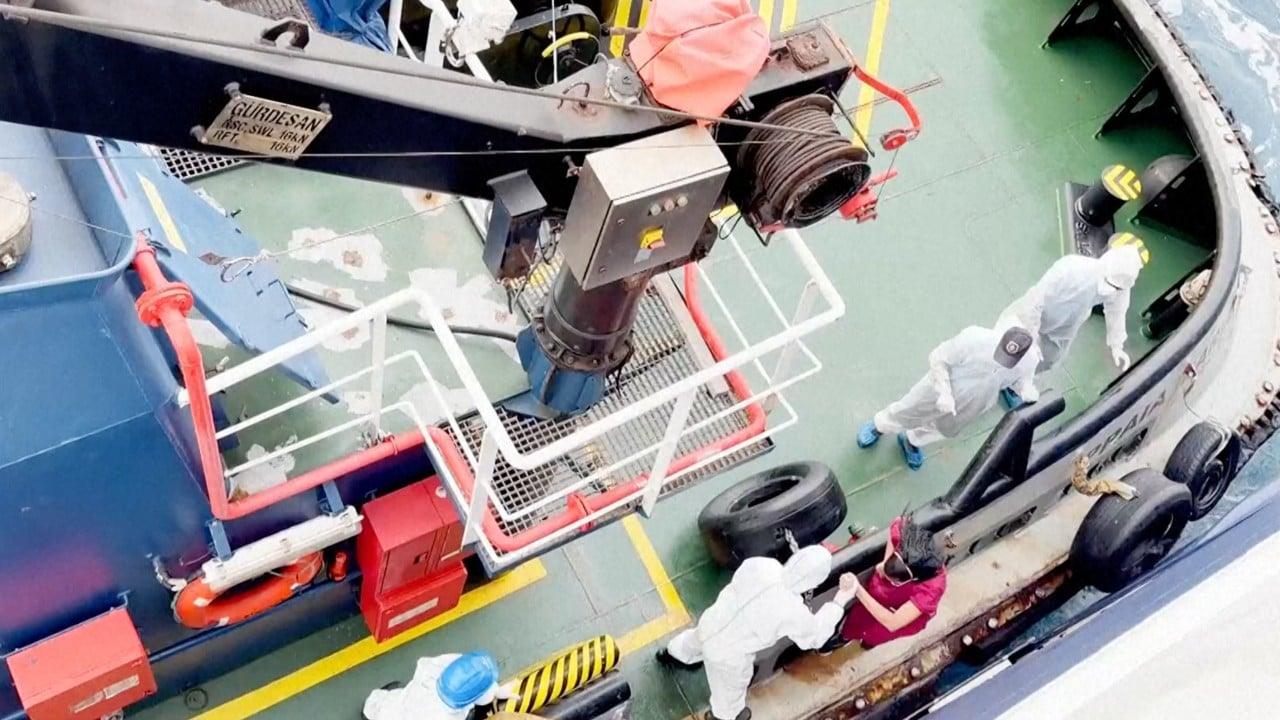
Epidemiologists investigating the timeline of the current outbreak noted a "staggered" infection pattern. The first wave hit a small group of travelers who had participated in a land excursion near a wooded port. However, the second wave involved crew members and passengers who never set foot off the ship. This secondary peak is the "smoking gun" for investigators. It suggests the virus did not just arrive on the ship; it found a way to stay and move.
The incubation period for Hantavirus is notoriously long, often ranging from one to eight weeks. This creates a massive tracking blind spot. A passenger could be infected in the middle of the Atlantic, disembark in a major international hub like Singapore or London, and not show symptoms until they are back in their home community. By then, the chain of transmission is invisible.
The Biological Reality of Hantavirus Pulmonary Syndrome
To understand why this shift is so dangerous, one must look at what the virus does once it enters the body. Most respiratory viruses focus on the upper airway. Hantavirus goes for the endothelium, the thin lining of your blood vessels.
The Leakage Mechanism
As the immune system tries to fight the virus, it triggers an overwhelming inflammatory response. The capillaries in the lungs begin to leak fluid. This isn't a typical "cold" where you have a runny nose. This is a systemic failure where the lungs literally fill with the body’s own plasma. Doctors call this Hantavirus Pulmonary Syndrome (HPS).
Why Transmission is Changing
The shift toward human-to-human spread likely involves a change in the viral load present in saliva or respiratory droplets. Usually, the virus stays deep in the lower respiratory tract, making it hard to cough out. A mutation that allows the virus to replicate higher up in the throat would turn every sneeze into a delivery system. This is the specific mechanism the WHO is currently sequencing in mobile labs.
A Systemic Failure of Surveillance
Public health agencies have been caught off guard because their surveillance models are built on historical data. They look for mice, not people. When a person shows up at a hospital with fever, muscle aches, and shortness of breath, the standard triage question is: "Have you been around rodents?"
If the patient says no, Hantavirus is often moved to the bottom of the list. They are tested for COVID-19, the flu, or pneumonia. By the time Hantavirus is considered, the patient is often in critical respiratory distress. This diagnostic lag is where the virus wins.
The cruise industry is particularly vulnerable to this lag. Shipboard doctors are well-equipped for minor injuries and norovirus outbreaks, but they are not typically prepared to manage a Level 4 biohazard. The current protocols for "flu-like illness" on ships are insufficient for a virus that kills one in three patients. Isolation rooms are limited, and the pressure to keep the ship moving often outweighs the impulse to quarantine the entire vessel at the first sign of a cough.
The Global Logistics of a Zoonotic Jump
The bridge between animals and humans is narrowing. As urban centers expand into previously wild areas, the contact between humans and rodent reservoirs increases. But the cruise outbreak represents a second, more dangerous bridge: the one between infected humans and the global travel network.
Logistically, containing a Hantavirus that spreads between people is a nightmare. Unlike some viruses that die quickly on surfaces, Hantavirus can remain viable for several days depending on the temperature and humidity. A single infected traveler touching a handrail, followed by a hundred others over the course of a day, creates a massive web of potential exposure.
The WHO’s move to investigate this as a human-to-human event isn't just a precaution. It is an admission that the old rules no longer apply. We are seeing a virus that has spent thousands of years in the shadows of the forest suddenly finding a way to thrive in the fluorescent-lit corridors of modern infrastructure.
The Reality of Treatment and Prevention
There is no vaccine for Hantavirus available in the West. There is no specific antiviral treatment that has been proven effective in large-scale trials. Treatment is purely supportive: intubation, oxygen, and intensive care.
If the virus is truly moving between humans, the medical community's only real tool is aggressive contact tracing and rapid isolation. This requires a level of transparency that the travel industry has historically resisted. Admitting a ship is a vector for a deadly virus is a commercial disaster. Yet, the cost of silence is a silent spread that could hit land before it is even identified.
The current investigation is focusing on the saliva samples of the survivors. They are looking for specific genetic markers that indicate the virus has adapted to bind more easily to human ACE2 receptors or other entry points. This is molecular detective work with the highest possible stakes.
Necessary Adjustments for the Travel Industry
The immediate response cannot be limited to better cleaning. It requires a fundamental shift in how air is circulated on long-haul transport. Recirculated air is a cost-saving measure, but it is also a viral superhighway.
- Redesigning Airflow: Moving toward 100 percent fresh air intake in common areas.
- Real-time Sequencing: Implementing portable genetic sequencing tools on major vessels to identify pathogens within hours, not weeks.
- Revised Triage: Training medical staff to recognize the "rapid crash" profile of HPS, regardless of whether the patient has seen a mouse.
We are currently witnessing the evolution of a pathogen in real-time. The Hantavirus has moved from the forest floor to the cabin floor. Ignoring this transition because it doesn't fit the traditional "rodent-only" model is a recipe for a public health catastrophe that the world is currently ill-prepared to handle.
Standard PCR tests must be updated to include Hantavirus panels for any cluster of severe respiratory distress, regardless of the patient's travel history or environment. Waiting for the "classic" signs of rodent exposure is no longer a viable medical strategy. The virus has changed its tactics; we must change ours.