History is rarely written in grand halls. More often, it is written in the sweat of nervous palms, the quiet ticking of a clock, and the heavy weight of a pen resting on paper.
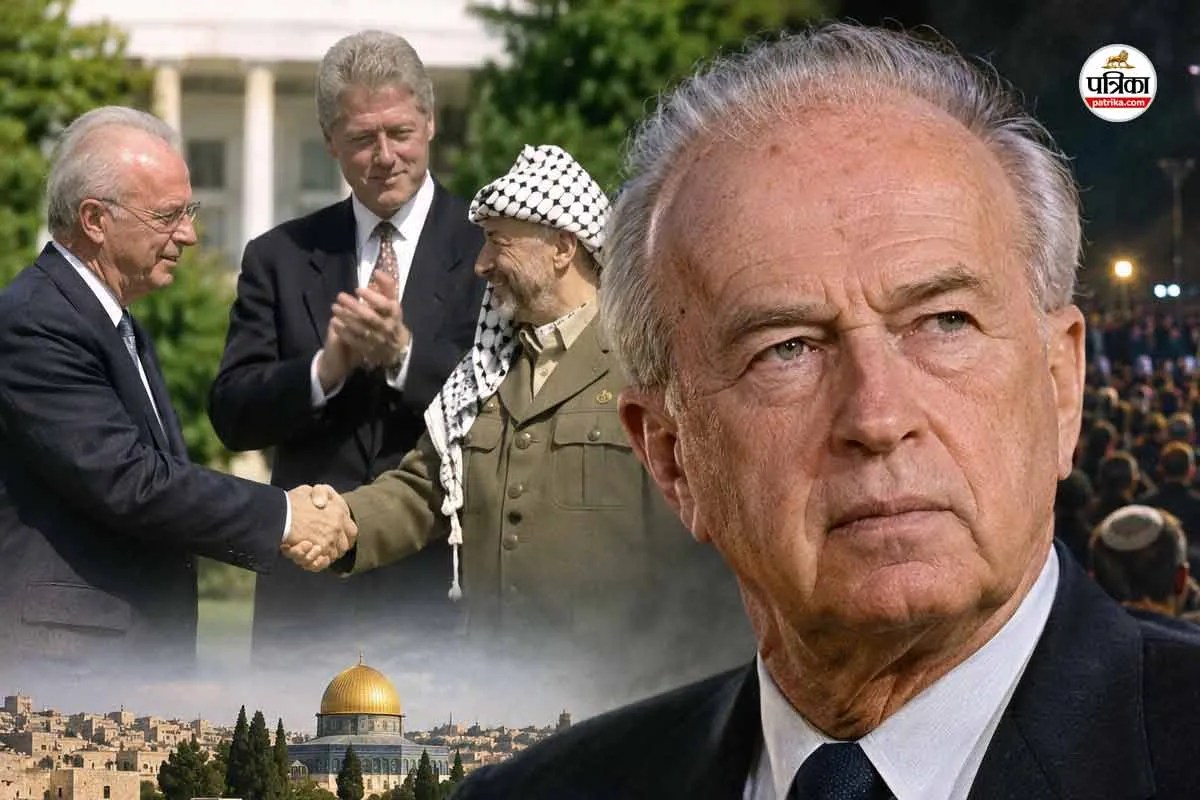
Picture a sun-drenched lawn in Washington D.C., September 1993. Cameras flash like summer lightning. Two men, bitter enemies for decades, step toward one another. One wears a military uniform etched with the memories of endless conflict. The other wears a civilian suit, his face lined with the map of a lifelong struggle. When Yitzhak Rabin and Yasser Arafat extend their hands, the world holds its breath. Bill Clinton stands between them, a quiet architect encouraging a miracle
The Handshake That Shook History and Cost a Life
news
Ink dries quickly on parchment. Lives do not.
Step back into the humid autumn air of Washington, D.C., in 1993. On the South Lawn of the White House, two men who had spent decades teaching their people to hate one another reached out across an invisible chasm. Yitzhak Rabin, the battle-hardened Israeli Prime Minister with the heavy brow and the reluctant posture, extended his hand. Yasser Arafat, the leader of the Palestine Liberation Organization wrapped in his familiar checkered keffiyeh, took it.
President Bill Clinton hovered behind them, a nervous director orchestrating a fragile peace. Millions watched through glowing television screens, holding their breath. For a brief, intoxicating second, the impossible felt tangible. People wept in cafes from Tel Aviv to Ramallah. They dared to imagine a future where children could grow old without sirens wailing in the night.
That moment was the Oslo Accords. It was supposed to be a roadmap, a blueprint for mutual recognition and a gradual transfer of self-governance. Instead, it became a slow-burning fuse.
To understand why that handshake ultimately led to a pool of blood on a Tel Aviv plaza, we have to look past the diplomatic handshakes and examine the human cost of sudden change. Peace, when forced upon populations steeped in generational trauma, is terrifying.
Consider the perspective of an ordinary citizen living in a contested neighborhood during that era. Every bus ride was a gamble. Every marketplace held a hidden threat. When leaders in suits announce that enemies are now partners, the psychological gears do not turn overnight. Fear does not evaporate because of a photo opportunity.
On one side, Israeli society fractured. Many viewed the accords as an existential surrender. They argued that handing land over to a historical adversary was akin to inviting catastrophe. Extremism began to curdle in the shadows, fueled by a toxic cocktail of religious fundamentalism and deep-seated political paranoia.
On the other side, skepticism reigned supreme. Palestinians watched checkpoints remain in place. They saw settlements expand even as negotiations dragged on. To many on the ground, the accords felt less like liberation and more like a gilded cage managed by proxy.
Yet, the heaviest price was paid by the architect himself.
Yitzhak Rabin knew the risks. He was no wide-eyed idealist. He was a former military general who understood the brutal calculus of war better than anyone. When he chose peace, he did so with open eyes, knowing it would alienate his base and infuriate the hardliners. He famously remarked that you make peace with your enemies, not your friends.
That conviction sealed his fate.
On November 4, 1995, a mass peace rally filled Kings Square in Tel Aviv. Rabin stood before a massive crowd, singing a Hebrew song of peace, a lyric sheet tucked into his pocket. The energy was electric, heavy with hope.
As he walked down the steps toward his waiting car, a radical Jewish nationalist named Yigal Amir emerged from the chaos. Three gunshots cracked through the night air.
The song of peace stopped instantly. The lyric sheet, stained with the Prime Minister's blood, fell to the pavement.
In that single, violent instant, the Oslo Accords suffered a mortal wound from which they would never recover. The extremist who pulled the trigger did not just kill a man; he murdered an entire paradigm of possibility. He proved that violence can violently interrupt the arc of history, dragging nations back into the dark.
Decades later, the echoes of those three gunshots still reverberate. The borders remain contested. The wounds remain raw. The map of the region is a patchwork of fractured trust and lingering resentment.
History is rarely written in a straight line. More often, it is forged in the fires of human contradiction—torn between the desperate hunger for a better tomorrow and the paralyzing grip of yesterday's grievances. The handshake on the White House lawn proved that enemies can meet in the middle, but Rabin's sacrifice demonstrated just how brutally expensive that middle ground can be.