Picture walking into your local grocery store on a Monday morning, heading straight for the yogurt and frozen peas, and finding the shelves stripped bare because the freezers hit 50°C overnight. That isn't a weird hypothetical. In October and November 2026, coordinated cyberattacks slammed into supermarket chains across Europe, hijacking refrigeration controllers and turning cold aisles into heat traps.
When cyberattacks hit European supermarket chains and disrupt refrigeration systems, it proves that digital sabotage doesn't just lock up spreadsheets or steal credit card numbers. It can melt equipment, trigger fire sprinklers, wipe out tons of fresh food, and shake public trust in the grocery supply chain. Honestly, a lot of retailers treated cooling gear like dumb metal boxes for way too long. Once those boxes got wired up to the internet for convenient remote tweaks, they became sitting ducks.
How Hackers Turn Defrost Mode Into a Weapon
You don't need a sci-fi virus to ruin a store full of dairy and meat. Attackers just abused a feature that already exists inside commercial cooling equipment.
Commercial refrigerators and freezers rely on operational technology, or OT—the industrial controllers and sensors that manage compressors, fans, and temperatures. Technicians love remote access because they can diagnose a glitch or push a schedule update from a laptop instead of driving to every branch. Problem is, convenience often beats security when legacy hardware gets exposed to the public internet.
Defrosting is supposed to be a brief, controlled cycle that melts frost off evaporator coils so cold air keeps flowing properly. Hackers pushed affected units into extended defrost or altered temperature setpoints overnight while stores were quiet. Without normal cooling running and without immediate human eyes on the floor, temperatures climbed rapidly. Reports from the October wave in France noted units hitting around 50°C—and even spiking up to 80°C in one Normandy location—causing severe heat damage, melting parts, and setting off sprinklers in some spots.
Look at how basic that cooling loop is in the diagram above. Every link—from the evaporator absorbing heat inside the cabinet to the compressor and condenser pushing heat out—depends on timed control logic. When an intruder hijacks the controller managing those cycles, the hardware obeys bad instructions faithfully.
Two Waves That Exposed Cold Chain Fragility
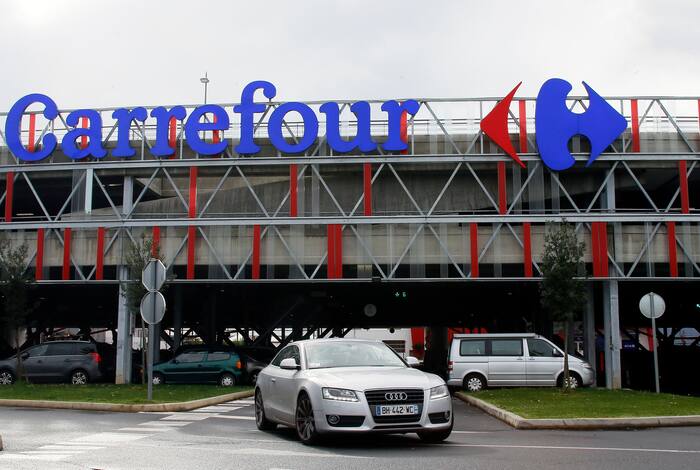
The first major wave hit France on the night of October 11, 2026, sweeping across hundreds of supermarkets under banners like Intermarché, Netto, Coopérative U, Carrefour, and Monoprix. Stores had to toss huge volumes of chilled and frozen inventory because once food sits in a danger zone, safe resale is off the table. In one outlet in Issy-les-Moulineaux alone, staff had to discard several tons of products.
Just three weeks later, on November 2, 2026, a second wave hit grocery chains across multiple European countries, including Belgium, Luxembourg, the Netherlands, Sweden, Estonia, Ireland, Portugal, and Germany. Retailers such as Delhaize, SuperValu, Coop, and Edeka saw disrupted cooling or pulled chilled and frozen goods as a precaution.
What makes this whole episode even scarier is what else got caught in the crossfire. Reports noted an attempt to push refrigerators holding blood plasma at French Blood Establishment (EFS) sites toward 110°C, where staff caught the anomaly via monitoring and saved the supply. Meanwhile, national and international agencies—including CERT-FR guidance in France and a joint advisory from U.S. agencies like CISA—flagged internet-exposed refrigeration controllers and end-of-service hardware as a growing physical hazard.
Who Is Behind It and Why There Was No Ransom
Attribution in fast-moving cyber incidents is never neat, and you shouldn't treat early claims as settled court verdicts. French officials pointed to Shahid Kaveh, an Iranian-affiliated cyber unit, while Tehran rejected the accusation as baseless. Other European officials and analysts have also discussed broader threat actors operating out of countries like Iran, Russia, and China, noting that state attribution and criminal or proxy activity aren't always identical.
Here's the twist that freaks security folks out: many of these disruptions didn't look like classic ransomware where attackers lock files and ask for a wire transfer. When there's no ransom note, you can't easily tell if the goal is geopolitical disruption, testing defenses, or pure sabotage. Spoiled groceries hurt budgets and morale, sure, yet the bigger worry is what happens if someone scales similar tactics across broader logistics or health infrastructure.
Why Retailers Keep Getting Burned by Old Gear
I've seen plenty of organizations treat industrial or building gear as "set it and forget it." A freezer compressor can keep humming for fifteen years, long after the vendor stops shipping security patches for its network controller. That mismatch between long physical lifespans and short software support cycles is a classic trap.
Another mistake is assuming that an air gap or a basic firewall keeps machines safe when third-party vendors need remote login access. Back in 2013, Target famously suffered a massive breach traced back to credentials stolen from a third-party HVAC contractor. Thirteen years later, plenty of retail networks still mix corporate IT, vendor maintenance portals, and shop-floor controllers way too loosely.
Even when alerts exist, silent tampering is brutal. If an attacker tweaks a schedule overnight without tripping a loud alarm—or if alerts go to an inbox nobody checks until 7 a.m.—six hours of warm air can ruin an entire aisle before anyone grabs a thermometer.
What Shoppers and Store Operators Should Do Next
If you're a shopper, don't panic-buy canned beans every time a tech headline pops up, though paying attention to store hygiene and reopened aisles makes total sense. Reputable grocers pull compromised chilled and frozen stock when cooling fails. Still, if you walk past a freezer case that feels lukewarm or looks freshly restocked after a weird outage, check seals, report odd temps to staff, and skip anything that looks thawed and refrozen.
If you run or advise retail stores, cold storage, or facilities, treat refrigeration security like fire safety—not an IT side project:
- Pull exposed controllers off the open internet. Audit every thermostat, chiller, and freezer controller with external access. If a unit doesn't strictly need public exposure, put it behind locked-down VPNs or isolated networks and retire end-of-life controllers.
- Run out-of-band temperature monitoring. Don't rely solely on the same controller network an attacker might manipulate to report fake readings or suppress alarms. Independent wireless or cellular sensors with clear escalation paths catch real drift fast.
- Lock down vendor access and test overnight drills. Require multi-factor authentication and least-privilege access for refrigeration contractors, then run a tabletop drill for a 3 a.m. defrost attack so staff know who checks temps, who calls technicians, and how spoilage gets logged.
- Check your insurance fine print before a crisis. Review commercial property and cyber policies together to see whether food spoilage from a cyber-induced equipment failure is covered or excluded.
Kicking a hacker out of a freezer controller is only half the job; proving the food inside stayed safe is what keeps the doors open.