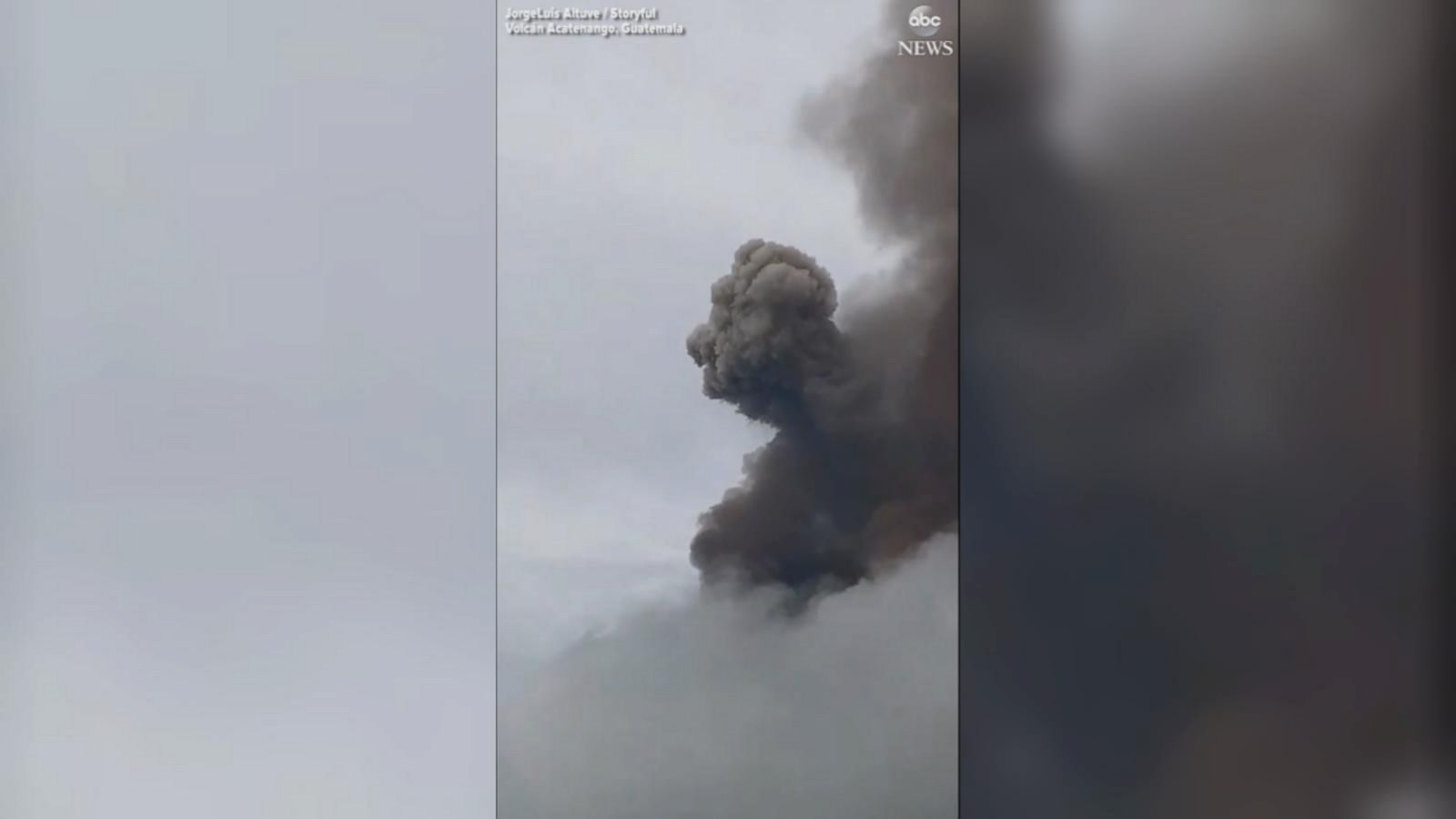
You’ve seen the footage. A group of hikers stands on a ridgeline, cameras out, as the ground beneath them begins to groan. Suddenly, a massive plume of ash and rock screams into the sky from the Fuego volcano in Guatemala. It looks like a movie set. The hikers are close. Too close. Some scream, others just stare, paralyzed by the sheer scale of the eruption. It’s the kind of viral moment that gets millions of views, but if you’re a seasoned trekker, it makes your blood run cold.
Social media has fundamentally changed how we interact with extreme geological events. We’ve traded a healthy fear of nature for the perfect vertical video. When a volcano like Fuego—one of the most active in Central America—decides to blow, the margin for error is zero. You aren't just watching a show; you're standing in a kill zone. If you’re planning to hike Acatenango to see Fuego’s eruptions, you need to understand exactly what you’re looking at and why those "cool" videos often capture the last moments of people who didn't respect the mountain.
The Brutal Reality of Volcanic Ballistics
Most people think the danger of an eruption is the lava. It isn't. In the viral clips of hikers caught in Guatemala, the real threat is "ballistics"—rocks the size of refrigerators launched at terminal velocity. When Fuego erupts, it’s often a Vulcanian or Strombolian event. This means pressure builds up until the "plug" of the volcano gets pulverized and sent flying.
If you’re standing on the "Knife's Ridge" (Camellon) of Fuego when a major pulse happens, you have no cover. These rocks don't whistle like in cartoons. They just arrive. Small lapilli can burn through your gear, but the larger blocks will simply crush you.
I’ve talked to guides in Antigua who’ve seen tourists try to run toward the rim for a better selfie during an active tremor. It's madness. The physics of an eruption don't care about your follower count. According to data from the National Institute for Seismology, Volcanology, Meteorology and Hydrology (INSIVUMEH), Fuego can produce pyroclastic flows—clouds of superheated gas and rock—that travel at over 100 kilometers per hour. You can't outrun that. You can't even out-drive it on most of the terrain surrounding the peak.
Why Hikers Get Caught Off Guard
The problem is familiarity. Fuego erupts dozens of times a day. If you spend the night on the neighboring Acatenango volcano, you’ll hear the "booms" every twenty minutes. It becomes background noise. You start to think it’s predictable.
It’s never predictable.
Guatemala’s volcanic arc is shaped by the subduction of the Cocos plate under the Caribbean plate. It’s a messy, violent tectonic process. Just because the last ten "puffs" were small doesn't mean the eleventh won't be a catastrophic flank collapse or a massive vertical explosion.
Common Mistakes on the Mountain
- Ignoring the Wind: Ash is a silent killer for your lungs and your electronics. If the wind shifts, you’re breathing pulverized glass.
- Cheap Gear: I see people trekking in sneakers and light hoodies. If a sudden ash rain starts, you need waterproof, heat-resistant layers and actual eye protection.
- Going Without a Licensed Guide: Local guides from communities like Soledad know the "mood" of the mountain. They see the subtle signs—animal behavior, specific gas smells—that tourists miss.
- The "One More Photo" Syndrome: People stay in the danger zone long after the sirens or the guides tell them to move.
Navigating the Ethics of Volcanotourism
There’s a weird tension here. Tourism brings vital money to the villages around Antigua, but it also creates a perverse incentive for guides to take people closer than is safe. When you look at those videos of hikers caught in the smoke, you have to ask who let them get that far.
Authorities in Guatemala often set "red zones" where hiking is strictly prohibited. Yet, every week, there are reports of "pirate" tours bypassing checkpoints. It’s not just your life at risk. When a group gets stranded or injured by volcanic debris, local rescue teams (like the CONRED agency) have to risk their lives to get you out. In a country with limited resources, that’s a massive burden to place on a community for the sake of a 15-second clip.
How to Actually Survive a Trek Near Fuego
If you’re going to do this—and you should, because it’s one of the most beautiful sights on Earth—do it with some dignity and a lot of caution.
Start by checking the INSIVUMEH daily bulletins. They provide technical data on the height of the ash plumes and the frequency of explosions. If they say the activity is increasing, stay in Antigua and watch from a rooftop bar. The view is still incredible, and the beer is colder.
When you're on the trail, keep your ears open. A "wet" sound to the eruption suggests a higher likelihood of lahars (mudflows), especially during the rainy season from May to October. If the ground starts vibrating constantly rather than in rhythmic pulses, that’s your signal to descend. Fast.
Forget the tripod. Forget the drone. If the mountain starts acting up, your only job is to put as much vertical and horizontal distance between you and the crater as possible. Don't hide behind a tree; it won't stop a volcanic block. Look for solid rock overhangs if you're stuck, but your best bet is always the descent.
Pack a high-quality N95 mask. Ash isn't like campfire smoke. It’s abrasive, it’s acidic, and it will trigger a respiratory crisis faster than you think. Keep it in your pocket, not at the bottom of your bag.
Respect the fact that Fuego is an open vent. It’s "breathing" constantly. That's why it's so active, but that's also why it’s so dangerous. There is no lid to hold back the pressure, so when it moves, it moves fast.
Download the CONRED emergency app and make sure your guide has a radio, not just a cell phone. Signal is spotty at best once you pass the 3,000-meter mark. If they don't have a communication plan, you’re with the wrong crew. Get down, find a reputable agency, and prioritize your life over your social media feed.