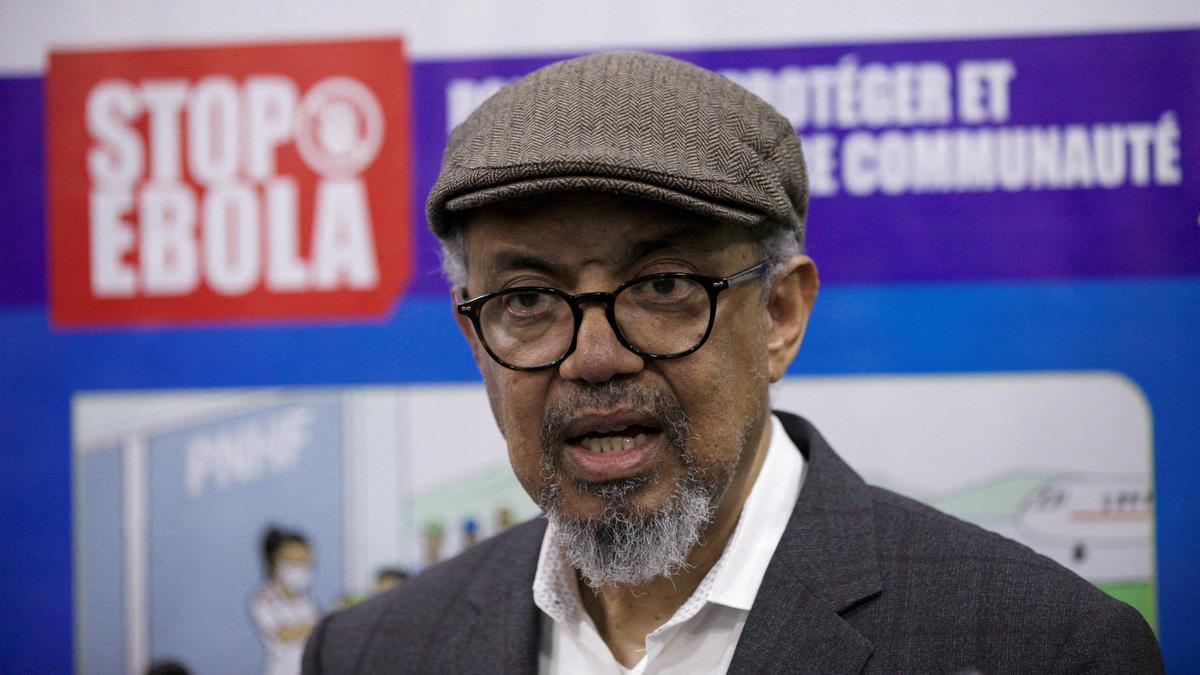
The World Health Organization chief just touched down in Bunia, the capital of eastern Congo's Ituri province. It's the absolute epicenter of a terrifying new health crisis. Right now, the Ebola outbreak is moving much faster than the global response. If you think we can just deploy the same old tactics used during previous outbreaks, you're dead wrong. This isn't the standard Ebola we've fought before. It's a completely different beast, and the current strategy is failing to keep up.
When WHO Director-General Tedros Adhanom Ghebreyesus stood alongside Congo's health minister, he tried to project confidence. He noted that the Democratic Republic of Congo has faced Ebola 16 times before and ended every single outbreak. This is number 17.
But history won't save lives here. The numbers tell a brutally honest story. Official figures show 906 suspected cases and 223 suspected deaths. The virus has already crossed the border into Uganda, confirming nine cases and one death.
This epidemic is outpacing us because it represents a catastrophic collision of a rare disease and violent conflict.
The Zero Vaccine Problem
We got comfortable during recent Ebola outbreaks. We relied heavily on Ervebo, a highly effective vaccine that targets the Zaire strain of the virus. That safety net is gone.
This specific outbreak is driven by the Bundibugyo ebolavirus. It's a rare species. Crucially, there's no approved vaccine for it. There is no approved medical treatment either.
Ebola Strain: Bundibugyo ebolavirus
Approved Vaccine: None
Approved Treatment: None
Estimated Mortality Rate: ~40%
Public health experts like Ayoade Alakija, chair of the global diagnostics alliance FIND, point out that we can't wait around for a pharmaceutical miracle. The only way out is old-school epidemiology. Test, track, trace, and quarantine. It sounds simple, but doing that in a war zone is close to impossible.
The virus kills roughly 40% of those it infects. Because it lacks a vaccine, the early detection window was completely missed. The virus likely spread undetected for weeks in Ituri because initial tests looked for the more common Zaire strain and came up negative. In fact, the International Federation of Red Cross and Red Crescent Societies revealed that three volunteers died back on March 27 after handling bodies. That means the virus was quietly circulating a month before the official mid-May detection.
War Zones and Broken Corridors
Ituri province is a commercial and migration hub. It's rich in gold, which draws thousands of migrant workers to informal mines. It's also a landscape torn apart by ethnic conflict. Militias allied with the Hema and Lendu groups have been fighting over land and minerals for years, a conflict that has claimed tens of thousands of lives.
Almost one million people in Ituri are displaced. They live in overcrowded camps with poor sanitation. When people flee violence, they move fast, and they take the virus with them. The disease has already drifted south into rebel-held territory in North Kivu and South Kivu, where the M23 group holds power.
Tedros is begging for an immediate ceasefire. He says containment corridors are severed and tracking down contacts is impossible when bombs are falling. Frontline workers are risking everything, but you can't build community trust when people are running for their lives.
The Fire This Time
The biggest barrier to stopping Ebola isn't just the lack of medicine. It's a profound breakdown of trust between local communities and international responders.
Western agencies often view resistance as ignorance. It isn't. It's a rational response from people who feel abandoned by the state until a terrifying disease threatens the West.
Look at what happened in Mongbwalu and Rwampara. Furious residents attacked local hospitals and set fire to isolation tents set up by Médecins Sans Frontières. Why? Because authorities refused to hand over the bodies of victims for traditional burials.
To an epidemiologist, a dead Ebola patient is a highly contagious vector. To a grieving family, that body represents a father or a religious leader who requires traditional washing and touching before burial. When military forces intervene to bury a loved one in a sealed coffin, it causes outrage.
During the second attack on the Mongbwalu hospital, 18 Ebola patients fled into the night. One critical patient died right in his bed while trying to escape the chaos. You can build the most sophisticated treatment center in the world, but if the local community sees it as a prison where their relatives go to die alone and be buried by strangers, they will burn it down.
Borders Clapped Shut
While money is starting to move—the U.S. just pledged an extra $80 million, bringing its commitment to $112 million—the political response from neighboring countries is actively hurting the effort.
Uganda and Rwanda closed their borders. The U.S. government enacted a rule restricting green-card holders who have recently visited Congo, Uganda, or South Sudan from reentering the country.
Tedros explicitly warned against these travel bans. They don't stop a virus. They just drive it underground. When you shut down official border crossings, people don't stop traveling. They use unofficial bush paths. They avoid health screenings entirely. Travel bans discourage the exact transparency needed to track cases.
Concrete Steps on the Ground
If you want to understand how to actually stop this crisis, look past the high-level diplomatic visits. The response needs an immediate pivot toward localized, community-led intervention.
- Fund Local Medics Directly: Stop funneling all cash through massive international agencies with high overhead. Local Congolese doctors and nurses understand the language and the tribal dynamics. They need masks, gloves, and basic protective gear immediately.
- Negotiate Safe Burial Protocols: Health teams must stop using heavy-handed military escorts for burials. Work with local elders to find a middle ground where bodies can be disinfected but families can still perform dignified, safe rituals from a distance.
- Deploy Rapid Testing Kits: Since we can't vaccinate, we must isolate early. Bring diagnostic labs closer to the gold mining hubs so miners can get tested before traveling to other provinces.
The WHO chief's visit brings temporary media attention, but headlines don't stop outbreaks. Unless international organizations stop relying on vaccines that don't exist and start addressing the deep-seated mistrust on the ground, this virus will continue to outrun the world's ability to contain it.