Grief has a very specific sound. It isn’t the cinematic sobbing you see in prestige dramas, nor is it the dignified silence of a black-and-white photograph. In real life, grief sounds like a refrigerator humming at three in the morning while a widow stares at an empty coffee mug she still hasn’t washed because his thumbprint might still be on the ceramic.
Now, imagine that exact silence shattered by the roar of ten thousand people laughing at the way he died.
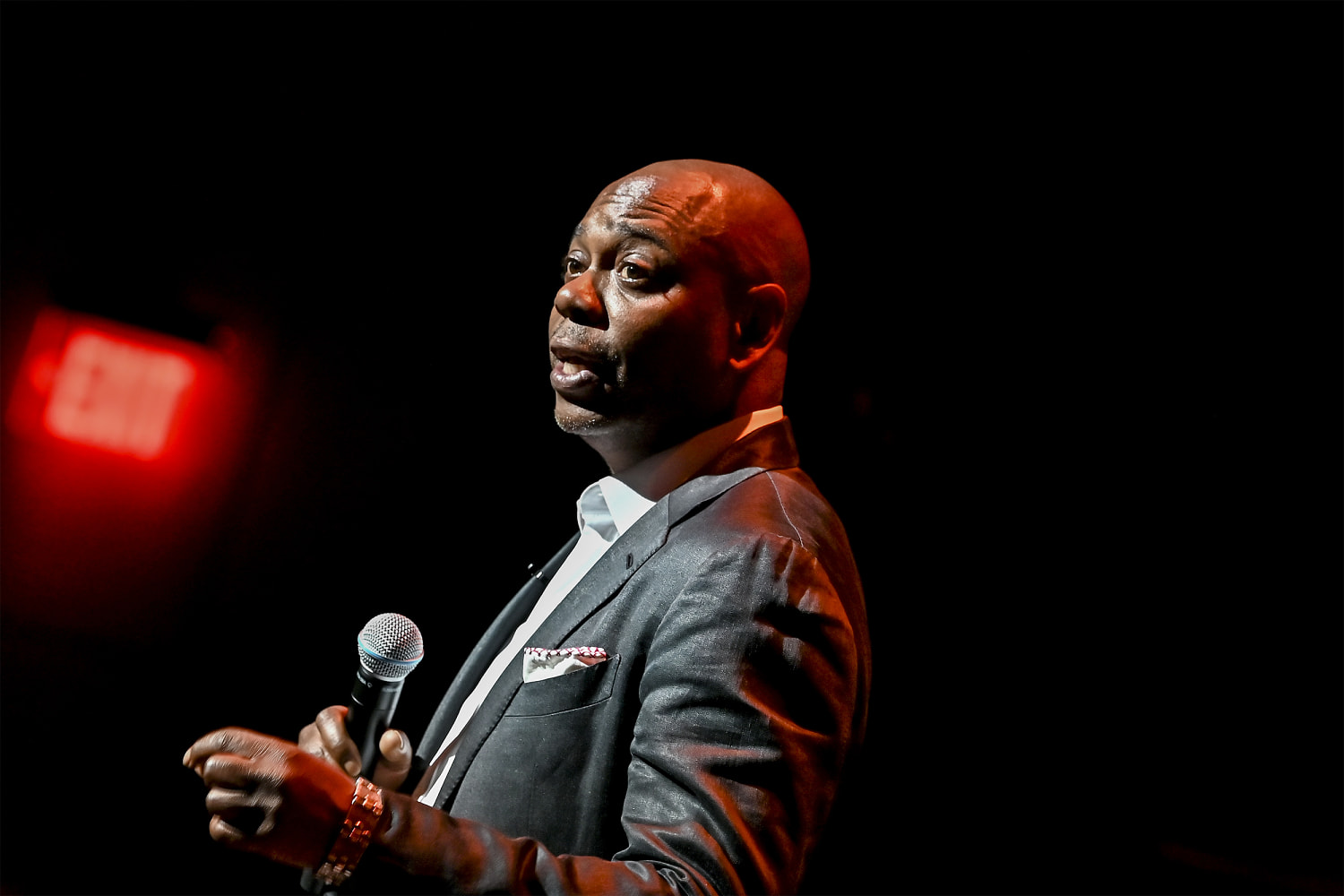
That is the collision we are witnessing right now, playing out in harsh fluorescent light across the internet and inside sold-out comedy arenas. On one side stands Dave Chappelle, arguably the most decorated stand-up comedian of his generation, pacing a stage with a microphone and a lit cigarette, turning a real-world political assassination into raw material for a crowd hungry for transgression. On the other stands Erika Kirk, a widow forced to watch the violent death of her husband, Charlie Kirk, metabolized into a punchline before the flowers on his grave have even fully dried. When she called the routine "beyond disgusting," she wasn't just offering a soundbite for the morning news cycle. She was screaming across a widening canyon between two worlds that no longer recognize each other's pain.
To understand why this moment feels so suffocating, you have to step away from the partisan trenches where most people immediately run for cover. It is too easy to reduce this to a scoreboard—left versus right, free speech versus sensitivity, comedy versus outrage. Those labels are cheap armor. They protect us from having to look at the human wreckage underneath.
The Architecture of a Punchline
Comedy has always been a predatory art form, and I say that with deep respect for the craft. Having spent years studying the mechanics of live performance and watching how rooms breathe when a comic takes the stage, I know that humor is essentially an alchemy of trauma. You take something heavy, dark, and terrifying, and you spin it fast enough that the audience laughs instead of screaming. Mel Brooks did it with Hitler. Richard Pryor did it with his own self-immolation. Stand-up comics are the court jesters allowed to say the unsayable while the king pretends not to flinch.
A joke is like a scalpel. In the hands of a master surgeon, a sharp blade cuts away rot and reveals a truth you couldn't reach any other way. It hurts, yes, but the cut has a purpose. In the hands of someone swinging wildly in a crowded room, that exact same blade just leaves people bleeding on the floor.
When Dave Chappelle steps up to the mic, he carries the weight of a cultural titan. Millions of people treat his specials not as entertainment, but as modern scripture—a corrective lens against a society they feel has grown too brittle, too policed, too dishonest. Chappelle knows this. He leans into the friction. Over the past decade, his brand has shifted from observational brilliance to something closer to philosophical brinkmanship, testing exactly how much discomfort an audience will swallow before they choke.
There is a specific thrill in that room when he crosses a line. You can feel the temperature drop, followed by a collective gasp, and then—if the timing is right—an explosive release of laughter. The audience isn't necessarily laughing because they are cruel. They are laughing because they survived the shock.
The View From the Front Row of Tragedy
Now leave the arena. Walk out past the merch tables, past the idling Ubers, and step into a quiet house in Arizona.
Consider a hypothetical scenario—one that mirrors the reality of every family who has ever lost someone to public violence. Picture a Tuesday afternoon. You are folding laundry or answering an email, completely ordinary, completely unguarded. Your phone rings. Within forty-eight hours, the private details of your husband's final seconds are being dissected by talking heads on cable news, slowed down frame-by-frame by amateur sleuths on X, and turned into dark memes by teenagers who have never felt the weight of a mortgage or a marriage vow.
You don't get to log off. The internet doesn't send casseroles; it sends notifications.
When Charlie Kirk was assassinated—a shocking burst of political violence that sent tremors through an already fractured country—his wife didn't lose a political commentator. She lost the person who knew how she liked her eggs, the father of her children, the man whose shoes were still sitting by the front door. In the immediate aftermath of a violent death, the brain operates in a state of biological shock. Psychologists who study traumatic bereavement note that the human nervous system isn't wired to process public spectacle alongside acute grief. The mind tries to build a protective cocoon just to keep the heart beating.
Then, a clip starts trending.
Someone in a darkened theater held up a phone, hit record, and uploaded a snippet of one of the most famous men on earth making light of the bullet that ended your life as you knew it. The crowd in the video is roaring. They are clapping. They are having a great night out.
Look at Erika Kirk's reaction through that lens, and the word "outrage" suddenly feels wildly inadequate. Calling it "beyond disgusting" isn't a PR strategy. It is the involuntary flinch of someone watching their deepest wound get poked with a stick for applause.
When Empathy Hits a Wall
We have built a media ecosystem that rewards emotional numbness. Every twenty-four hours, we are fed a fresh buffet of catastrophes—wars, shootings, scandals, economic collapses—all compressed into identical vertical rectangles on a six-inch glass screen. To survive the sheer volume of tragedy, our brains have developed a callous. We process real human death with the exact same neural pathways we use to watch a season finale of a prestige thriller.
Nobody is real anymore. Everyone is an avatar.
If you hated Charlie Kirk's politics—and millions of people fiercely opposed his rhetoric, his organization, and his worldview—it becomes dangerously easy to flatten him into a caricature. Once someone becomes a symbol rather than a flesh-and-blood human being, empathy stops at the border of their ideology. People tell themselves that because a man lived by the political sword, his family forfeits the right to quiet mourning. They convince themselves that mocking a tragedy is somehow a blow against the ideas they disliked.
It isn't. It is just rot.
History offers plenty of warnings about what happens when a society loses its ability to separate political combat from basic human decency. During the height of the Troubles in Northern Ireland, or the darkest chapters of the American 1960s, the normalization of mocking the dead was never a sign of cultural resilience. It was a symptom of spiritual exhaustion. When people laugh at an assassination, they aren't demonstrating strength. They are demonstrating that their capacity for horror has been broken.
I admit, sitting here trying to untangle this, it is unsettling how easily we justify cruelty depending on who is holding the microphone. If a conservative comedian had stood on stage and mocked the murder of a progressive activist, the exact same people defending Chappelle's artistic freedom today would be demanding his career be burned to ashes by sundown. Conversely, plenty of voices currently rushing to defend Erika Kirk's dignity spent years cheering when comedy was aimed at the pain of their ideological enemies.
Hypocrisy is the native language of the internet. We all speak it fluently when our tribe is winning.
The Invisible Stakes of the Joke
So where does that leave the line? Does comedy have to die so that grief can be respected?
No. That is a false choice, and anyone selling it is trying to manipulate you.
There is a massive difference between punching up at power and dancing on a fresh grave. Great dark comedy illuminates the absurdity of death, the hypocrisy of institutions, or the strange ways human beings cope with terror. When Pete Davidson jokes about losing his father on 9/11, the laughter comes from a place of shared, agonizing intimacy; he owns the scar, so he gets to decide how it's displayed. When George Carlin dissected the sanitized language we use around death, he was attacking our collective denial, not a specific widow weeping in her kitchen.
When a billionaire comedian mocks a recent assassination to an arena of strangers, there is no catharsis for the wounded. There is no truth being spoken to power, because the target is already in the ground. The only currency being traded in that room is shock value—a cheap, synthetic high that fades the moment the house lights come up.
And the real cost isn't paid by the comedian. He goes back to his green room, collects his check, and flies home. The cost is paid in the quiet erosion of what we owe one another as human beings.
Every time we applaud the humiliation of a grieving family because we disliked the deceased, we lower the floor of our shared humanity by another inch. We train ourselves to see suffering not as a call to compassion, but as content. We teach our children that nothing is sacred—not a marriage, not a funeral, not the unbearable silence left behind when a life is violently cut short—so long as the delivery gets a laugh.
The Silence After the Applause
Erika Kirk will have to wake up tomorrow in a house that is still too quiet. She will have to explain to people she loves why the world seems to find their worst nightmare entertaining. No viral tweet, no cable news panel, and certainly no comedy special is going to carry that weight for her.
Eventually, the news cycle will move on. Another outrage will replace this one by Friday afternoon, another clip will trend, and the internet will sharpen its knives for a brand-new target. The algorithms will keep spinning, hungry for whatever makes us angriest, loudest, and most divided.
Somewhere tonight, a comic will walk onto a stage, adjust the microphone stand, look out into the dark, and decide what kind of mirror they want to hold up to the crowd. And somewhere in the dark, thousands of people will sit with their hands ready to clap, deciding what kind of monsters they are willing to become just to feel something for ninety minutes.