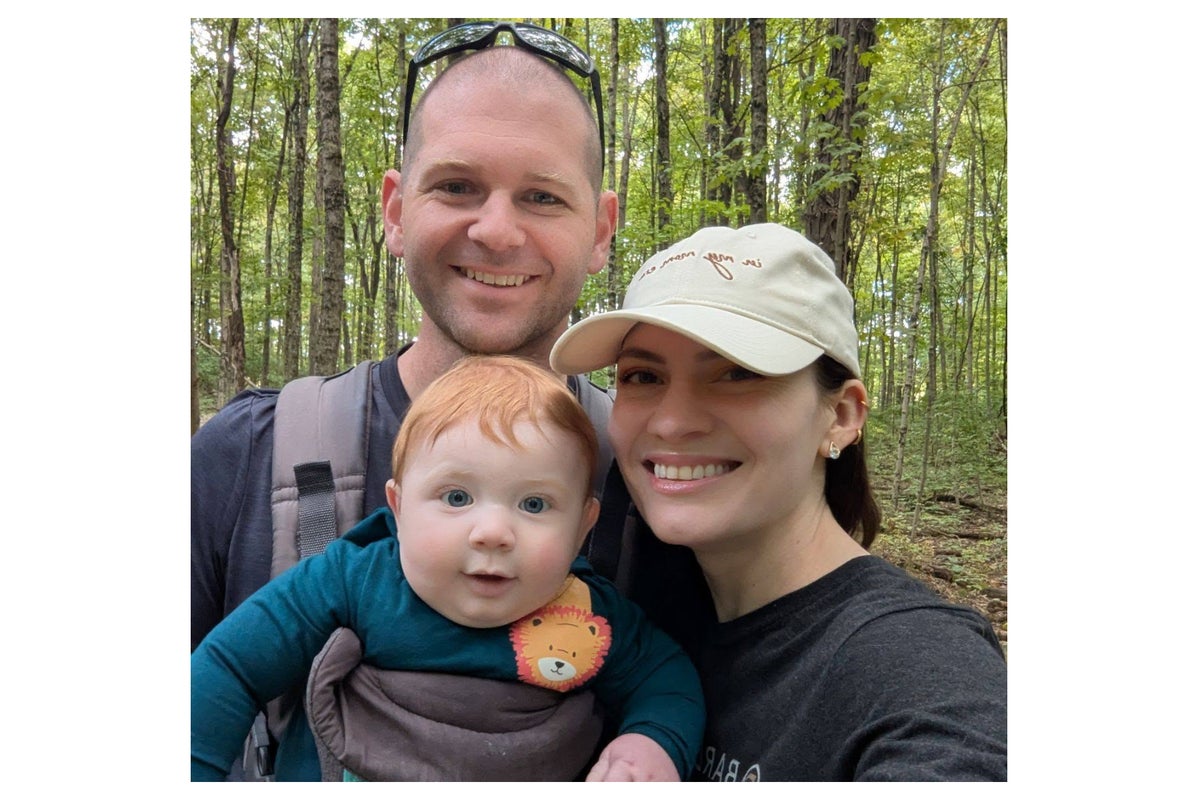
The interstate does not care about polling data. On a stretch of asphalt on Interstate 71 in Delaware County, Ohio, a catastrophic chain-reaction crash snuffed out three lives in a single, violent instant. Lynnea Soposki, 36, her 37-year-old husband Luke, and their one-year-old son Logan died when a semi-truck plowed into their vehicle. Months later, their faces and names were pulled from the wreckage and thrust onto millions of computer and television screens across America, not as victims of a tragic highway accident, but as props in a hard-edged political attack ad.
The advertisement, produced and aired by the National Republican Senatorial Committee in support of Senate candidate Jon Husted, weaponizes the Soposki family's deaths to attack former Senator Sherrod Brown over immigration policies. It is a textbook example of modern campaign machinery treating human grief as raw material. The surviving relatives are furious, issuing public statements pleading for the removal of their loved ones' likenesses from political warfare, only to be met with the cold indifference of campaign strategists who view millions of views as a successful metric regardless of the human collateral. Don't forget to check out our previous coverage on this related article.
Behind the thirty-second spot lies a machinery of political communication that relies on emotional shock value to bypass rational debate. When political committees turn a dead toddler and his parents into talking points, they cross a distinct ethical line. This practice raises hard questions about consent, the commodification of tragedy, and the widening disconnect between political operatives and the communities they claim to represent.
The Mechanics of Outrage Marketing
Political advertising has long abandoned subtle persuasion in favor of visceral impact. Modern data analytics allow campaigns to target voters with surgical precision, but the creative strategy remains brutally simple. Fear and anger move numbers. Compassion and nuance do not. If you want more about the background here, BBC News offers an informative summary.
When the National Republican Senatorial Committee launched its short-run campaign spot, it bypassed policy debates on infrastructure or commercial driving regulations to focus entirely on an emotional trigger. The ad flashes images of the Soposki family alongside footage of the highway crash, directly attributing their deaths to federal border policies.
There is a profound disconnect between the political narrative and the legal reality of the crash. The driver of the semi-truck, Modou F. Ngom, was charged with aggravated vehicular homicide and vehicular assault. While political committees rushed to frame the incident through an immigration lens, Department of Homeland Security records confirm that Ngom became a naturalized U.S. citizen years prior to the accident. He faces state criminal charges and a civil wrongful death lawsuit, yet these legal specifics were flattened to fit a predetermined political script.
The strategy relies on a calculated gamble. Campaign managers know that using real victims creates immediate emotional friction, which drives engagement, shares, and algorithmic visibility. Millions of people watched the unlisted YouTube video before it completed its cycle. Every view represents a metric of success for the media buyers, entirely divorced from the reality that a grieving family was forced to watch their private nightmare looped on social media feeds for political gain.
The Breakdown of Consent and Family Dignity
When private citizens are drafted into public campaigns without their permission, the traditional boundaries protecting private grief evaporate. The Soposki family made their position unequivocally clear through public statements and private requests. They wanted the ad pulled immediately. They emphasized that Lynnea and Luke were ordinary people, not political symbols.
The response from the political apparatus exposed a structural deflection of responsibility. When approached by journalists and the family, representatives for candidate Jon Husted pointed out that the ad originated from the national committee rather than the local campaign office, effectively bouncing accountability between different layers of the party infrastructure. Meanwhile, committee spokespersons defended the buy as a necessary tool to hold political opponents accountable, treating the family's distress as an unfortunate background noise.
This dynamic reveals a deeper institutional pathology. National political committees operate with massive war chests and insulated consultant networks. They are structurally isolated from the local communities where tragedies occur. To a media strategist sitting in a distant office, an Ohio family is merely an asset in a media buy. The consent of the surviving relatives is treated as an administrative hurdle rather than a moral requirement.
The Broader Erosion of Public Discourse
The exploitation of the Soposki family is not an isolated aberration. It is part of a broader degradation of public discourse where real-world suffering is routinely converted into partisan ammunition. When every tragedy must immediately be processed through a partisan lens, society loses the capacity to address root causes.
A fatal collision on Interstate 71 involves complex systemic factors: commercial transit oversight, driver fatigue, highway infrastructure, and corporate logistics pressures. By reducing a multi-vehicle highway pileup into a slogan about border security, political campaigns actively distract from the mundane and difficult work of safety reform.
The relatives of Lynnea, Luke, and little Logan are left to manage their trauma in public view, while political operatives move on to the next media cycle. The ad has run its course, the view counts have peaked, and new targets are already being selected for upcoming electoral battles.
The family's public plea remains a stark reminder of the human cost behind political messaging. Grief belongs to the living who bear it, not to the strategists who rent it for thirty seconds.


