The office on Des Voeux Road smelled of stale espresso and the cold, flat metallic tang of air conditioning that never quite figured out Hong Kong's humidity. It was past midnight. Outside, the neon ribs of the city bled red and blue through the blinds, casting long, fractured shadows across a desk littered with empty paper cups and printouts of quarterly active user metrics.
Li watched the flickering green numbers on his multi-monitor setup. He was thirty-four, wore an unironed cotton shirt with the sleeves rolled up to his elbows, and had spent the better part of a decade building a portfolio of mainland tech stocks that once felt as permanent as the granite foundations of Central.
Then the floor dropped out.
Regulatory lightning didn't just strike in Beijing; it obliterated the skyline. Overnight, the grand thesis of Chinese domestic tech expansion—the endless consumer runway, the unstoppable digital tollbooths, the infinite venture capital runway—was rewritten by decree. Antitrust fines scaled into the billions. Private tutoring was effectively legislated out of existence. Data security laws turned every byte of user information into a geopolitical liability.
Li did what millions of retail investors across Shanghai, Shenzhen, and Hong Kong were suddenly forced to do. He looked across the water. He looked south.
He looked toward Singapore, toward New York, toward the quiet, relentless machinery of overseas expansion.
The Anatomy of a Chokehold
To understand why brokerages like Tiger Brokers and Futu Holdings suddenly found their fortunes shifting across oceans, you have to understand the claustrophobia that settled over the domestic Chinese market in the wake of the crackdown.
For years, these platforms grew fat and fast on the back of China's domestic liquidity boom. They were the digital turnstiles for a generation of smartphone-wielding millennials who viewed the stock market not as a dusty institution for retirees, but as a high-stakes video game with real money. Futu and Tiger provided the slick interfaces, the margin financing, the community chatrooms where memes turned into buy orders overnight. They were local champions riding a local tsunami.
(Note: When we talk about these platforms, we are looking at the digital infrastructure of retail wealth—brokerages that transformed how ordinary people trade global assets.)
Then Beijing turned off the pump.
It wasn't a single policy, but a coordinated tightening of the ideological and financial screws. The state wanted capital directed away from speculative internet platforms and toward hard manufacturing, green energy, and semiconductor fabrication. The message to the tech sector was unmistakable: grow where we tell you to grow, or don't grow at all.
Daily trading volumes on mainland exchanges began to curdle. The high-growth tech darlings that once fueled retail euphoria turned into regulatory minefields. For brokerages whose entire business model depended on transaction volume and user velocity, staying put meant slowly starving in a gilded cage.
Packing Digital Bags
Survival required a different kind of audacity. If the domestic market was freezing over, they had to go where the capital was still warm, liquid, and looking for a home.
This is where the narrative pivots from restriction to reinvention.
Imagine walking into a sleek, minimalist co-working space in downtown Singapore. The accents are a mix of Mandarin, Singlish, and American-inflected tech jargon. On the whiteboards, diagrams map out customer acquisition costs not for Shanghai or Beijing, but for Kuala Lumpur, Tokyo, and New York.
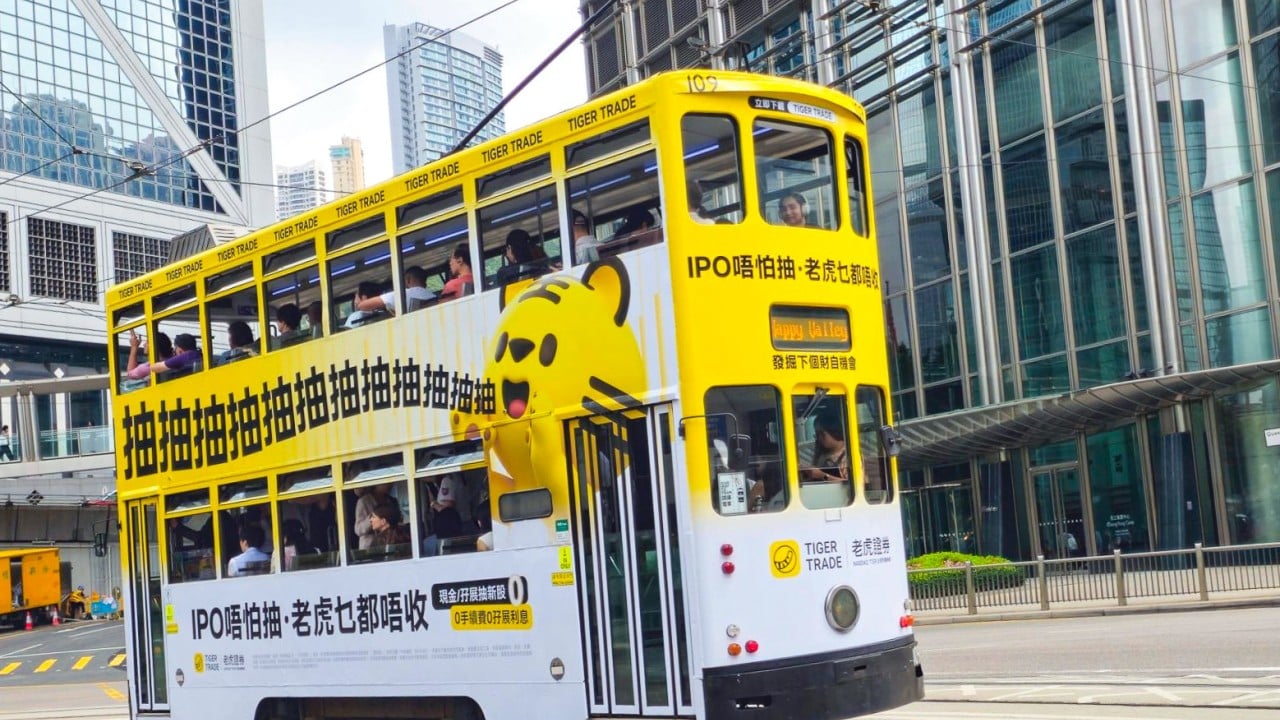
Tiger and Futu didn't just pack up; they cloned their engines for foreign soil. They took the exact playbook that conquered Shenzhen—zero-commission hooks, gamified reward systems, lightning-fast account openings—and exported it to Southeast Asia and the West.
The numbers tell a stark, unromantic story of this exodus. Even as mainland growth stalled, international client assets swelled. By targeting the diaspora, the tech-savvy millennial class in Singapore, and retail traders in the United States hungry for options trading, these platforms found a second wind. Overseas revenue became the oxygen tanks for companies whose domestic lungs were being squeezed.
Consider the paradox. A crackdown designed to rein in financial speculation inadvertently birthed global challengers. By forcing these companies out of their domestic comfort zone, Beijing accidentally forged multinational fintech contenders capable of competing on the global stage against incumbent Western brokerages like Robinhood or Interactive Brokers.
The Human Cost of the Pivot
Behind the glossy press releases and soaring overseas client acquisition metrics lies a quieter, more exhausting reality for the people working inside these firms.
Product managers found themselves pulling double shifts to comply with overlapping regulatory frameworks across Singapore, the United States, and Hong Kong. What works in mainland China will get you immediately sued or banned in Delaware or Orchard Road. Compliance officers became the most powerful people in the building, vetoing feature rollouts with the flick of a pen.
For the average retail investor caught in the middle, the transition felt like an earthquake. Accounts had to be restructured. Assets migrated across borders through a maze of currency controls and compliance checks. Trust, once broken or strained by sudden regulatory shifts, had to be rebuilt brick by digital brick.
Li eventually diversified. A portion of his capital left the mainland entirely, routed through overseas accounts into global equities. It wasn't born out of a desire for aggressive expansion; it was an act of financial self-preservation. He wasn't alone. Billions of dollars in retail wealth began a silent, digitized migration across borders, slipping through fiber-optic cables beneath the South China Sea.
The New Frontier
Today, the landscape looks unrecognizable compared to five years ago.
The domestic Chinese market remains subdued, weighed down by structural shifts and cautious consumer sentiment. Yet, Tiger and Futu stand taller on global balance sheets than they ever did relying solely on domestic exuberance. They have transformed from localized stock-trading apps into cross-border financial conduits.
They proved that in the digital age, capital is remarkably fluid. Build a fast enough pipe, and money will always find a way to flow downhill, even if you have to dig through mountains of red tape to do it.
Back on Des Voeux Road, the red neon glow continues to paint the midnight office. Li closes his laptop. The screens go dark. The numbers rest, waiting for the Tokyo bell to ring, then Singapore, then London, then New York, in an endless, sleepless rotation that never stops turning.