Fear sells better than physics.
The recent frenzy surrounding UK nationals being whisked away to hospital isolation after a Hantavirus outbreak on a cruise ship is a masterclass in public health theater. We are watching a repeat of the same tired script: a low-probability event occurs, the media treats it like the opening scene of a contagion thriller, and the public demands "safety measures" that defy the basic biological reality of the pathogen in question. Learn more on a related topic: this related article.
Hospital isolation for Hantavirus exposure isn't a medical necessity for the healthy. It’s a PR stunt designed to soothe a terrified electorate that has forgotten how to evaluate risk.
The Myth of the "Floating Biohazard"
Mainstream reporting treats every virus on a cruise ship as if it’s the next Black Death. This lazy consensus ignores the most fundamental rule of virology: transmission mechanics matter more than the name of the bug. Further reporting by WebMD delves into comparable perspectives on the subject.
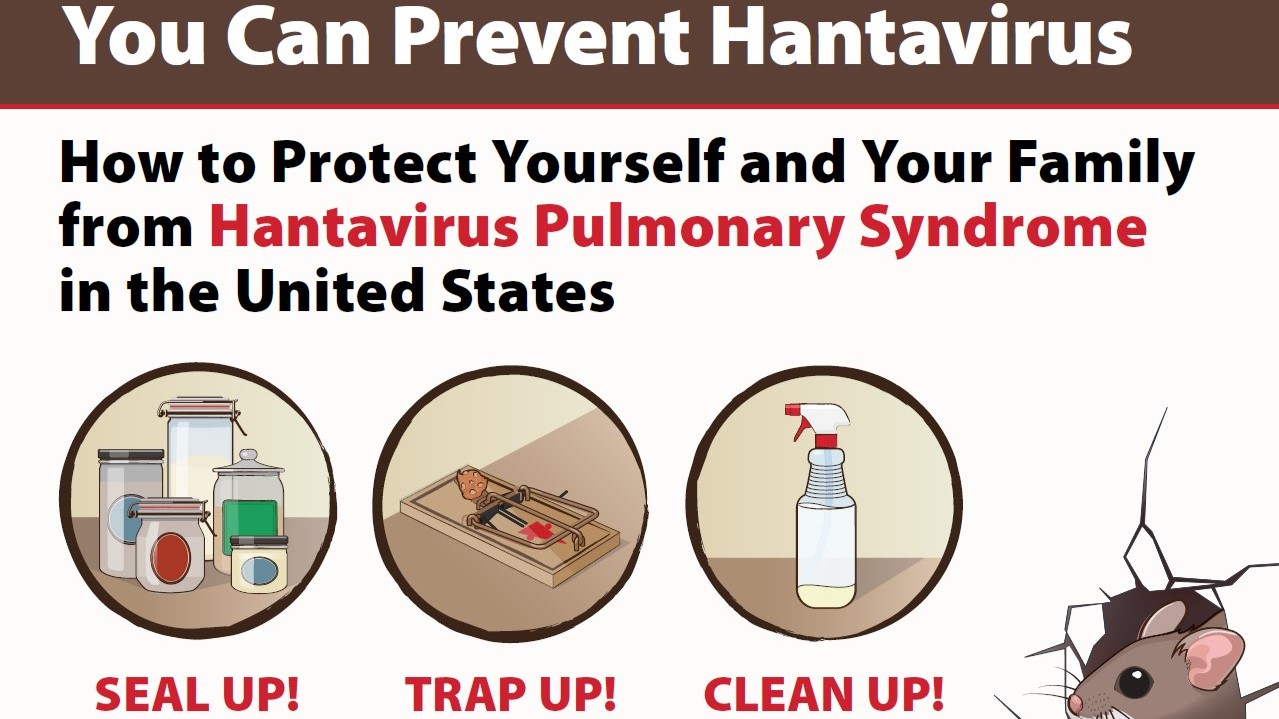
Hantaviruses are not COVID-19. They are not influenza. They are primarily zoonotic. In the vast majority of cases—specifically those involving the strains found in the Americas and Europe—the virus is transmitted through the inhalation of aerosolized droppings, urine, or saliva from infected rodents.
The "lazy consensus" assumes that because people are in a confined space, the virus will jump from person to person like wildfire. But human-to-human transmission of Hantavirus is vanishingly rare. It has been documented almost exclusively with the Andes virus strain in South America. Even then, it requires intimate, prolonged contact.
Putting UK nationals in hospital isolation upon their return isn't about stopping a "spread" that isn't happening. It’s about the optics of containment. We are burning clinical resources to quarantine people against a threat that—biologically speaking—is already a dead end once they leave the source of the rodent infestation.
Misunderstanding the Risk Gradient
The tragedy of modern health reporting is the death of the denominator. You hear "outbreak" and "hospitalization," and your brain triggers a fight-or-flight response. You don't ask about the base rate.
Look at the numbers. Hantavirus Pulmonary Syndrome (HPS) is undeniably severe, with mortality rates often cited around 38%. That is a terrifying statistic. However, the probability of a passenger actually contracting the virus on a modern cruise ship is statistically lower than the probability of that same passenger being struck by lightning while walking to the buffet.
Rodent infestations on high-end cruise liners are failures of maintenance, not heralds of an apocalypse. By isolating returning travelers, health authorities are validating a disproportionate level of fear.
When you treat a low-probability, non-communicable event as a national emergency, you desensitize the public to actual, high-probability threats. This is the "cry wolf" effect of 21st-century biosecurity. We are training people to fear the wrong things.
The High Cost of Performance Safety
In my years observing how bureaucratic systems react to "exotic" threats, one pattern emerges: the tendency to over-correct to avoid a headline.
Isolating these individuals in specialized hospital units is an expensive, resource-heavy maneuver. Consider the following:
- Resource Displacement: Every negative-pressure room occupied by a healthy, asymptomatic cruise passenger is a room unavailable for a patient with drug-resistant TB or a genuine respiratory crisis.
- Psychological Trauma: Forced isolation isn't a neutral event. It has documented impacts on mental health, yet we hand it out like candy to satisfy a news cycle.
- Economic Distortion: The travel industry is bullied into adopting "sanitization protocols" that involve spraying chemicals that are often more irritating to the human respiratory system than the pathogens they are meant to kill.
We are choosing "the appearance of doing something" over the "effectiveness of doing the right thing."
Dismantling the "People Also Ask" Delusions
If you search for Hantavirus right now, the top queries are riddled with misinformation. Let's correct the record with some brutal honesty.
"Can I catch Hantavirus from someone on the bus who was on that ship?"
No. Unless you are swapping significant amounts of bodily fluids with someone infected with the specific Andes strain—which isn't what we're talking about here—the risk is zero. Stop holding your breath.
"Is it safe to go on a cruise?"
You’re asking the wrong question. A cruise ship is a petri dish for Norovirus, which will actually make your life miserable, yet people board them by the millions without a second thought. Hantavirus is a freak occurrence. If you’re worried about this, you shouldn't be driving a car to the port, as the drive is infinitely more lethal.
"Why are they in the hospital if they aren't sick?"
Because the government is afraid of the 0.0001% chance of a headline that says "Government Let Virus Into London." It’s defensive medicine practiced at a policy level.
The Real Failure: Infrastructure, Not Infection
The real story here isn't the virus. It's the catastrophic failure of the ship’s integrated pest management (IPM) systems.
A cruise ship is a closed loop. For a rodent population to reach a density where Hantavirus becomes a detectable risk to passengers, there has to be a systemic breakdown in food waste management and structural integrity.
Instead of debating quarantine lengths, we should be eviscerating the cruise line’s maintenance logs. We are focusing on the tail end of the problem (the passengers) instead of the source (the corporate negligence).
Imagine a scenario where a ship’s engine explodes because of skipped inspections. We wouldn't quarantine the survivors; we would sue the engineers. Why do we treat biological failures differently? We treat them as "acts of god" or "mysterious outbreaks" rather than what they usually are: a line item on a budget that was cut to maximize quarterly dividends.
Why You Should Be Skeptical
The "contrarian" take here isn't that Hantavirus is harmless. It’s that our reaction to it is a form of scientific illiteracy.
We live in an era where we have more data than ever, yet we consistently make decisions based on vibes. The "vibe" of a cruise ship virus feels like a movie, so we react with movie-set solutions.
Hospital isolation for the asymptomatic is the medical equivalent of taking your shoes off at airport security. It makes you feel like the world is being managed, but it does nothing to address the actual mechanics of the threat. It’s a security theater that we’ve exported to the healthcare sector.
If we actually cared about public health, we would be talking about global rodent control, waste management in international waters, and the reality of zoonotic spillover. Instead, we’re watching a fleet of ambulances meet a plane to pick up people who will, in all likelihood, spend three days in a sterile room eating hospital food before being sent home with a clean bill of health and a hefty bill for the taxpayer.
Stop falling for the spectacle.
The virus isn't the threat to the UK. The threat is a public health policy driven by the fear of Twitter trends rather than the rigors of epidemiological science. We are burning the house down to kill a spider, then cheering while we stand in the cold.
Demand better logic. Demand the denominator. And for heaven’s sake, stop acting like every cruise ship is the Diamond Princess. Biology doesn't care about your trauma; it only cares about how it moves. And Hantavirus doesn't move through a hospital ward.
Get out of the hospital and go home.