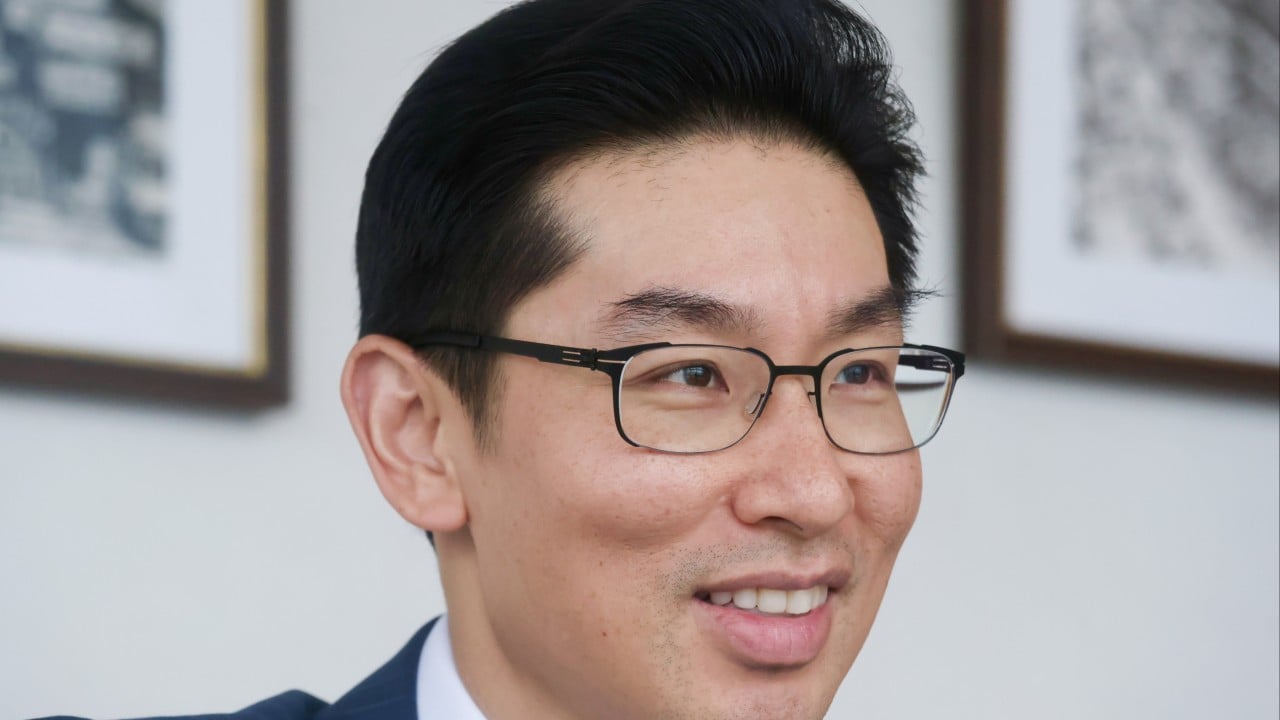
The view from the forty-fifth floor of a Central district skyscraper is indifferent to history. Below, the harbor churns with the same relentless energy that has defined this city for a century, a deep, slate-gray movement of capital and cargo. Across the desk sits Julian, a man whose family name is etched into the stone foundations of Swiss private banking. He is third-generation wealth, the kind of person who speaks about currency fluctuations with the casual intimacy of someone discussing the weather in the Alps.
For decades, Julian’s world was circular. Assets moved from Geneva to London, rested in Luxembourg, and occasionally ventured into the American markets. It was a closed loop. Safe. Predictable. Stagnant.
Today, Julian is looking at a map of the Pearl River Delta. He is not alone. Behind the hushed, velvet-curtained doors of BNP Paribas and other global institutions, a quiet migration is underway. European dynastic wealth—long synonymous with conservative preservation—is actively rerouting itself toward Hong Kong.
The Geography of Anxiety
To understand why a family office based in Zurich would suddenly find the gravity of Hong Kong irresistible, you have to stop looking at spreadsheets and start looking at the map of global anxiety.
Consider the hypothetical case of the Van den Berg family. For eighty years, their fortune was anchored in European manufacturing and real estate. It was a comfortable arrangement until the "triple squeeze" hit: sluggish growth across the Eurozone, a dizzying regulatory environment that feels increasingly hostile to private capital, and a geopolitical climate that makes the Atlantic feel like a widening canyon rather than a bridge.
The Van den Bergs are not looking for excitement. They are looking for an escape hatch.
Hong Kong offers something the old centers of Europe cannot: proximity to the engine room of the future. While European markets grapple with demographic winter and bureaucratic inertia, the Asian market is characterized by a sheer, visceral velocity. The city acts as a gateway to the Greater Bay Area—a megalopolis of 86 million people—where the next generation of industrial and technological titans is currently being minted.
This is the hidden logic behind the shift. Wealthy Europeans are no longer content to act as passive observers of the East. They want to be participants in its expansion. They are moving their family offices to Hong Kong because money, like water, ultimately follows the path of least resistance—and the path of highest growth.
The Architecture of the New Dynasty
Establishing a family office in a foreign jurisdiction is an act of profound vulnerability. It is an admission that the home country no longer provides the security required for multi-generational survival. When a European family shifts their base of operations to Hong Kong, they aren’t just moving assets; they are engaging in a complex structural migration.
They seek the "Hong Kong advantage." This isn't just about the absence of capital gains tax or the streamlined incorporation processes, though those help. It is about the ecosystem. In Central, a single meeting can bridge the gap between a private equity firm in Singapore, a tech startup in Shenzhen, and a manufacturing conglomerate in Vietnam.
The city functions as a neutral operating system for high-stakes capital.
For the traditional European patriarch, this transition is often jarring. They are accustomed to the "Old World" style of banking—slow, relationship-heavy, and deeply embedded in centuries-old social hierarchies. In Hong Kong, the culture is hyper-efficient, digital-first, and relentlessly meritocratic. Here, if your capital isn't working, it’s failing.
The Cost of Stasis
Critics often point to the political climate of Hong Kong as a deterrent. It is a valid concern, one that any prudent wealth manager addresses with cold, hard risk assessment. Yet, the data suggests that for the ultra-high-net-worth individual, the perceived risk of Hong Kong is often balanced against the very real, systemic risk of remaining tethered to a stagnating European economy.
Many families are choosing a hybrid model. They maintain their heritage offices in Zurich or Monaco as emotional anchors, while deploying "satellite" family offices in Hong Kong to handle active investment and regional diversification. It is a pragmatic hedging strategy. They are voting with their feet, ensuring that if one continent stumbles, the other serves as a stabilizer.
This trend is not a flash in the pan. It is a structural realignment. When major players like BNP Paribas emphasize their dedication to these clients in the region, they are acknowledging a reality that the media often misses: the center of gravity for private wealth is drifting inexorably toward the Pacific.
The Invisible Stakes
Why does this matter to the average person? Because the movement of "smart money" is the most accurate leading indicator of where the global economy is heading. When private family offices move, infrastructure follows. Talent follows. Tax bases shift.
We are witnessing the end of an era where Western capital dictated the terms of global development. We are entering an era of exchange, where European liquidity is being traded for a front-row seat to Asian innovation.
The families making this move understand something fundamental: legacy is not about keeping things exactly as they were. It is about the ability to adapt to where the world is actually going. They have realized that the safest place to store a fortune is not in a vault that hasn't been opened for fifty years, but in a market that refuses to stop moving.
As the sun sets over the Kowloon peninsula, the lights of the harbor reflect not just the city’s prosperity, but the silent, urgent arrival of the Old World into the new. They have arrived, suitcases packed with centuries of accumulated influence, ready to stake their claim on the next hundred years. The quiet hum of capital in the city tonight is the sound of history changing hands.