The wind at three thousand feet does not feel like air. It feels like a physical wall, a solid mass of rushing current that roars past your ears until it swallows every other sound on earth. Up there, the world loses its definitions. The roads below shrink into tiny, neat pencil lines, and the houses look like discarded toys in a patch of overgrown grass. For a brief pocket of time, you are entirely detached from the heavy, messy reality of living on the ground.
Most people look up at the sky and see an empty void. A jumper looks up and sees a canvas of pure possibility.
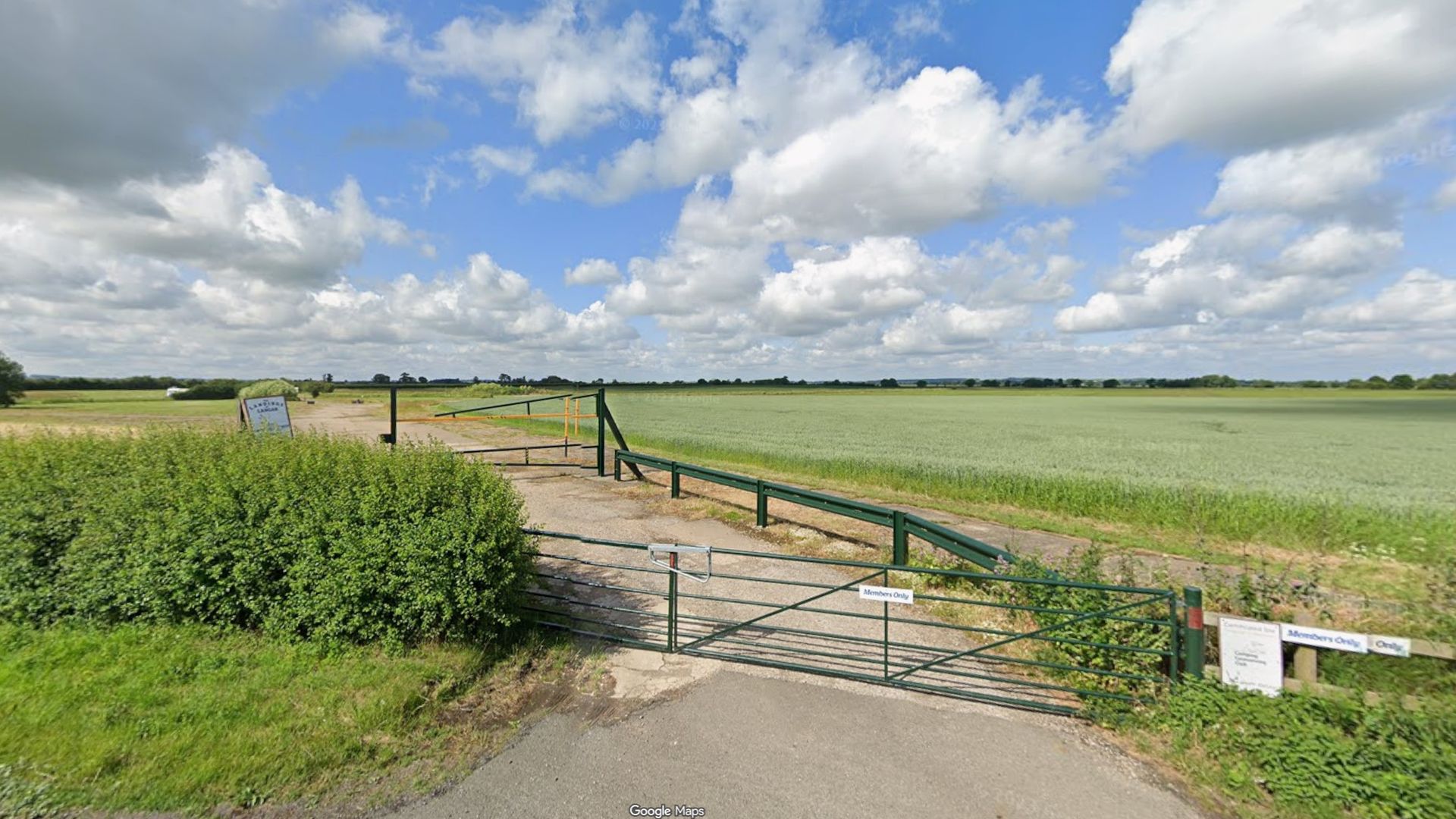
When a twenty-two-year-old woman stepped onto the tarmac near the airfield last weekend, she wasn't looking to make headlines. She was chasing that specific, elusive clarity that only comes when you willingly step away from the safety of the earth. She had her whole life neatly mapped out ahead of her, a future filled with the ordinary milestones of young adulthood. Yet, in a fraction of a second, a routine jump turned into the unthinkable.
The news reports that followed were cold, stark, and utterly devoid of breath. They used phrases like "equipment malfunction" and "pronounced dead at the scene." They reduced a vibrant, laughing human being to a series of coordinates and a tragic statistic.
But a life is not a statistic. And to understand what happened near that airfield, we have to look past the sterile language of police reports and look at the fragile mechanics of human flight.
The Illusion of Perfect Control
We live under the comforting assumption that technology has tamed the wild elements of our world. We trust the steel cables of elevators, the automated braking systems of our cars, and the nylon fabric of a parachute. We treat them as absolute guarantees.
A parachute system is a marvel of human engineering. It relies on a beautifully simple sequence of physics. You pull a ripcord, a small pilot chute catches the air, and that tiny pocket of resistance drags the main canopy out of its tightly packed container. Within seconds, a chaotic tumble transforms into a stable, controlled glide. To make things even safer, modern rigs are equipped with an Automatic Activation Device—a tiny computer that calculates altitude and speed. If a diver passes a certain threshold while falling too fast, the computer fires a small pyrotechnic cutter, slicing the reserve loop and deploying the backup parachute automatically.
The system is designed to be foolproof. It is built to save you even if you are unconscious.
But the sky does not care about engineering.
When you study aviation anomalies, you quickly learn that disasters are rarely caused by a single, catastrophic failure. Instead, they are born from a cruel alignment of microscopic variables. A slight twist in a nylon line. A sudden, erratic gust of wind shifting just as the deployment bag leaves the pack. A fraction of a second where human instinct fights against mechanical timing.
Imagine a hypothetical diver—let's call her Sarah, to give a name to the thousands of young people who share this passion. Sarah has checked her three-ring release system twice before boarding the plane. She has felt the reassuring weight of the container against her spine. She trusts the fabric. But when the human body is plunging toward the earth at one hundred and twenty miles per hour, the margins for error do not just shrink. They vanish.
If a main parachute deploys improperly, it can begin to spin. The lines twist tightly together, turning the canopy into a useless, thrashing streamer. The centrifugal force generated by that spin is immense. It pins your arms to your chest. It distorts your vision. The ground, which once seemed so distant, begins to rush upward with terrifying velocity.
At that moment, the diver has a choice to make, and they must make it within five seconds.
The Weight of Five Seconds
Time stretches when adrenaline floods the system. Five seconds on the ground is barely enough time to tie a shoe or take a sip of coffee. In the air, five seconds is an eternity of life-or-death decision-making.
The standard emergency procedure is deeply ingrained through hours of hanging-harness training on the ground. Locate the cut-away handle. Peel it. Pull it to release the malfunctioning main canopy. Then, and only then, locate the reserve handle and arch your body to clear the path for the backup chute.
It sounds mechanical. It sounds simple.
But consider the reality of a human mind experiencing total sensory overload. The roar of the wind is deafening. The horizon is spinning like a broken carousel. The brain, hardwired for survival over millions of years, is screaming that something is fundamentally wrong. Under that kind of pressure, the hands can grow heavy. The simple act of reaching for a handle becomes a monumental feat of willpower.
We often wonder how young people find the courage to jump from a perfectly functional airplane. We classify them as thrill-seekers or adrenaline junkies. That label is a lazy simplification. The people who frequent these quiet country airfields are often the most meticulous, analytical individuals you will ever meet. They are engineers, nurses, students, and teachers. They do not court death; they celebrate a heightened form of life. They embrace the discipline required to master the air.
When that discipline fails, or when the equipment betrays that trust, the consequence is absolute.
The community that surrounds these small airfields is tight-knit, almost fiercely so. It is a subculture bound together by a shared understanding of risk. When a pack opens on the tarmac, multiple pairs of eyes watch the folding of the silk. When a plane takes off, those left on the ground look up, tracking the colorful squares as they bloom against the blue.
When one of those squares fails to open properly, a collective breath is held across the entire field. The silence that follows the siren of an emergency vehicle is a weight that settles deep into the bones of every person present. They know that it could have been any one of them.
The Echoes on the Ground
The true tragedy of an accident like this does not end when the sirens fall silent. It ripples outward, tearing through families, friendships, and communities. A twenty-two-year-old woman is at the very dawn of her independent existence. The investments of childhood have been paid, and the promises of adulthood are just beginning to be realized.
Think of the empty room waiting back home. The textbook left open on a desk, the half-written text message, the keys sitting on the kitchen counter. These mundane objects take on a cruel, permanent significance in the wake of a sudden loss. They are the physical anchors of a life that was violently unmoored in a distant field.
Investigators will spend weeks analyzing the wreckage of the gear. They will download the data from the computer microchips, check the weather logs, and interview the jumpmasters. They will attempt to construct a neat, logical explanation for an event that defies human comfort. They will point to a specific knot, a mechanical delay, or an unfortunate body position during deployment.
They will answer the question of how. But they can never truly answer the question of why.
We seek these explanations because we desperately need to believe that the world is predictable. We want to believe that if we follow the rules, check the equipment, and make the right choices, we can escape the inherent fragility of being alive.
The cold truth is much harder to stomach. We are fragile creatures navigating an indifferent universe. Whether we are driving down a highway or falling through the upper atmosphere, we are constantly trading a degree of safety for the freedom to move, to explore, and to live fully.
The young woman who lost her life near that airfield took a risk that most people would find terrifying. But she did so in pursuit of a moment of pure, unfettered freedom. As the community mourns and the investigators finish their paperwork, the small planes at the airfield will eventually lift off into the sky once again. The jumpers will still look upward with longing. They will continue to pack their rigs with trembling, careful hands, forever aware of the immense gravity that waits below.