The Weight of a Decision
Imagine a young man in a heavy rucksack, the humid air of a distant land pressing against his chest. He isn't a politician yet. He isn't a face on a glowing television screen or a name printed on a ballot. He is a Marine. In the early 2000s, JD Vance was part of a generation that watched the sky fall on a Tuesday morning and subsequently followed their leaders into the dust of the Middle East.
When you have carried a rifle in a foreign desert, your perspective on "military action" stops being an abstract debate and starts being a matter of kinetic energy and human bone. This is the invisible weight behind the headlines today. When Vance stands on a stage and explains why he no longer wants to "bomb Iran"—a position he once seemed to flirt with—he isn't just checking a new political box. He is grappling with the ghost of a younger version of himself.
The shift in his stance on Iran isn't a minor tweak. It is a fundamental rejection of the logic that governed American foreign policy for two decades. To understand why he changed his mind, we have to look at the wreckage of the promises that came before him.
The Architecture of a Mistake
For years, the consensus in Washington was a polished, bipartisan machine. It suggested that American power could, and should, reshape the world through the sheer force of will and high-tech ordnance. Vance calls this the era of "dumb presidents." While the phrase sounds like a schoolyard insult, it points to a much deeper, more systemic failure of imagination.
Think of a home builder who keeps using the same blueprint even after the last five houses he built collapsed. Eventually, the neighbors start to ask questions. In Vance’s narrative, the architects of the Iraq War and the various "interventions" that followed were builders who ignored the foundation. They promised democracy and delivered chaos. They promised safety and delivered a trillion-dollar bill and a generation of veterans with scars that don't show up on X-rays.
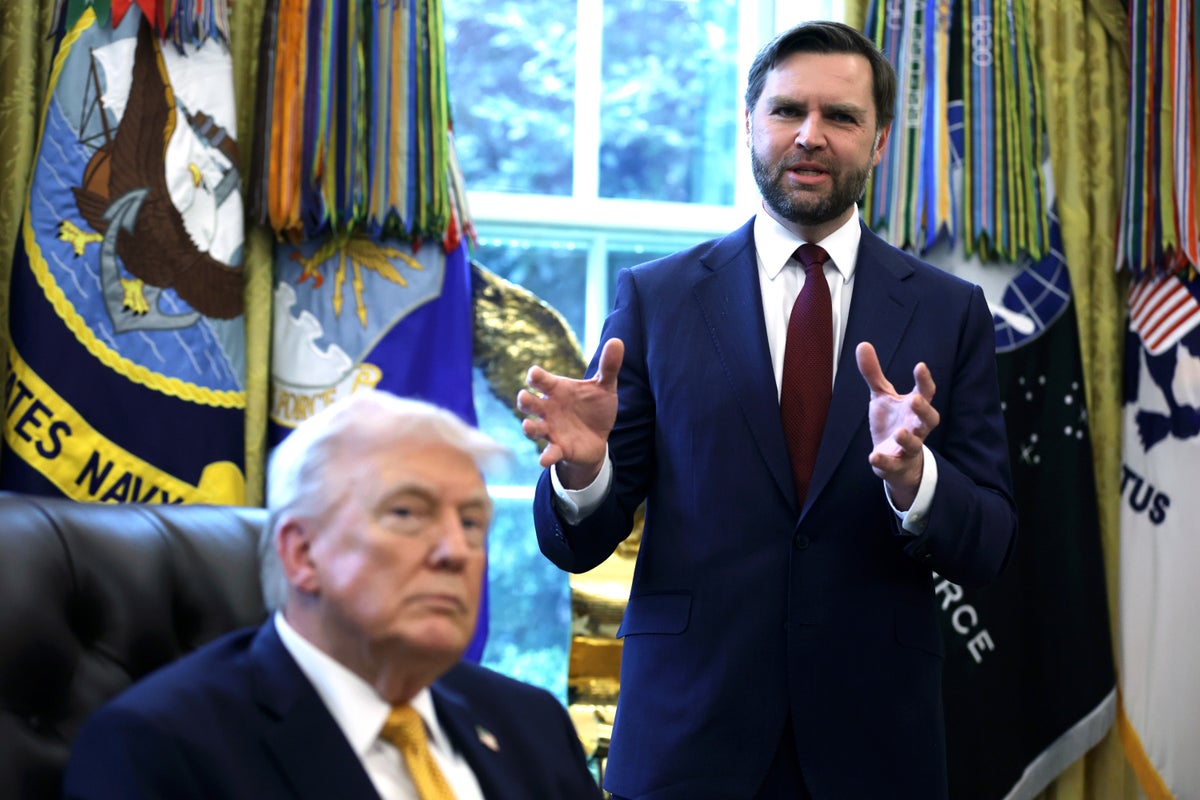
Vance’s pivot on Iran is rooted in this exhaustion. In 2024, he argued that the U.S. has no interest in a direct war with Tehran, despite his previous, more hawkish rhetoric. He isn't arguing that Iran is a "good actor." He is arguing that the United States is no longer in the business of fixing broken things with hammers.
The Trump Variable
The catalyst for this transformation wasn't a textbook or a think-tank white paper. It was a person. Donald Trump’s "America First" doctrine acted as a solvent, dissolving the old certainties of the Republican party.
Vance’s critics call it a flip-flop. His supporters call it an awakening.
But the reality is more human than a campaign talking point. It is the story of a man looking at the outcome of the "maximum pressure" campaigns and the surgical strikes of the past and concluding that the math simply doesn't add up. When Vance credits Trump for his shift, he is essentially saying that the former president gave him permission to admit that the old way was a disaster.
The stakes here are not just about a single election. They are about the definition of American strength. Is a nation strong because it is willing to fight everyone, or is it strong because it knows exactly when to keep its powder dry?
A Hypothetical Horizon
Consider a hypothetical young officer named Sarah. She sits in a briefing room today, listening to talk of "surgical strikes" against Iranian infrastructure. She has heard her father talk about the "surgical strikes" in Baghdad twenty years ago. She knows how the story usually ends: the surgery is successful, but the patient—the region—is left in a permanent coma of instability.
When Vance talks about avoiding war with Iran, he is talking to the Sarahs of the world. He is betting that the American public is tired of being the world's primary care physician in a clinic that only offers amputation.
The core of his argument is that "dumb presidents" were blinded by a sense of historical inevitability. They believed that because the U.S. could do something, it must do it. Vance is attempting to decouple those two concepts. He is trying to inject a sense of tragic realism into a conversation that has long been dominated by utopian interventionism.
The Ghost in the Room
There is a specific kind of silence that follows a veteran who changes his mind about war. It’s not the silence of someone who has lost their nerve. It’s the silence of someone who has seen the bill.
Vance’s evolution on Iran is a mirror held up to a country that is still trying to figure out what it learned from the last twenty years. If he is right, the "dumb" era of foreign policy is over, replaced by a cold, transactional realism. If he is wrong, his hesitation will be seen by history as a dangerous retreat that invited even greater conflict.
But for now, the story is about the pivot itself. It is about a man who once believed in the mission, saw the cracks in the armor, and decided to walk a different path. It is a story of a generation that grew up in the shadow of 9/11 and is now, finally, trying to step out into the light of a different, more cautious day.
The rucksack is still heavy. But the direction of the march has changed.
The true test of a leader isn't whether they never change their mind. It is whether they can explain the cost of the path they once walked, and why they are so desperate to avoid walking it again. Vance has made his choice. He has traded the certainty of the hawk for the scars of the skeptic.
Whether the world allows him that skepticism remains to be seen.
Would you like me to analyze how this shift in rhetoric might influence specific swing state voters with high veteran populations?