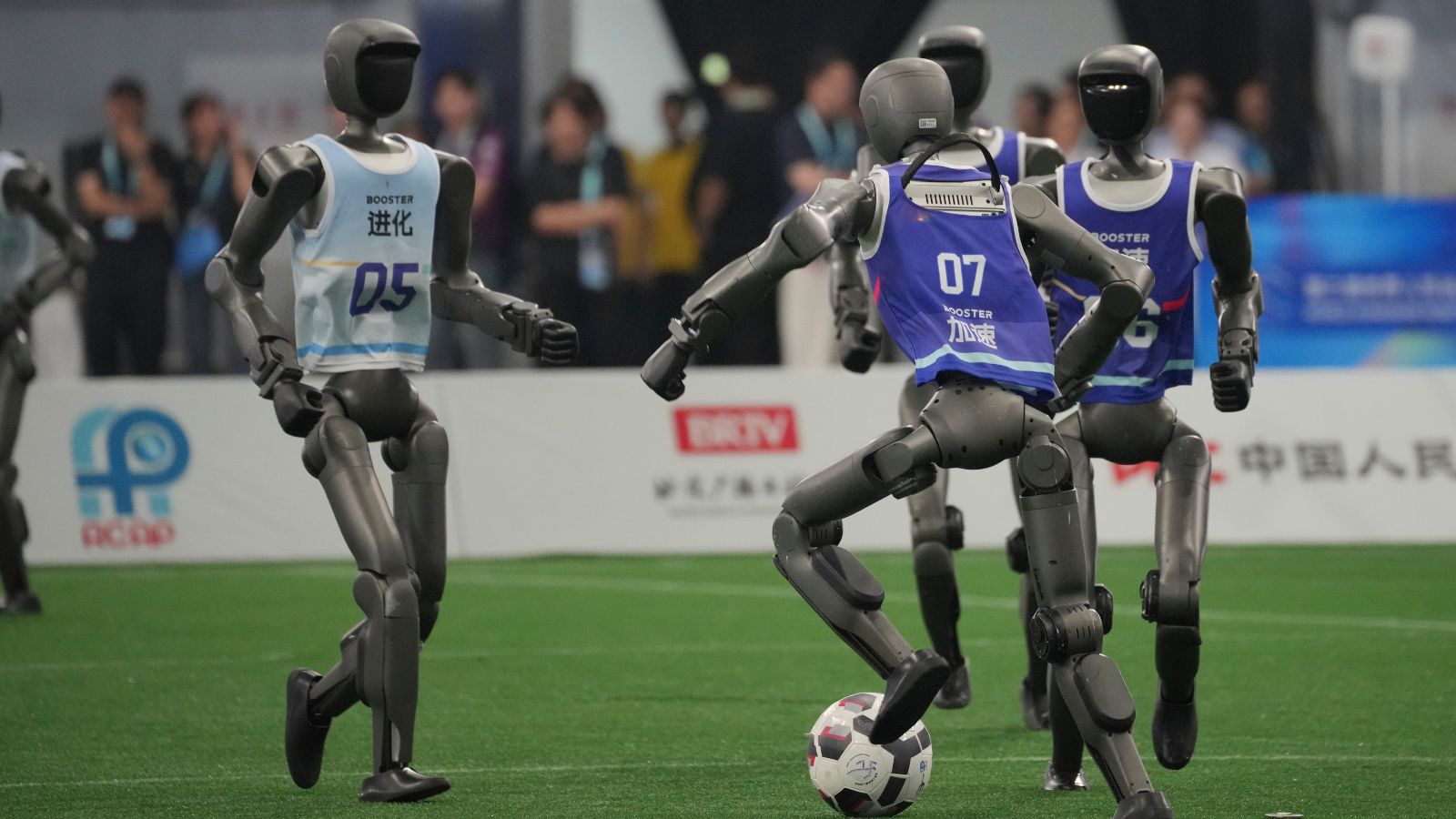
We built our mechanical children in our own image because of vanity. We wanted them to walk with a swagger, gesture with open palms, and stare back at us with synthetic eyes that blinked with simulated fatigue. We gave them two legs to stumble over uneven pavement, two arms to lift boxes that a hydraulic crane could hoist with a whisper, and a torso that mimics a spine that has spent millennia aching under gravity.
Then we sent them out into the real world.
And the real world laughed.
It laughed in the form of a loose floor tile, a flight of spiral stairs, a sudden gust of wind caught between two skyscrapers, and the brutal physics of a high center of gravity. While Western laboratories spent billions chasing the cinematic dream of a titanium biped that could jog across a meadow, something much quieter, much more intelligent, and infinitely more practical was happening in the industrial heartlands of the East. Chinese makers looked at the humanoid fantasy, looked at the factory floors crying out for efficiency, and quietly threw the rulebook into a furnace.
They realized a simple, bruising truth. The future does not belong to the walking man. It belongs to the working shape.
Consider what happens when you step onto a modern assembly line in Shenzhen or Shanghai. The air smells faintly of hot ozone, lubricating oil, and cooling metal. The rhythm is a relentless heartbeat of pneumatic presses and robotic arms hissing as they apply structural adhesive with micro-meter precision. In this environment, a robot shaped like a human is not a marvel of engineering. It is an expensive joke.
A bipedal humanoid is a bundle of compromises. To keep it upright, engineers must cram hundreds of delicate sensors, gyroscopes, and high-torque actuators into a narrow frame, generating heat that requires active cooling fans humming like trapped hornets. Every step is an algorithmic crisis, a million tiny mathematical calculations just to keep a multi-million-dollar machine from face-planting onto the concrete. It is a brilliant magic trick, but magic pays terrible dividends to warehouse operators trying to hit quarterly shipping quotas.
So, the engineers turned their backs on vanity. They asked a different question entirely. What if we stop trying to build a person and start trying to build a tool?
The answer is a quiet revolution in practical design. Instead of forcing a robot to balance on two feet, Chinese manufacturers are embracing wheeled bases, quadrupedal chassis, and modular torsos that pivot with fluid, terrifying efficiency. These machines do not trip over stray pallet straps. They do not require a massive backup generator just to stand still for ten minutes. They roll smoothly across epoxy floors, lock onto cargo with magnetic clamps, and bend their waists with the precise, non-human geometry required to load a shipping container in half the time.
We have been mesmerized by the theater of technology for so long that we forgot what technology is actually for.
Technology is the art of removing friction from human existence. When a robot mimics human anatomy purely for the sake of emotional resonance, it introduces friction. It brings our structural limitations into environments that never needed them. A human body is a masterpiece of evolutionary compromise, shaped by millions of years of running away from predators on the African savanna. Why on earth would we replicate those compromises in a warehouse where the floors are flat and the ceilings are uniform?
The shift away from total anthropomorphism is not a retreat. It is an advance.
Walk through a modern distribution center utilizing these pragmatic designs, and you notice an uncanny absence of drama. There are no dramatic stumbles, no sudden emergency stops triggered by a software glitch in the knee actuator. There is only motion. Clean, low-profile platforms glide beneath heavy inventory racks, lifting tons of steel with a quiet electric whir. Robotic arms mounted on sturdy, weighted pedestals weld chassis frames with a rhythmic grace that puts human fatigue to shame.
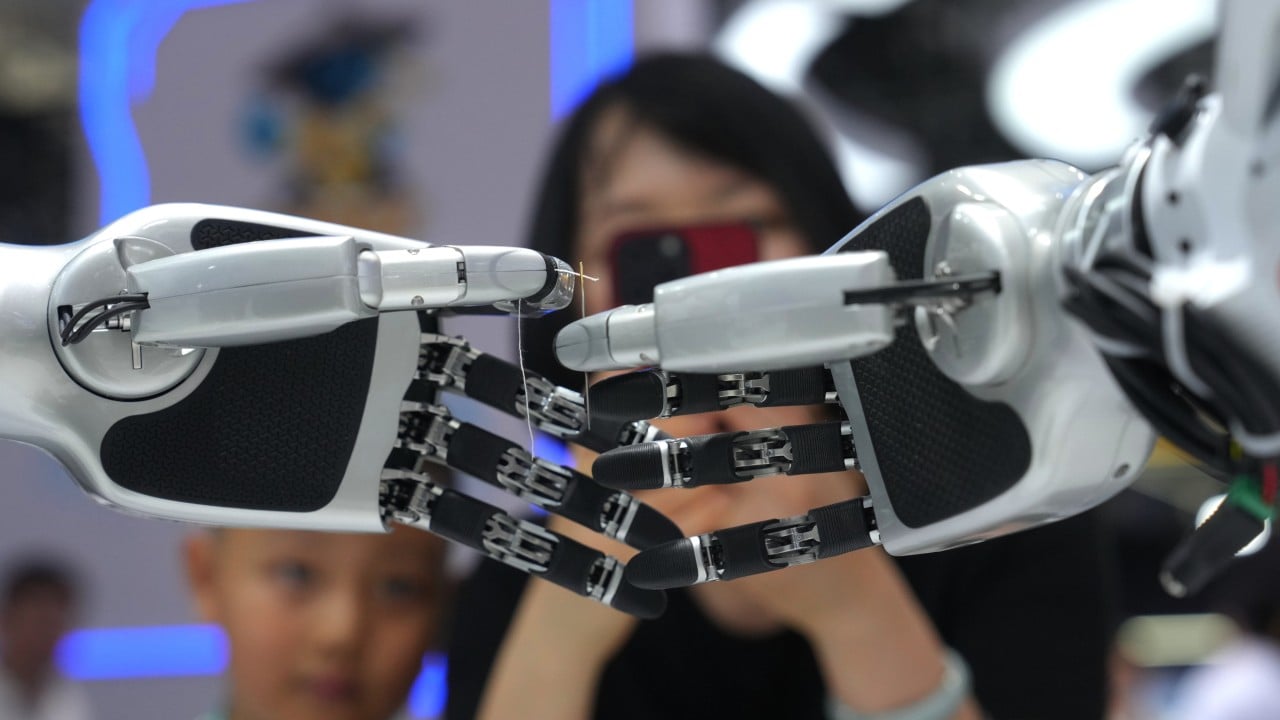
When humanoid forms do appear in these spaces, they are radically specialized. They are torso-and-arm assemblies bolted onto mobile platforms, possessing the dexterity to manipulate buttons, flip switches, and handle irregular packages without the burden of walking legs. They are functional components of a larger ecosystem, not solo actors trying to steal the show.
This is where the western narrative of robotics often loses its way. We want a companion. We want a mechanical servant that can pour our morning coffee, fold our laundry, and converse with us in a comforting baritone. We judge the state of the industry by viral videos of robots doing backflips in pristine testing facilities, as if gymnastics were the primary metric of industrial utility.
Meanwhile, the factories that build the very phones in our pockets are operating on an entirely different frequency. They do not care if a robot can dance. They care if it can run for seventy-two hours without overheating, if its maintenance cycle can be measured in months rather than minutes, and if its cost can be absorbed by the productivity it unlocks within a single fiscal year.
The emotional core of this transition is hard to swallow for those of us who grew up reading science fiction. We wanted the Jetsons. We wanted Rosie the Robot moving gracefully through a sunlit kitchen. Letting go of that dream feels like a betrayal of our childhood imaginations. It feels like shrinking our ambitions, settling for wheels and tracks instead of the glorious, cinematic stride of a machine that looks back at us in the mirror.
Yet, there is a deeper elegance in functional honesty.
When you strip away the unnecessary legs, the theatrical faceplates, and the illusion of personhood, you are left with pure intent. You are left with a machine that honors the physics of the task rather than the vanity of the creator.
The machines of tomorrow are already here, and they do not look like us. They are low, stable, relentless, and quietly reshaping the world while we are still busy watching the biped stumble.