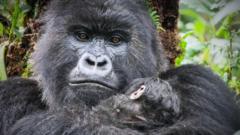
The footage is seared into the collective consciousness of three generations. David Attenborough, sitting in the damp undergrowth of Rwanda, inches away from a mountain gorilla. The creature nudges him. There is a look of mutual recognition, a bridge crossed between species, a moment of profound, unadulterated intimacy. The world wept. The world cheered. And the world was fed a load of absolute nonsense about how nature works.
We treat that moment as a holy relic of documentary filmmaking. We hail it as the ultimate triumph of patience, empathy, and luck. It was none of those things. It was a meticulously negotiated interaction, a product of institutional habituation, and a blueprint for a tourism industry that now arguably threatens the very animals it pretends to celebrate.
Stop believing the fantasy that this was a spontaneous meeting of minds.
The Myth of the Unscripted Miracle
The narrative pushed by production houses is simple: Attenborough went into the forest, found the group, and nature allowed him to be one of them. It is a fairy tale.
In the late 1970s, the mountain gorilla population was already under intense observation. Researchers like Dian Fossey had spent years systematically desensitizing these animals to human presence. The process of habituation is not "making friends" with an animal. It is the calculated, aggressive destruction of an animal's natural fear response. When you watch that footage, you are not watching a wild animal choosing to be gentle. You are watching a habituated animal that has had its primary survival instinct—the avoidance of unknown threats—systematically dismantled by human researchers over years of exposure.
The gorillas did not "accept" Attenborough. They were conditioned to tolerate the presence of bipedal primates. The production team knew exactly where to go. They knew the temperament of the specific silverback. They knew the protocol for minimizing aggression. This wasn't a serendipitous encounter; it was a scheduled appointment with a compromised animal.
Producers love the "spontaneous" angle because it sells tickets. It sells the romantic notion that if you are pure of heart and quiet of spirit, nature will open its doors. It is a lie that sells documentary subscriptions. It is also a lie that puts people in danger and confuses the public about the necessity of maintaining distance from wildlife.
The Biological Cost of Your Entertainment
We need to talk about what habituation actually does. It is not just about making animals comfortable with cameras. It is a fundamental alteration of their ecosystem.
When you habituate a gorilla group, you remove the barrier between them and human pathogens. A common cold for a human can be a death sentence for a mountain gorilla. We are talking about respiratory infections, skin diseases, and parasites that humans carry without symptom, which are then passed on to a population with no evolved immunity.
Every time a production crew crawls into the brush to capture that "intimate" shot, they are gambling with the group's health. The 1979 shoot is the gold standard for this gamble. It set a precedent that prioritized the shot over the sanctity of the animal’s isolation. By framing this as a beautiful connection, the industry sanitized the invasive reality of close-proximity filming.
If we truly respected these animals, we would prioritize their health over our desire for a close-up. But we don't. We prioritize the aesthetic of intimacy. We want the eye contact. We want the shot of the knuckle brushing the camera lens. We want the feeling that we are part of their world, even though our presence is, by definition, a disruption.
The Tourism Trap
The fallout from that iconic moment is visible in the hills of Virunga today. It created a demand for the "gorilla experience." It turned these animals into a high-ticket commodity.
Before that documentary, gorilla tourism was a niche endeavor for dedicated biologists. After, it became a bucket-list item for anyone with enough cash to buy a permit. The industry response was to create a supply for this demand, which meant further habituating more groups to ensure that every tourist gets their own version of the Attenborough moment.
Now, we have a situation where groups of humans—sometimes dozens per day—cycle through the forest to stare at gorillas. The animals are stressed. Their natural behaviors are truncated by the constant need to ignore the shutter-clicking, whispering, sweating humans circling them. We have traded the integrity of the gorilla's behavior for the fleeting thrill of a selfie.
The industry will tell you this funding is vital for conservation. They will point to the anti-poaching measures funded by tourist dollars. That is a convenient narrative, but it ignores the trade-off. We are funding conservation by fundamentally changing the subject of that conservation. We are turning wild animals into semi-domesticated performers, dependent on the infrastructure we built around them.
Why The Filmmaking Ego Matters
The ego of the wildlife filmmaker is a massive, unspoken driver in this industry. It is the need to be the "first," the "closest," the "most intimate." It is the pursuit of the "impossible shot."
In the 1979 shoot, the cameras were heavy, the film was expensive, and the lighting was difficult. The logistical challenge was immense. But the desire to prove that we could "get close" to the apex of the wild remains the primary ego-stroke for directors and cinematographers.
Ask any producer about the "ethic" of their shoot, and they will give you a rehearsed speech about minimal impact. Ask them if they would ever turn down the chance to film a critically endangered species because the presence of the crew might alter their behavior, and you will get silence. The business model requires the content. The content requires the proximity.
The industry has created a feedback loop where the "wild" experience is defined by how close the human can get without being eaten or harmed. It is a perverse measurement of success. It ignores the behavioral ecology of the animals in favor of the visual language of human-animal connection.
The Real Lesson
If you want to understand the true nature of that gorilla encounter, you have to strip away the music, the narration, and the nostalgia. You are left with a group of people, heavily armed with equipment, intruding on the daily life of animals that have been conditioned to accept their presence as a non-lethal annoyance.
The danger in the myth is that it leads us to believe we can engage with the wild without consequence. We see the interaction, we feel the warmth, and we think, "If he can do it, why can't I?"
We see it in the hikers who try to pet bison in Yellowstone. We see it in the tourists who try to feed bears in national parks. We see it in the influencers who jump fences to get that perfect shot with a wild animal. The Attenborough moment provided the cultural permission structure for this behavior. It taught us that wild animals are meant to be understood through the lens of human emotion and connection. They are not. They are meant to exist.
We have reached a point where the production value of nature documentaries is so high that the audience expects a level of intimacy that is fundamentally unsustainable in the real world. We expect the animals to perform. We expect them to be curious, gentle, and camera-ready. When they act like wild animals—defensive, territorial, or simply indifferent—we are disappointed.
We have fetishized the encounter. We have prioritized the image of the wild over the wild itself. The mountain gorillas are surviving, yes. But they are surviving in a shadow world, a managed territory where their daily existence is defined by the needs of human observers.
The next time you see a documentary clip of a human and an animal sharing a tender moment, stop looking at the faces. Look at the background. Look at the camera angle. Look at the way the animal is positioned. Ask yourself how much conditioning had to happen to make that specific shot possible. Ask yourself who benefits from the illusion of intimacy.
The answer is rarely the animal. It is the viewer, the filmmaker, and the industry that relies on you believing that nature is waiting to be your friend. It isn't. Nature is indifferent to your presence. The moment you introduce human desire into the wild, you stop witnessing nature and start creating a production.
The gorilla encounter wasn't a moment of truth. It was the moment we started building the stage.
Stop looking for the connection. Start looking at the cost. We are paying for these shots with the integrity of the ecosystem, and we are not nearly as enlightened as we think we are. The cameras are still rolling, the lights are still burning, and the wild is still being written out of the script to make room for our own self-important narrative.
Turn off the screen and walk into the woods without a camera. Sit still. Watch what happens when you don't try to force a moment of connection. You will realize that the silence you feel is the only thing that actually matters, and that the "magic" on the screen was nothing more than a carefully edited piece of theater designed to make you feel like the center of the universe.
The theater is closed. The truth is much colder, much quieter, and entirely indifferent to you. Get used to it.