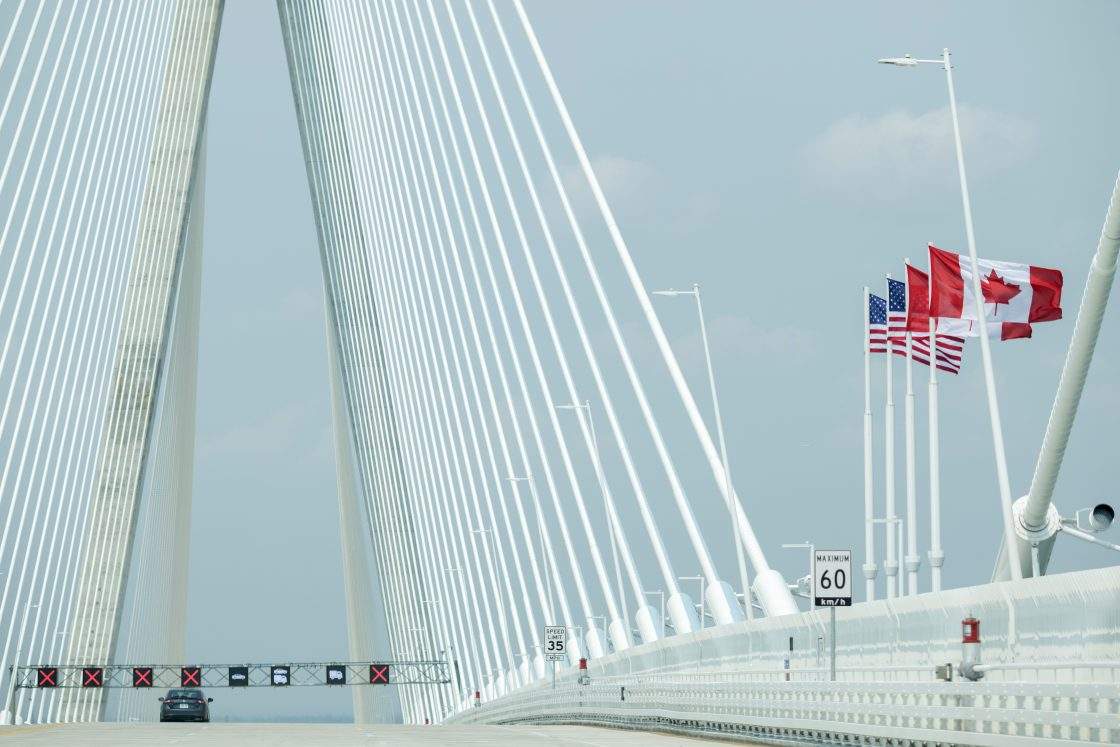
The House of Commons committee on government operations and estimates is convening to probe Prime Minister Mark Carney's handling of the newly opened Gordie Howe International Bridge revenue-sharing agreement. At the center of the inquiry is a stark discrepancy: while the $6.4 billion structure linking Windsor and Detroit finally welcomed its first motorists, Ottawa's official commitments collided with reality. Prime Minister Carney previously insisted that Canadian taxpayers would recover their entire construction investment before any net toll revenues were shared with the United States. Yet, the parallel agreement signed to secure the border opening tells a different story, committing Canada to split half of net revenues with the U.S. over a 15-year window without waiting for debt principal recovery.
Cross-border infrastructure projects rarely escape political friction, but this dispute exposes a deeper vulnerability in federal communication and bilateral leverage. For a project designed to streamline an economic corridor moving hundreds of billions in trade, the financial ambiguity surrounding the toll architecture threatens to overshadow the engineering triumph itself.
Anatomy of a Shift
To understand why parliamentarians are pressing for answers, one must look at the timeline of the agreement. Under the original 2012 pact forged between Canada and the state of Michigan, Canada agreed to finance, build, and operate the multi-billion-dollar span. In exchange, Ottawa was slated to retain 100 percent of toll collections until its initial capital outlay was fully amortized—a timeline structural analysts projected could span decades.
Political pressure from Washington shifted those parameters. Facing abrupt demands to alter the terms prior to the crossing's inauguration, federal negotiators struck a parallel accord. The updated framework splits net operating revenues 50-50 with the Americans for a duration of 15 years, funneling the U.S. share into a regionally managed economic development fund. Furthermore, any future adjustments to toll pricing exceeding specific thresholds require mutual consent.
Prime Minister Carney later conceded that his public descriptions of the mechanics were imperfect. He maintained that the core 2012 agreement remained legally intact, framing the revenue split as a minor percentage of the crossing's overall economic value over time. Opposition MPs, however, argue that glossing over the immediate diversion of net profits amounts to a failure of transparency.
The Financial Reality Behind the Rhetoric
At its core, the committee room debate centers on the definition of net revenue versus gross tolls. Operating a massive six-lane span carrying intense commercial truck traffic involves steep, recurring expenditures. Maintenance, safety systems, security, and staffing consume a significant portion of early collections.
When government officials argue that the financial impact is minimal during the initial ramp-up phase, economic data offers partial backing. Traffic density takes years to reach peak commercial capacity, meaning net margins in the infancy of the asset are relatively modest. Yet, principle matters in public accounting. Giving up half of those early operational margins to a foreign federal entity—without recovering the debt service burden first—marks a definitive departure from Ottawa's original baseline promises.
The investigation will likely dissect internal memoranda to determine when senior leadership realized the initial financing narrative no longer matched the binding text of the parallel accord. Bureaucrats drafted the compromise to avert a catastrophic shutdown of the border opening, but political messaging lagged behind the diplomatic concessions.
The Broader Economic Stakes
Discussions in Ottawa cannot be isolated from the wider geopolitical theatre. North American trade corridors face continuous pressure from shifting tariff regimes and protectionist posturing. The Gordie Howe span stands as the single most critical commercial artery between the two nations, handling thousands of daily freight movements that sustain automotive and manufacturing supply chains.
Any disruption to its operation carries exponential costs for businesses relying on prompt cross-border logistics. From that pragmatic viewpoint, administration defenders argue that surrendering a portion of net proceeds is a small price to pay to keep the asphalt open and commercial goods flowing without paralyzing tariffs.
Critics counter that ceding ground on financial terms without extracting reciprocal trade concessions sets a dangerous precedent. If federal authorities misrepresent minor details of a bridge agreement, public trust erodes regarding how larger, high-stakes trade disputes are handled behind closed doors.
As committee members question department officials and review the unvarnished text of the parallel accord, the focus shifts from past rhetoric to future accountability. The concrete pylons of the span are already bearing the weight of heavy transport trucks, but the political fallout from its financial architecture has only just begun to settle.


