The myth of the frictionless global economy finally died this year. For decades, we operated under the assumption that a container could move from a factory in Shenzhen to a warehouse in New Jersey with predictable precision. That world is gone. Today, we’re watching a high-stakes collision between old-fashioned geopolitical brinkmanship and a climate that refuses to cooperate.
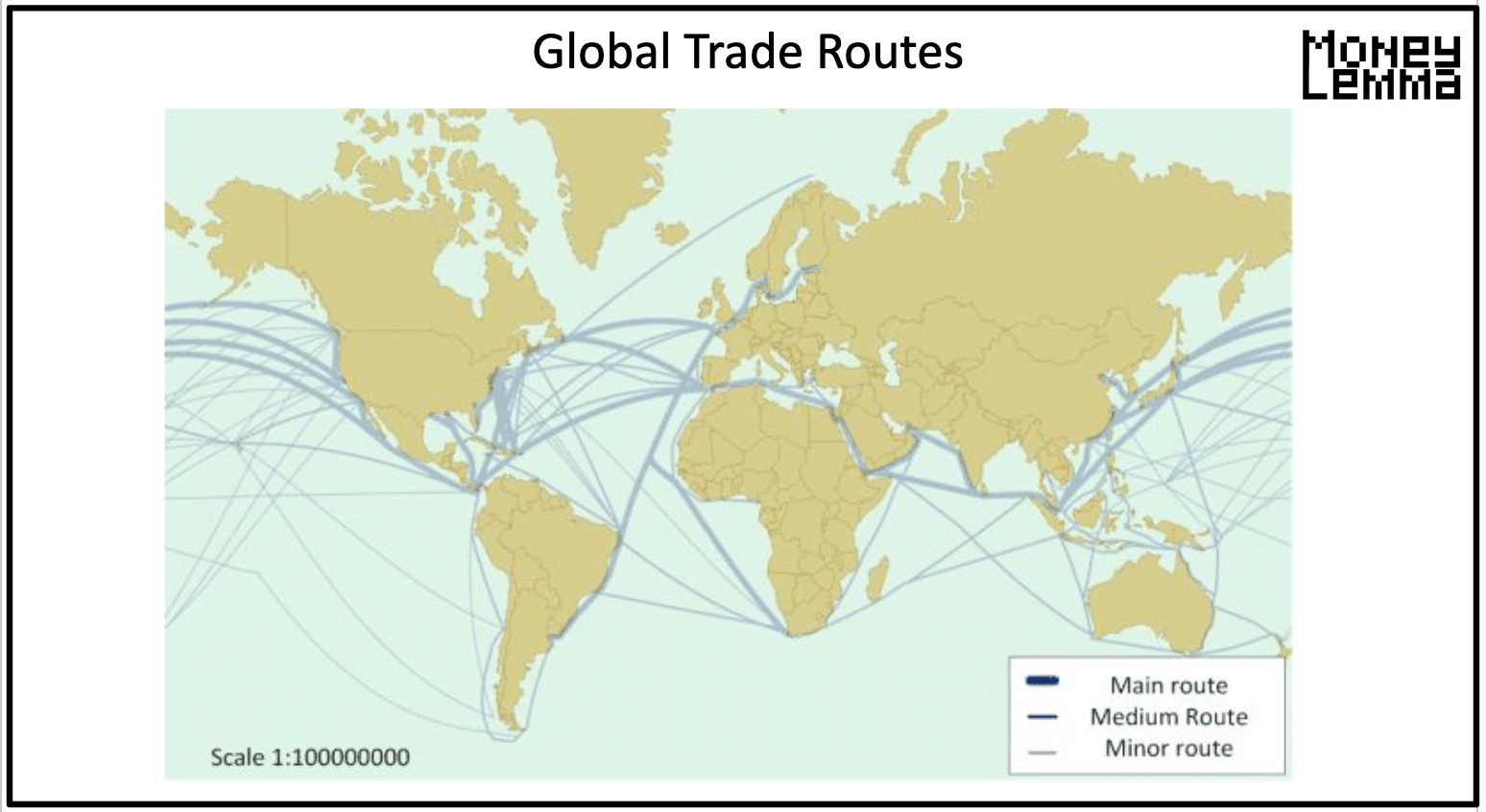
If you’re wondering why your supply chain costs are ballooning or why energy prices refuse to settle, look at the map. It’s not just one bad actor or one dry summer. It’s a systemic vulnerability that was hiding in plain sight.
The Chokepoint Reality Check
We rely on a handful of narrow, shallow, and frankly fragile passages to move the lifeblood of the global economy. When you mix the current conflict in the Middle East with the persistent, drought-driven water scarcity in places like Panama and Europe, you don’t just get delays. You get a fundamental repricing of risk.
The Strait of Hormuz is the most dangerous example. It handles about 20% of the world’s oil. When that route faces blockades or credible threats to tanker safety, the market doesn't just hiccup; it panics. We saw Brent crude surge past $80 a barrel recently, a direct result of vessels either staying in port or taking the long way around Africa. That extra transit time isn't just a headache for logistics managers—it’s a permanent tax on every gallon of fuel and every consumer good that touches the ocean.
The Dual Threat of Nature and Nations
Most people separate war and climate change in their minds. That’s a mistake. They are currently acting as a pincer movement on international logistics.
In the Middle East, the crisis is defined by intent. Iran’s influence over the Strait of Hormuz and regional activity in the Bab el-Mandeb Strait have turned key shipping lanes into bargaining chips. These are political choices that can, in theory, be resolved through diplomacy. But as we’ve seen throughout 2026, those negotiations are gridlocked.
Then, there’s the climate factor. You can’t negotiate with a dry canal. The Panama Canal, which serves as a vital artery for trade between Asia and the U.S. East Coast, has been crippled by recurring drought. When water levels drop, the number of daily transits is slashed. It’s a physical limit. If you’re a shipping line, you can’t pay your way out of a lack of water, even if you’re willing to drop millions for a spot in the queue.
Similarly, Europe’s industrial heartland relies on the Rhine River. When the water gets too low, barges run light or stop running entirely. This isn't just about shipping costs; it’s about the raw materials—the chemicals, the coal, the ore—that keep European factories humming. When the river fails, the factory slows down.
Stop Relying on Just-in-Time
If you’re still clinging to a just-in-time inventory strategy, you’re playing a game you’re going to lose. That model was designed for an era of stability. We aren’t in that era anymore.
- Map your redundancies. If your entire supply chain hinges on a single transit point like the Suez or Panama, you are one drought or one skirmish away from a total stoppage. Diversify your routing now. Yes, the Cape of Good Hope adds weeks to your timeline, but at least your cargo actually moves.
- Increase your buffer. If you need an item to keep your business running, stop treating it as a liability on your balance sheet. Treat it as insurance. Carrying two to four extra weeks of inventory is the cost of staying open while your competitor is stock-out.
- Audit your contracts. Many businesses are getting crushed because they didn’t understand their force majeure clauses. Check your agreements for language regarding port closures, naval blockades, or regional conflict. Use these to renegotiate your exposure.
- Demand better visibility. You cannot manage what you don’t see. The best forwarders right now aren't the ones promising the cheapest rates; they’re the ones giving you real-time data on exactly where your ships are and how they’re rerouting.
The New Normal Is Expensive
We need to accept that the era of hyper-optimized, ultra-cheap shipping is behind us. The combined pressure of regional conflict and environmental instability means that "smooth sailing" is no longer a realistic baseline.
Prices for container freight and oil are reflecting this new reality. When one route closes, the ripple effect forces ships into longer voyages, which consumes more fuel, which drives up bunker prices, which increases the cost of every single commodity. It’s a self-reinforcing cycle.
The companies that survive the next few years won’t be the ones that perfectly predicted the next crisis. They’ll be the ones that built enough slack into their systems to handle the disruption when it finally hits their dock. Don’t wait for the next report on a blocked strait or a record-low river level to make changes. The volatility is already here. You need to start operating like it.