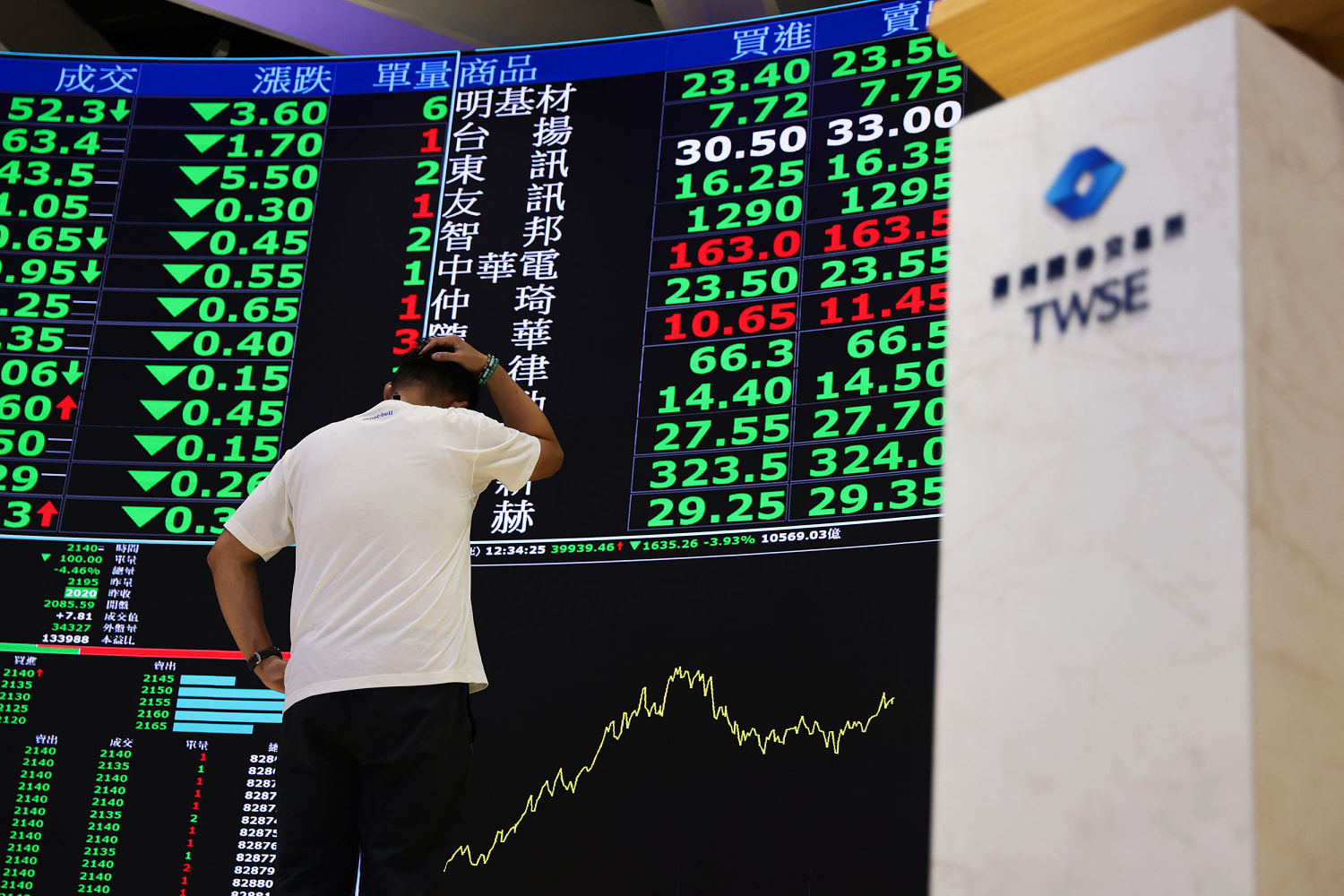
Global tech stocks tumble across Asian and European trading floors whenever a Democratic sweep—commonly called a blue wave—materializes in Washington because institutional investors immediately price in higher corporate tax rates, stricter antitrust enforcement, and disrupted cross-border supply chains. While financial headlines frame these overnight sell-offs in Tokyo, Seoul, Frankfurt, and Amsterdam as sudden panic, the reality on institutional trading desks is far more mechanical. Algorithms and portfolio managers do not wait for legislation to pass; they reprice future cash flows the moment unified legislative control appears likely, hitting the world's most valuation-sensitive sector first.
Markets hate uncertainty, yet they hate predictable margin compression even more. When a single party captures the White House and both chambers of Congress, the legislative friction that normally protects corporate bottom lines vanishes. For technology companies that spent years optimizing global tax structures and scaling through unchecked acquisitions, a unified Democratic government represents an immediate threat to their core financial architecture. Also making headlines in this space: Pothole Governance and the Cost of Bad Discipline.
The Anatomy of an Overnight Sell-Off
To understand why a political shift in the United States triggers immediate red screens in Taipei or Zurich, you have to look at how modern equity markets are wired. Global technology is not a collection of isolated regional industries. It is a single, tightly coupled financial organism.
When U.S. election results point toward a blue wave, the reaction begins in U.S. equity index futures—specifically the Nasdaq-100 futures—before American cash markets even open. Overnight liquidity is thin. Automated trading systems scanning news wires and betting markets react to shifting probabilities within milliseconds, driving futures contracts down. More insights regarding the matter are detailed by The Wall Street Journal.
Asian markets are open when these probability curves cross critical thresholds. Portfolio managers in Tokyo and Hong Kong look at Nasdaq futures, see the implied drop for Apple, Nvidia, or Microsoft, and immediately begin offloading their local suppliers.
The Supply Chain Domino Effect
A semiconductor foundry in Taiwan or a memory chip manufacturer in South Korea derives a massive portion of its revenue from American tech giants. If Wall Street decides that mega-cap U.S. tech firms face lower net earnings or forced structural breakups, the suppliers downstream feel the valuation contraction instantly.
By the time European markets open hours later, the narrative is already cemented. Institutional desks in London and Frankfurt adjust their exposure to European semiconductor equipment makers—such as ASML in the Netherlands—and enterprise software providers like SAP. What looks to casual observers like a global contagion is actually a synchronized, three-timezone repricing of the exact same revenue stream.
Three Structural Threats Driving the Repricing
Veterans on Wall Street rarely trade on political rhetoric. They trade on earnings per share, discount rates, and regulatory risk premiums. A Democratic sweep alters all three variables simultaneously, forcing analysts to rewrite their valuation models overnight.
Corporate Tax Repatriation and Minimum Rates
Technology companies carry some of the highest profit margins in the global economy, and historically, they have paid some of the lowest effective tax rates. Through intellectual property licensing and overseas subsidiaries, multinational tech firms legally shifted billions in profits to low-tax jurisdictions in Europe and Asia.
A unified Democratic Congress historically favors raising the statutory corporate tax rate, increasing the Global Intangible Low-Taxed Income (GILTI) rate, and enforcing strict corporate alternative minimum taxes.
Consider a hypothetical example to see the math. Suppose a major cloud computing firm generates $50 billion in pre-tax income, paying an effective global tax rate of 14 percent. If new legislation pushes that effective rate to 21 percent, the company loses $3.5 billion in annual net income overnight—without losing a single customer or selling one fewer software license. Because growth stocks trade at high multiples of future earnings, a permanent 7 percent haircut to net income translates into a massive contraction in market capitalization.
Antitrust Enforcement and Breakup Risk
During periods of divided government, antitrust enforcement relies entirely on existing statutes and slow-moving court battles. A blue wave opens the door to legislative overhauls of competition law.
Institutional investors have watched the regulatory mood darken toward dominant digital platforms for years. Under a unified Democratic government, the threat shifts from one-off fines—which tech giants easily absorb as a cost of doing business—to structural remedies. These include:
- Blocking vertical mergers and strategic "acqui-hires" that allow incumbents to absorb emerging competitors.
- Forcing the separation of platform ownership from competing business lines, such as separating an e-commerce marketplace from its private-label retail arm.
- Banning default search and app store placement agreements that generate billions in pure-margin licensing revenue.
When a company's valuation depends on ecosystem lock-in, any credible threat to dismantle that ecosystem forces institutional funds to reduce their position sizes.
Interest Rates and Fiscal Stimulus Mechanics
There is a second-order macroeconomic effect that often catches retail investors off guard. A blue wave typically signals aggressive fiscal spending—infrastructure bills, green energy subsidies, and expanded social programs.
Large-scale fiscal stimulus increases federal borrowing, which pushes U.S. Treasury yields higher as bond investors demand greater returns to absorb the new debt supply. Higher Treasury yields act like gravity on high-growth technology stocks. Because tech companies promise profits far into the future, analysts discount those future cash flows back to the present using the risk-free Treasury rate. When yields spike, the present value of future tech earnings drops, triggering automatic selling across growth portfolios globally.
Why Asian and European Tech Take Collateral Damage
It is easy to see why Silicon Valley stocks drop when Washington turns blue. Explaining why shares in Seoul, Tokyo, and Frankfurt often fall just as hard requires looking at cross-border capital flows and index construction.
Global institutional funds rarely buy individual stocks in isolation; they allocate capital through Exchange-Traded Funds (ETFs) and regional sector baskets. When a sovereign wealth fund or a massive pension manager decides to reduce its global technology weighting due to U.S. regulatory risk, they execute basket trades that sell technology equities across every major index simultaneously.
Furthermore, European and Asian tech indices are heavily concentrated. In several European markets, a single semiconductor equipment supplier or software giant accounts for a disproportionate share of the entire national index. When foreign institutional investors pull money out of European equities to raise cash or rotate into defensive domestic sectors, those flagship tech stocks absorb the brunt of the selling pressure.
The Currency Feedback Loop
Exchange rates compound the pain for international tech exporters. If a blue wave weakens the U.S. dollar due to expectations of wider fiscal deficits, the euro, yen, and Korean won strengthen in response.
For an export-heavy Asian hardware manufacturer or a European industrial software firm, a stronger local currency is a direct hit to profitability. Goods priced in dollars suddenly yield fewer yen or euros when revenues are converted back home. Thus, international tech stocks get squeezed from both ends: falling demand expectations from U.S. clients and unfavorable currency translation on the earnings they do manage to generate.
The Rotation Trade Nobody Talks About
When global tech stocks tumble, the money does not simply vanish into thin air. Capital rotates. While financial media focuses on the red arrows hitting major tech benchmarks, institutional trading desks are simultaneously buying the perceived winners of a Democratic sweep.
This sector rotation is ruthless and immediate. Portfolio managers dump high-multiple software and semiconductor names to fund purchases in sectors poised to benefit from Democratic policy priorities:
- Clean Energy and Grid Infrastructure: Solar manufacturers, battery storage developers, and electrical grid component suppliers in Europe and Asia frequently rally on the exact same days that semiconductor stocks crash.
- Industrial Materials and Construction: Companies supplying raw materials, heavy machinery, and engineering services benefit from anticipated U.S. infrastructure spending.
- Healthcare Services: While pharmaceutical makers face drug-pricing pressure, hospital operators and managed care providers often gain on expectations of expanded federal healthcare subsidies.
Understanding this rotation explains why broad market indices sometimes look relatively stable even while technology shares are in freefall. Beneath the surface, trillions of dollars are shifting from digital assets to physical infrastructure.
What the Headlines Get Wrong About Trade Policy
A common misconception among casual market watchers is that a Democratic sweep automatically brings relief from tariffs and trade wars, which should theoretically help Asian and European tech stocks. In practice, institutional investors treat this assumption with extreme skepticism.
While a Democratic administration may abandon erratic, unilateral tariff threats against traditional European allies, its stance on strategic technology competition with China remains hawkish. Export controls on advanced semiconductors, lithography equipment, and artificial intelligence chips enjoy broad bipartisan support in Washington.
European and Asian chipmakers know this well. Tighter export restrictions mean lost revenue in the Chinese market—one of the largest buyers of semiconductor manufacturing equipment and consumer electronics components in the world. When investors weigh the slight reduction in transatlantic trade friction against the certainty of strict technology export controls and higher corporate taxes, the net calculation remains negative for global tech valuations.
Historical Reality Versus Market Panic
Experience teaches you that initial election-night market reactions are notoriously poor predictors of long-term sector performance. Trading algorithms are built to price immediate risk, not legislative reality.
Time and again, markets have sold off tech stocks on the fear of sweeping regulatory overhauls, only to watch those same stocks rally months later when the actual legislation proves far milder than feared. Even with unified control of Washington, slim congressional majorities give moderate lawmakers enormous leverage to water down corporate tax hikes and block radical antitrust bills.
Moreover, major technology companies possess unmatched balance sheets and lobbying muscle. When statutory tax rates rise, corporate tax departments find new deductions. When regulators challenge acquisitions, companies pivot to internal research and development or return cash to shareholders through massive stock buybacks, which artificially boost earnings per share and support stock prices.
The sell-offs in Tokyo, Frankfurt, and New York are real, and the volatility they create can wipe out billions in paper wealth within hours. Yet for disciplined observers, those sharp drops represent the market's obsession with short-term margin compression rather than any fundamental collapse in global demand for computing power, cloud infrastructure, or enterprise software. When the political dust settles, earnings growth—not legislative theater—still dictates where capital ultimately flows.