Smoke smells different depending on what is burning.
When wood burns in a rural Bangladeshi kitchen, the air turns sweet and heavy, smelling of mustard oil, wet clay, and evening rice. When plastic and paper burn inside a shattered storefront, the stench is sharp. It stings the back of the throat and coats the tongue in copper. Recently making headlines in this space: Two Words on a Red Carpet and the Weight of the World.
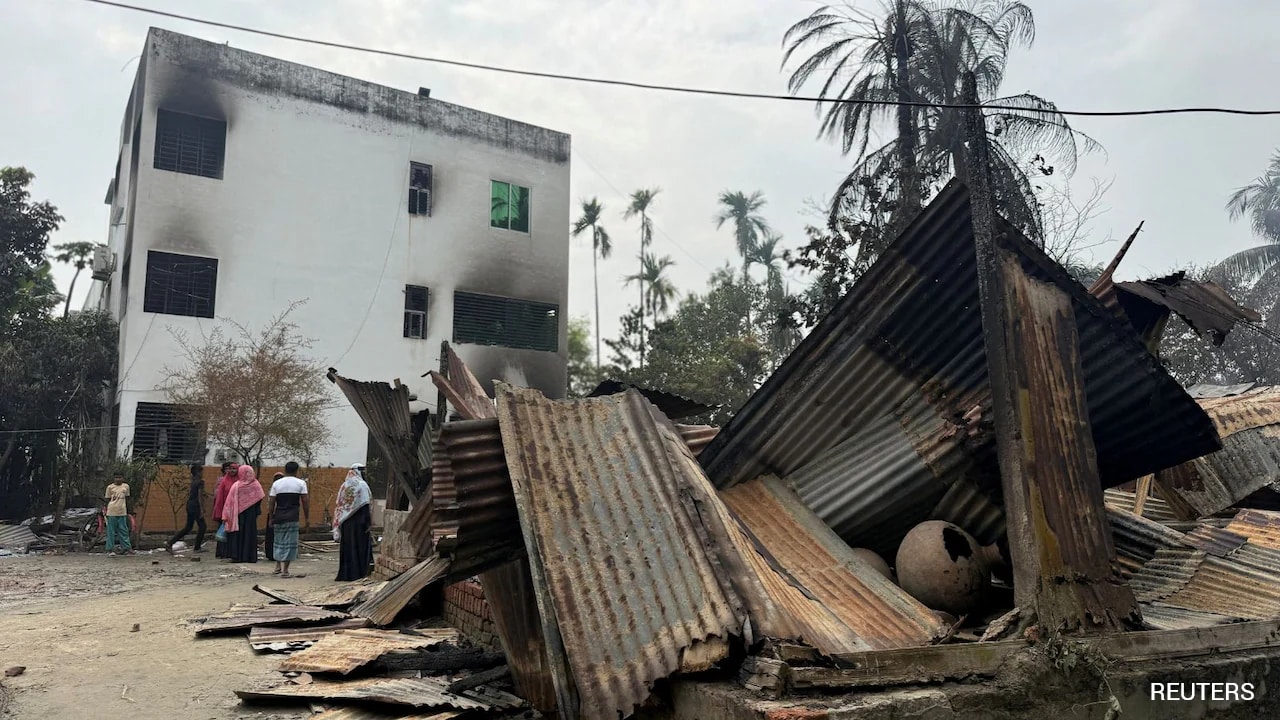
In early 2025, that sharp, metallic smoke rose over Bangladesh. Reports surfaced of arson attacks targeting the ancestral home of Nobel Peace Prize laureate Muhammad Yunus, alongside multiple branches of Grameen Bank—the pioneering microfinance institution he founded nearly half a century ago.
To an outsider scrolling past a headline, the story looks like another flashpoint in South Asian political unrest. A famous name. A damaged building. A brief flicker of outrage before the feed refreshes. Further information regarding the matter are detailed by NPR.
Look closer, though, and the ash tells a much older, far more volatile story. Burning a Grameen Bank branch is not merely vandalizing concrete and glass. It is setting fire to the ledger of a nation’s poorest women, testing whether an idea that won a Nobel Prize can survive the raw fury of modern political polarization.
The Architecture of a Radical Bet
To understand why anyone would throw a firebomb at a rural bank branch, you first have to understand what that branch actually holds.
Walk into a typical Grameen Bank outpost in a district like Tangail or Bogura on a quiet Tuesday morning, and you will not find marble floors, mahogany desks, or armored vaults. You will find plastic chairs, ceiling fans whirring against the monsoon humidity, and thick, dog-eared passbooks filled with handwritten columns of numbers.
For decades, traditional banking operated on a simple, ruthless rule: the more money you already have, the more money we will lend you. Without land titles, gold jewelry, or a salaried guarantor, a poor villager was invisible to the financial system. If a sudden flood drowned a rice paddy or a fever struck a child, the only door open was the local mahajan—the informal moneylender whose interest rates could swallow a family’s labor for generations.
In 1976, Muhammad Yunus, then an economics professor at Chittagong University, looked at that system and decided it was broken at the root. During a devastating famine, he met a woman named Sufiya Begum in the village of Jobra who made bamboo stools. Because she lacked twenty-two cents to buy her own bamboo, she had to borrow from a trader who forced her to sell the finished stools back to him at a price that left her with two cents of profit a day.
Yunus lent twenty-seven dollars out of his own pocket to forty-two people in Jobra. Every single cent came back.
Think of traditional banking as a fortress built to keep risk out. Grameen Bank was built like a banyan tree—a system whose roots drop down from above, anchoring themselves in social trust rather than physical collateral. Borrowers formed small groups of five. No one signed a mortgage. Instead, weekly meetings, peer accountability, and the sheer dignity of being trusted became the guarantee.
By the time Yunus and Grameen Bank were awarded the Nobel Peace Prize in 2006, the model had grown into a financial lifeline serving millions of borrowers, roughly ninety-seven percent of whom were women.
A Hypothetical Morning After the Fire
Imagine—and let us be clear that this is a composite portrait drawn from how rural microfinance operates on the ground—a woman named Amena living three kilometers outside a district town where a Grameen branch was torched.
Amena is forty-two. She does not read political editorials, nor does she follow the shifting alliances of Dhaka’s power brokers. What she knows is that six years ago, a loan of fifteen thousand taka allowed her to buy two goats and a second-hand sewing machine. Today, her daughter is in secondary school, and Amena holds a small savings balance in her passbook.
When she hears that men arrived after midnight with kerosene and iron rods, smashing the windows of the local branch and setting the furniture alight, her first thought is not about constitutional reform or international diplomacy.
Her first thought is about her passbook.
Is the record of her repayments gone? Will the loan officer still come to the village courtyard on Thursday morning? If she needs a small seasonal loan before the harvest, who will hand over the cash?
Violence against physical infrastructure always lands heaviest on the people with the smallest margin for error. A wealthy businessman in Dhaka loses a day of trading when the streets shut down; a village weaver loses the working capital that buys tomorrow’s thread.
The Long Shadow Between Politics and the Poor
Why did the anger turn toward Yunus and the bank he built?
The answer lies in the long, bitter fault line running through Bangladeshi public life. For years before the dramatic political upheavals of 2024—when massive student-led protests toppled the long-standing government of Sheikh Hasina and installed Muhammad Yunus as the chief adviser of an interim administration—Yunus had been locked in a fierce struggle with the state.
During the previous administration, Yunus faced dozens of legal cases, labor law convictions, and relentless political attacks. Critics in the former ruling establishment accused him of overstepping his role as a social entrepreneur, insinuating that he harbored political ambitions and questioning the interest rates charged by microfinance institutions. Supporters, alongside international observers and human rights advocates, viewed the campaign as systematic political vendetta against Bangladesh’s most globally recognized citizen.
When the political tide reversed in August 2024 and Yunus stepped in to lead the interim government, the fault line did not disappear. It inverted.
In a country nursing deep wounds, every institution becomes a symbol. To millions, Yunus represented integrity, global respect, and a clean break from authoritarian rule. To loyalists of the ousted regime and factions angered by the shifting political order, his residence and the bank bearing his legacy became targets of retaliation.
When mobs strike a bank branch or a family home, they are rarely attacking balance sheets. They are attacking a totem.
What Microfinance Critics Get Right—and What Arson Gets Wrong
It would be dishonest to pretend that Grameen Bank, or microfinance as a whole, exists above criticism. Anyone who has spent time studying rural economies in South Asia knows the debates are real, nuanced, and unresolved.
Economists have argued for years over whether small loans truly lift families permanently out of poverty or merely help them smooth out seasonal shocks. Some researchers have pointed out that intense weekly repayment schedules can create immense social pressure inside villages, occasionally forcing borrowers to take a loan from one NGO to pay off another. Others have questioned whether interest rates—typically hovering around twenty percent in the broader microfinance sector to cover the high operational cost of sending officers to remote villages—place too heavy a burden on fragile enterprises.
Those are vital, adult arguments. They belong in university halls, parliamentary committees, and village meetings.
Fire solves none of them.
Burning down a branch office does not lower an interest rate by a single basis point. It does not forgive a debt in a way that helps a borrower build credit; instead, it paralyzes the local ecosystem that circulates cash through rural markets. When an office burns, disbursements freeze. Small shopkeepers who rely on borrowers’ daily purchases see their foot traffic dry up. The ripple moves outward in silence.
The Invisible Ledger
There is a technical truth about modern banking that mobs often misunderstand when they strike a local branch: the numbers survive.
Long before the attacks, Grameen Bank had digitized its core records, backing up client accounts, savings balances, and loan histories across secure servers far removed from any single rural storefront. Even if every paper ledger in a district office turned to gray ash, the institutional memory of who owes what—and who owns what—remains intact.
Yet banking is never purely a digital exercise. It is an emotional contract.
A rural borrower hands over hard-earned banknotes to a loan officer because she believes the institution will still be standing next month, next year, and ten years from now when her children need tuition. That belief is fragile. You can rebuild a scorched wall in three weeks with brick, cement, and fresh paint. Rebuilding the quiet confidence that allows a woman to hand her life savings across a wooden counter takes years.
A Pattern Older Than Borders
History offers a grim reminder of what happens when political rage turns inward against community institutions.
Across developing economies—from post-conflict West Africa to regions of Latin America—moments of political transition often trigger attacks on local cooperatives, clinics, and rural credit unions. The pattern is almost always the same. Instigators target visible, lightly guarded symbols associated with a rival leader, calculating that the spectacle of smoke and shattered glass will project strength and sow chaos.
The tragedy is that these institutions are the exact shock absorbers a society needs during political turbulence. When national politics are volatile, local economic engines keep food on tables and children in classrooms. Destroying them is like burning the lifeboats because you are angry at the captain.
I remember standing once outside a small cooperative office in a flood-prone district after a night of political hartals—general strikes that paralyze transport across the country. The shutters were dented from rocks thrown the night before. At seven in the morning, before the city newspapers had even arrived, the branch manager unlocked the twisted metal gate, swept the broken glass into a dustpan, and set out two plastic chairs on the veranda. Within twenty minutes, six women arrived with their passbooks wrapped in plastic bags to keep out the morning mist. Nobody gave a speech. They simply sat down, counted out crumpled bills, and went back to work.
The Ashes and the Quiet Stubbornness
We do not know yet how long the aftershocks of Bangladesh’s political transformation will last, nor how fiercely rival factions will continue to test the boundaries of civil order. Political transitions are messy, unpredictable, and rarely follow the clean arcs written in history textbooks.
What remains certain is the quiet stubbornness of the people at the bottom of the economic pyramid.
A house can be scorched. A storefront can be blackened with soot, its windows boarded up with raw plywood while investigators take photographs and politicians trade blame on evening television.
Somewhere down a red-clay road, a woman still wakes before dawn, lights her stove, checks the thread on her loom, and tucks a worn passbook into the fold of her sari, waiting for the bank door to open again.