The champagne still pops with a crisp, expensive snap. Caviar is piled high on mother-of-pearl spoons. Outside the tinted glass of the Expoforum, the late spring sun of St. Petersburg refuses to set, casting a perpetual, surreal glow over Russia’s premier economic gathering.
On paper, everything looks exactly as it always did.
For years, the St. Petersburg International Economic Forum (SPIEF) was affectionately dubbed the "Russian Davos." It was the glittering crown jewel of Vladimir Putin’s economic public relations machine. It was a place where American CEOs clinked glasses with oligarchs, where European finance ministers signed multi-billion-dollar energy deals, and where the global elite came to court the Kremlin.
But walk the corridors today and the air feels thin. The glamour is a coat of cheap paint over a cracked wall.
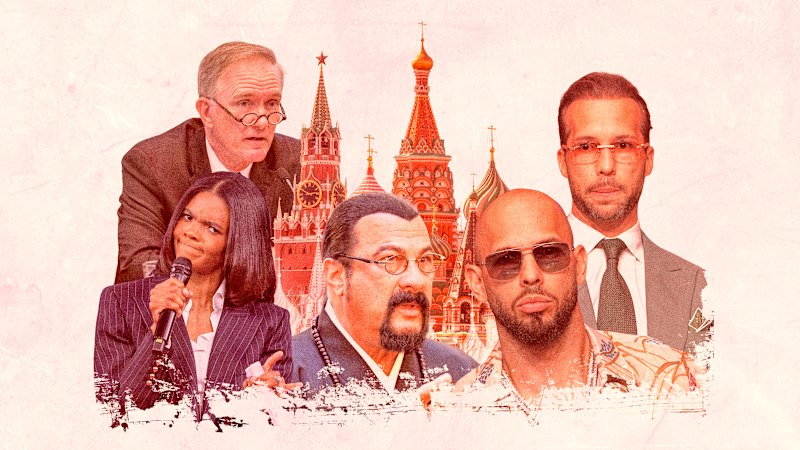
The global titans are gone. In their place stands a bizarre ecosystem of domestic influencers, mid-level bureaucrats from friendly non-Western nations, and an overwhelming, unspoken sense of dread. The music is loud, but it cannot drown out the phantom artillery fire echoing from a war thousands of miles to the south.
This is the reality of a fortress economy trying to throw a party while the world watches it burn.
The Illusionists on the Pavilion Floor
Imagine a young Russian tech entrepreneur. Let's call him Dmitry.
A few years ago, Dmitry would have come to this forum looking for Silicon Valley venture capital. He would have pitched his software to German investors or Japanese conglomerates. Today, Dmitry stands in a pavilion surrounded by state-sanctioned lifestyle influencers filming TikToks in front of military-grade hardware.
He is not pitching global expansion. He is pitching survival.
Dmitry’s reality is the reality of modern Russian business. The country has pulled off a remarkable feat of macroeconomic gymnastics, pivoting its entire trade apparatus toward China, India, and the Global South to replace lost Western markets. On the surface, the numbers look resilient. Russian GDP hasn't collapsed the way Western economists predicted back in 2022.
But look closer at Dmitry’s face when the cameras turn off.
The growth he is witnessing is not driven by innovation, consumer confidence, or genuine economic health. It is driven by a massive, unsustainable injection of state military spending. The factories are humming because they are building tanks, shells, and drones. It is a textbook example of military Keynesianism—a temporary high that leaves the rest of the civilian economy starved of oxygen, starved of parts, and starved of people.
The influencers posing next to luxury domestic cars—rebranded Chinese imports, if we are being honest—provide the perfect metaphor. They are there to project a sense of normalcy, to tell the domestic audience that life goes on, that the sanctions failed, and that Russia is still the center of a vibrant, alternative global order.
It is a beautiful show. But you cannot eat a projection.
The Invisible Drain
The real tragedy of the forum isn't who is there, but who is missing.
It isn't just the Western CEOs who stayed away. It is the missing generation of Russian talent. Hundreds of thousands of tech workers, engineers, scientists, and forward-thinking entrepreneurs packed their bags and left the country when the war began. They took their brains, their code, and their future tax rubles with them to Dubai, Yerevan, Tbilisi, and Berlin.
What remains is a profound, structural labor shortage.
Consider what happens when a country tries to run a modern economy while simultaneously drafting hundreds of thousands of working-age men into the military and losing hundreds of thousands more to emigration. Unemployment drops to historic lows. Sounds great, right? Wrong.
In a healthy economy, low unemployment means prosperity. In Russia right now, it means a desperate, cannibalistic scramble for workers. Companies are forced to jack up wages just to keep the lights on, competing directly with the astronomical salaries the state pays to military recruits.
This brings us to the central monster hiding under the rug at SPIEF: inflation.
The Central Bank of Russia has been forced to keep interest rates sky-high to prevent the economy from overheating. For a business owner like Dmitry, this means borrowing money to expand is practically impossible. The cost of capital is suffocating. He cannot import the Western microchips his software needs because of sanctions, and the Chinese alternatives are expensive and logistically complicated to source.
So, while the speakers on the main stage talk about "sovereign economic development" and the decline of the US dollar, the small business owners in the audience are quietly calculating how many months of runway they have left before the high interest rates and supply chain bottlenecks crush them.
The Shadow of the Dragon
There is a distinct lack of balance in the new global partnerships being celebrated in St. Petersburg.
The forum’s organizers point proudly to the large delegations from Beijing, New Delhi, and various African capitals. They talk of a multipolar world where Russia is a leading pillar. But anyone with a basic understanding of geopolitics can see the imbalance in the room.
Russia didn't decouple from the West to become independent. It decoupled from the West to become a junior partner to China.
Every major deal signed at the forum now runs through the yuan. Russian oil and gas, once the premium fuel powering European industry, is now sold at deep discounts to Asian buyers who know exactly how desperate the Kremlin is for cash. Russia has traded its European dependency for a total reliance on Beijing for consumer goods, technology, and geopolitical cover.
It is a gilded cage. The influencers on the floor might not notice the bars, but the old-guard oligarchs sitting in the VIP lounges certainly do. They built their fortunes by integrating Russia into the global financial system. They bought villas in Tuscany, yachts in Monaco, and shares on the London Stock Exchange. Now, they are trapped inside the fortress, forced to reinvest their wealth domestically in projects dictated by the state’s wartime priorities.
They smile for the state media cameras. They nod during Putin’s keynote address. But their eyes tell a different story. It is the look of men who know that their wealth is no longer truly theirs—it belongs to the war effort, for as long as the war effort needs it.
The Cost of the Performance
Walking away from the glittering pavilions, past the security checkpoints and the heavily armed guards, the illusion begins to evaporate.
The St. Petersburg International Economic Forum was once a window into a brighter, more integrated future for Russia. Today, it is a monument to stagnation. It is a vivid demonstration of how a nation can use its vast natural wealth to simulate prosperity while systematically gutting its long-term potential.
The war has become the gravity around which everything else in Russian life must orbit. It dictates the budget, it dictates the interest rates, it dictates who walks through the doors of the Expoforum, and it dictates who is allowed to speak.
As the white night finally transitions into a brief, shadowy twilight, the music from the after-parties carries across the Neva River. It is loud, frantic, and desperate. It is the sound of a elite class trying to convince themselves that the ground isn't shifting beneath their feet.
The party will end. The influencers will turn off their cameras. The foreign delegates will fly home. And Dmitry will go back to his office, staring at a spreadsheet of rising costs, missing workers, and unavailable parts, wondering how much longer a country can survive on a diet of pure adrenaline and gilded ghosts.