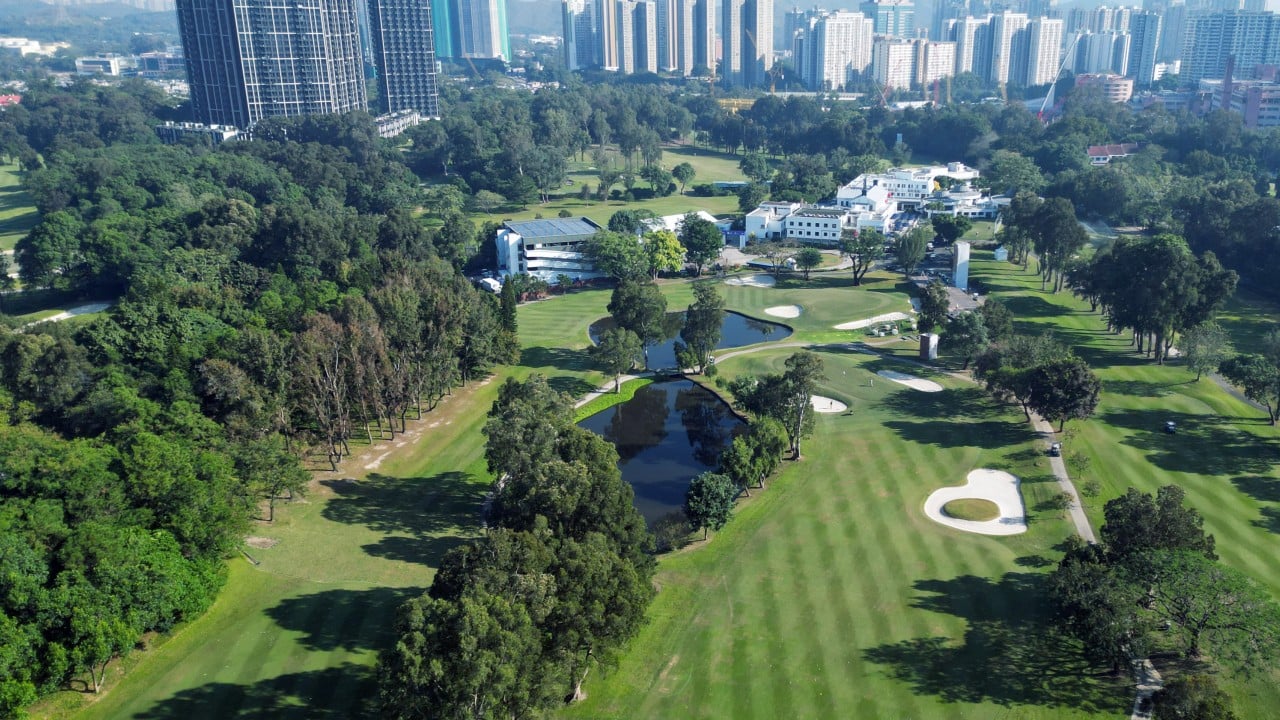
The afternoon heat in Fanling hangs heavy, thick with the scent of freshly mown hybrid bermudagrass and the distant, polite clink of a titanium driver meeting a golf ball. For nearly a century, this sound belonged exclusively to a select few. It was the soundtrack of deals made in whispers, of colonial legacies preserved in amber, and of a sprawling oasis of green that remained resolutely shut to the millions living just beyond its manicured borders.
But the air is shifting. The silence that once protected Hong Kong’s ultra-exclusive private sports clubs is being broken by a loud, persistent demand from the streets below. Read more on a related topic: this related article.
Hong Kong is a city defined by vertical ambition and horizontal claustrophobia. Space is the ultimate currency. Yet, some of the most valuable land on earth has long been held under Private Recreational Leases, granted decades ago for nominal fees—sometimes just a single dollar. The original bargain was simple: clubs received cheap land to promote sports. In reality, many transformed into fortresses of privilege. Now, the government is forcing these institutions to make a choice that goes against their very nature. Pay the market land premium, or open the gates to the public.
This is not just a bureaucratic policy shift. It is a quiet revolution over who owns the soul of the city’s geography. More analysis by CBS Sports explores comparable views on this issue.
The Invisible Borders of the Fairway
Imagine a young competitive swimmer. Let's call her Karen. She trains in a cramped, chlorinated public pool in Kowloon, sharing a lane with elderly recreational swimmers and splashing toddlers. She has the raw talent to compete internationally, but lacks the undisturbed water time to shave those crucial milliseconds off her butterfly stroke.
A fifteen-minute drive away sits an Olympic-sized pool, sparkling and virtually empty under the midday sun. It belongs to a private club. The water is pristine. The lanes are clear. But Karen cannot cross the threshold because her family cannot afford a membership fee that rivals the price of a luxury apartment.
This disparity highlights the friction at the heart of the current debate. For generations, the city’s elite viewed these clubs as essential sanctuaries. They argue that without these spaces, Hong Kong cannot attract top global talent or maintain its status as an international financial hub. Business leaders need places to network, they say. International executives expect a certain standard of leisure.
But that argument wears thin when a family of four is eating, sleeping, and living in a subdivided flat smaller than a club's locker room.
The government's mandate strikes directly at this tension. Under the updated policy framework, clubs operating on expired or expiring leases can no longer rely on automatic, dirt-cheap renewals. If they wish to maintain their exclusive grip on the land, they must pay a substantial premium, reflecting a significant percentage of the land’s actual market value. If the financial toll is too high, they must surrender a massive chunk of their operating hours to outside sports organizations, schools, and ordinary citizens.
Privacy, once guaranteed by a handshake and a colonial-era charter, is now a commodity with a staggering price tag.
The True Value of a Square Foot
To understand how Hong Kong arrived at this crossroads, one must look at the sheer mathematics of survival in the territory. The city consistently ranks as the world’s least affordable housing market. Land is cleared, seas are reclaimed, and mountains are carved out just to build high-rises.
In this environment, a golf course or a private cricket ground is no longer just a sports facility. It is an astronomical luxury.
Consider the sheer scale of the land in question. The Fanling golf course alone occupies roughly 170 hectares. Critics have pointed out for years that this single expanse of greenery could house hundreds of thousands of people if converted into public residential estates. While the government has already moved to claw back a small portion of that specific site for housing, the broader policy targets the dozens of other private clubs scattered across Hong Kong Island and the New Territories.
Club directors are facing an existential crisis. The math simply does not add up for many of them. If they pass the new land premium costs onto their members, debenture prices will skyrocket, potentially alienating the very people who keep the clubs afloat. If they open their doors to the public to satisfy the alternative requirement, the illusion of total exclusivity vanishes.
The tension in the air during board meetings is palpable. Decades of tradition are colliding head-on with modern civic necessity.
Dismantling the Old Boys Network
The resistance from the clubs is rarely loud, but it is deeply entrenched. It manifests in arguments about heritage, about the preservation of historic trees, and about Hong Kong’s international prestige. There is a genuine fear among members that allowing public access will ruin the pristine conditions of the facilities. They worry about crowded tennis courts, booked-out golf simulators, and a loss of the quiet prestige they paid millions to secure.
But the counter-argument is rooted in a fundamental question of fairness. Why should the public subsidize the leisure of the ultra-wealthy?
By charging nominal land premiums for decades, the city was effectively diverting resources away from public infrastructure. The new policy reverses this dynamic. It forces a reassessment of what sports development actually means. True sports development does not happen exclusively behind a velvet rope. It happens when a kid from a working-class neighborhood has a place to run, swim, and play without breaking the family budget.
The transition will not be smooth. Enforcement will be a logistical minefield. How will the government monitor whether a club is genuinely making its facilities available, or if it is burying the public booking options behind layers of bureaucratic red tape? Skeptics wonder if clubs will offer unusable hours—like Tuesday mornings at 4:00 AM—to technically satisfy the requirement while keeping the public out.
The administration insists the oversight will be stringent. The clubs are being watched, not just by officials, but by an increasingly vocal public that refuses to be ignored.
A New Horizon for the City Street
Change is already visible, occurring in small, incremental shifts that would have been unthinkable a generation ago. School buses now occasionally pull up to gates that used to turn away anyone without a brass member's badge. Teenagers from local estates are stepping onto manicured pitches, looking around with a mix of awe and defiance.
The old world is not disappearing overnight. The clubs will survive, but their relationship with the city they inhabit must change fundamentally. They can no longer exist as islands of extreme wealth detached from the realities of the concrete jungle surrounding them.
The afternoon sun begins to dip below the horizon, casting long shadows across the fairways. The clink of the golf club is joined by a new sound echoing from a nearby field—the loud, chaotic laughter of school children playing a football match on ground that used to be forbidden. The gates are unlocking, not because the clubs wanted to open them, but because a changing city left them with no other choice.