Silence.
That is the first thing you notice when you stand on the banks of a river that has been chewed up and spit out by industrial history—not the absence of water, which still rushes over the cobbles with a deceptive, glassy sparkle, nor the absence of wind in the valley oaks, but the eerie, hollow quiet beneath the surface where millions of silver bodies ought to be flashing against the current. Discover more on a related subject: this related article.
If you walk along the gravel bars of California’s Central Valley rivers today—places like the Merced, the Tuolumne, the Yuba, or the Feather—you will see mountains that do not belong there. They rise from the floodplain like the sun-bleached spines of prehistoric beasts, forty-foot ridges of smooth, grey river cobble stacked in neat, parallel rows as far as the eye can see. To an untrained hiker, they look like strange geological quirks, perhaps the ancient moraines left behind by a retreating glacier.
They are not natural. They are the scars of machines that ate the earth alive. Further analysis by The Washington Post highlights similar perspectives on the subject.
For over a century, we told ourselves a comforting bedtime story about the California Gold Rush. We pictured a lone prospector in a wool shirt, kneeling beside a mountain creek with a tin pan, swirling away silt to reveal a few gleaming flakes of yellow metal. We turned that image into a romantic myth of grit, luck, and frontier independence.
We forgot what came next. When the easy placer gold vanished from the creek beds, the tin pans were thrown away, and the engineers moved in with floating steel monsters the size of four-story apartment buildings.
The Floating Factories That Turned Rivers Upside Down
To understand why Chinook salmon and steelhead trout are vanishing from California today, you have to picture a machine called a bucket-line dredge.
Imagine a massive wooden or steel barge floating in a pond of its own making. Extending from its bow is a heavy steel boom armed with an endless conveyor belt of cast-manganese buckets, each one capable of scooping up a ton of earth in a single bite. Day and night, twenty-four hours a day, three hundred and sixty-five days a year, those buckets plunged down into the riverbed—digging thirty, fifty, sometimes a hundred feet below the water table, clear down to the bedrock.
Inside the belly of the barge, deafening revolving screens and high-pressure water jets washed the ancient river gravels, trapping the heavy gold dust in mercury-lined riffles. And what did the machine do with the rest of the river? It dumped it out the back.
Here is the physical tragedy of that process, explained as simply as possible: a healthy river is layered like a well-built house. On the bottom sits the heavy bedrock and large boulders. Above that rests a thick, permeable bed of medium-sized gravel—stones roughly the size of walnuts and baseballs. And on the very top lies a rich blanket of fine silt, sand, and organic soil that anchors cottonwoods, willows, and reeds.
The bucket-line dredges inverted the house. They buried the fertile topsoil sixty feet underground and piled the sterile, washed cobbles on top in towering, barren windrows. Between 1898 and the 1960s, these floating factories churned through hundreds of miles of California river corridors, turning lush, braided floodplains into moonscapes of rock.
Meet Mateo, and the River That Forgot How to Hold Life
To see what this geological vandalism actually feels like on the ground, step into the waders of a hypothetical third-generation commercial fisherman named Mateo, standing near the confluence of the San Joaquin and Merced rivers on a crisp October morning.
Mateo’s grandfather fished these waters when the fall run of Chinook salmon was so dense that people claimed you could practically walk across the river on their backs. His father fished them when the runs were shrinking, blaming the new concrete dams rising across the Sierra foothills. Now, Mateo stares at an empty net and a regulatory notice shutting down the entire California salmon season for another consecutive year, wondering how he is going to pay the mortgage on his boat.
Mateo knows about the dams. Everyone knows about the dams. Concrete walls like Friant, New Exchequer, and Oroville cut salmon off from ninety percent of their historic high-elevation spawning grounds in the Sierra Nevada.
But the real problem lies elsewhere, hidden in plain sight below the dams.
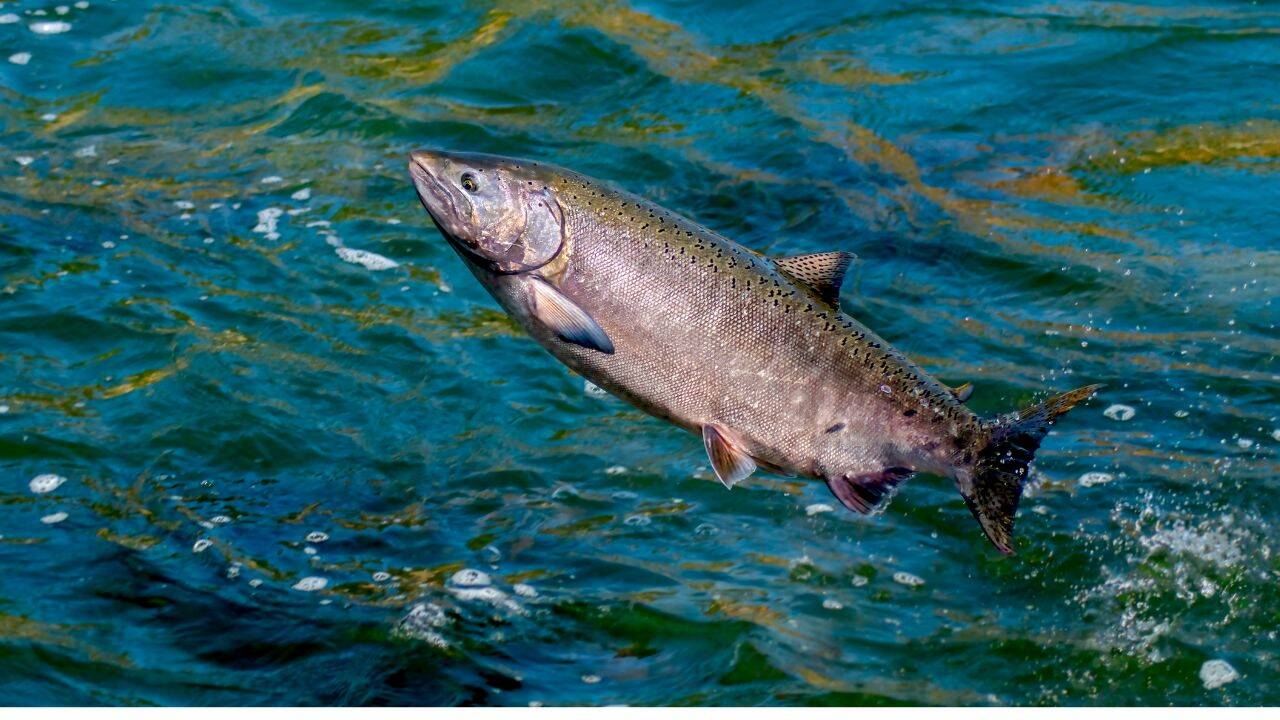
Even in the short stretches of river where salmon are still allowed to swim, the river itself has been broken. When a female Chinook salmon battles her way up from the Pacific Ocean, navigating hundreds of miles of agricultural runoff, predatory striped bass, and warm water, her body is literally dissolving from the inside out. She hasn't eaten since she left the salt water. Every ounce of her remaining energy is dedicated to a single biological imperative: digging a nest, called a redd, in clean river gravel to lay her four thousand eggs.
Now, picture that exhausted female arriving at a dredged stretch of river.
Instead of a wide, shallow, braided channel filled with loose, walnut-sized gravel where oxygen-rich water percolates gently through the stones, she finds a narrow, deeply incised trench bordered by forty-foot walls of oversized dredge tailings. Because the floodplain was walled off by those rock piles, winter floods can no longer spread out across the valley floor. Instead, the river blasts through that narrow chute like water from a firehose, scouring away whatever small spawning gravel remains and leaving behind only massive boulders too heavy for a salmon to move with her tail.
If she manages to lay her eggs anyway, the traps close in. Without gentle side channels and inundated floodplains, the newly hatched fry have nowhere to hide from the rushing current and hungry predators. In a natural river, young salmon spread out onto flooded grassy plains in the spring, gorging on aquatic insects in warm, slow-moving water until they grow fat and strong enough to survive the ocean. In a dredged river, those nurseries do not exist. The baby fish are flushed straight into the deep, fast main channel, where non-native bass pick them off like targets in a shooting gallery.
The Invisible Poison Sleeping in the Tailings
If the physical destruction of the riverbed were the only legacy of historic gold dredging, the problem would be daunting enough. It is not.
I will admit something that even seasoned river restoration engineers find deeply unsettling: when you dig into those historic tailing piles, you are not just moving rocks. You are waking up a chemical ghost.
During the height of hydraulic and dredge mining in California, miners poured an estimated twenty-six million pounds of liquid elemental mercury into the Sierra Nevada watersheds to bind with fine gold flakes. Roughly ten to thirteen million pounds of that mercury was never recovered. It washed downstream, settling into the deep, oxygen-poor sediments of the dredged riverbeds and tailing ponds.
On its own, elemental mercury is stubborn and relatively stable. Yet when those stagnant dredge ponds warm up in the California sun, naturally occurring bacteria living in the oxygen-starved mud consume the inorganic mercury and convert it into methylmercury—one of the most potent neurotoxins on Earth.
Methylmercury does not stay in the mud. Plankton absorb it. Aquatic insects eat the plankton. Juvenile steelhead and salmon eat the insects. And at every step up the food chain, the concentration magnifies, accumulating in the muscle tissue of fish, river otters, herons, and the human families who still cast lines from the riverbanks to put dinner on the table. Every restoration project that touches a dredged California river today has to walk a razor-thin tightrope: how do you flatten the rock piles and reconnect the floodplain without accidentally stirring up a century-old toxic time bomb?
Why Steelhead and Salmon Are the Canary in Our Watershed
It is tempting, especially if you live hundreds of miles from the Sacramento-San Joaquin Delta, to view the collapse of California’s native fish as a niche environmental story—sad for anglers, unfortunate for wildlife photographers, but largely irrelevant to modern life.
That is a dangerous illusion.
Anadromous fish—species like Chinook salmon and steelhead trout that are born in freshwater, migrate to the ocean to grow, and return to their natal streams to spawn—are not merely passengers in the ecosystem. They are its architects.
For millions of years, salmon acted as a massive biological conveyor belt, hauling millions of tons of nitrogen, phosphorus, and marine-derived nutrients from the deep Pacific Ocean and depositing them high into the interior forests and valleys of North America. When bears, eagles, and scavengers dragged spawned-out salmon onto the riverbanks, those nutrients fertilized the giant redwoods, valley oaks, and riverside willows. The trees grew taller, casting cool shade over the water and dropping insects into the current, which in turn fed the next generation of young salmon.
When you sever that cycle by turning the river bottom into sterile gravel heaps, the entire watershed begins to starve. Water temperatures climb because the riverside forests wither without marine nutrients and seasonal groundwater recharge. Groundwater tables drop because the river is trapped in a deep, dredged trench instead of spreading across the floodplain to soak into the aquifer.
The same river modifications that killed the salmon nurseries are now leaving Central Valley farming communities and cities vulnerable to catastrophic floods, because those towering dredge tailings act like accidental levees, funneling high water downstream at destructive speeds rather than letting the valley absorb the surge naturally.
Rebuilding a River, One Ton of Cobble at a Time
Yet, if you return to certain stretches of the Merced, the Yuba, or the Stanislaus rivers today, you will hear a different sound.
The roar of diesel engines has returned to the gravel bars—not to strip the gold, but to put the river back together.
Over the past decade, a quiet revolution has taken hold among river scientists, tribal nations, state agencies, and local landowners. They realized that simply pouring hatchery-raised fish into a broken river is like pouring water into a bucket with no bottom. If you want the salmon and steelhead back, you have to rebuild the house.
The work is staggering in scale. Along the Merced River—one of the hardest-hit victims of twentieth-century bucket-line dredging—restoration crews have spent years bringing in massive excavators and dump trucks to haul away hundreds of thousands of tons of historic dredge tailings. They grade down the forty-foot rock mountains, transforming barren stone deserts back into gentle, sloping floodplains. They crush oversized cobbles into the exact walnut-sized gravel that female Chinook need to build their redds, then inject tens of thousands of tons of that clean gravel directly back into the active river channel.
They carve sinuous side channels and backwater alcoves, planting tens of thousands of native willows, cottonwoods, and sedges into the newly uncovered topsoil.
And then, they wait for the rain.
When winter storms hit the Sierra Nevada and the river swells over its banks, something miraculous happens on these restored reaches. Instead of roaring down a narrow, lifeless chute, the water spills gently out onto the newly graded floodplain. Within days, sunlight warming that shallow water triggers an explosion of zooplankton—the microscopic crustaceans that scientists half-jokingly call "salmon cheeseburgers."
Juvenile salmon and steelhead immediately swim out of the cold, fast main channel and into these flooded meadows. Studies conducted on restored Central Valley floodplains have shown that young salmon rearing in these shallow habitats grow up to five times faster than their siblings trapped in the dredged main river. They emerge fat, silver, and muscular—equipped with the size and speed needed to survive the perilous gauntlet out through the Golden Gate and into the open ocean.
The Measure of What We Leave Behind
We cannot undo the nineteenth and twentieth centuries. Nobody is going to tear down all the concrete dams that supply water to thirty-nine million Californians, and nobody can erase the feverish ambition that drove men to tear apart entire valleys for a few ounces of yellow metal.
What we can do is stop pretending that the damage is finished.
For too long, we looked at those towering piles of river rock along California’s highways as harmless relics of a colorful past—quaint monuments to our pioneering spirit. We failed to see them for what they actually are: an ongoing, active blockade against life itself, starving a river system that feeds an entire state.
Stand again on that restored riverbank on the Merced as the late afternoon sun drops behind the Coast Range, turning the water the color of hammered copper. Look down into the clear, shallow riffle where the excavators finished their work just two autumns ago. There, holding steady against the gentle current over a fresh bed of walnut-sized stones, is a dark, muscular shadow—three feet long, scarred from a thousand-mile journey through the Pacific, sweeping her tail across the clean gravel to carve a cradle for the future.