Salt water is a ruthless editor. It eats iron, dissolves flesh, and turns thousand-year-old oak into sponge within a few human lifetimes. For centuries, the deepest floors of the South China Sea kept their secrets simply because human lungs fail, steel hulls buckle, and the darkness at fifteen hundred meters down is absolute.
Then came the machines. If you found value in this piece, you might want to look at: this related article.
Picture a hypothetical researcher—let us call her Lin—sitting in a climate-controlled control room aboard a research vessel rocking gently off the coast of Hainan. She is wearing a faded fleece jacket against the chill of the server racks humming behind her. On her triple-monitor setup, there is no murky green water, no floating silt, and no tangle of rotting rigging. Instead, there is a razor-sharp, three-dimensional digital twin of a Ming Dynasty merchant ship resting on the abyssal plain, rendered in glowing amber wireframe. Lin reaches out, taps a trackpad, and rotates the entire wreck with two fingers.
This is no longer science fiction, nor is it an isolated laboratory experiment. Across China, archaeological institutions are executing a sweeping national initiative to bring artificial intelligence, autonomous underwater vehicles, and deep-sea robotics into the core of historical excavation. While conventional headlines treat this as a simple gadget upgrade—swapping trowels for algorithms—the reality is far more intimate. Humanity is finally building the senses required to rescue its own forgotten memory before the ocean finishes digesting it. For another perspective on this event, see the latest coverage from CNET.
The Tyranny of the Trowel
To understand why this shift matters, you have to understand the quiet heartbreak of traditional archaeology.
For over a hundred years, digging up the past meant destroying it in slow motion. Every time an excavator scraped away a layer of earth at a site like the Yin Ruins in Anyang or the Sanxingdui sacrificial pits in Sichuan, that stratigraphic context vanished forever. If a student missed a faint stain in the soil, or mislabeled a bag of charcoal, that piece of the puzzle was gone. The human eye gets tired. Back muscles cramp after six hours crouched in a muddy trench under a July sun.
I have stood at the edge of active excavation pits where the air smelled of damp clay and diesel generators, watching brilliant scholars squint at half-buried bronze fragments while rain threatened to wash away a week of brushwork. You feel the clock ticking in your bones. You know that beneath your boots lies a conversation from three thousand years ago, and you are trying to transcribe it while someone slowly erases the chalkboard.
Now multiply that anxiety by ten thousand atmospheres of pressure.
Underwater archaeology has always been a brutal negotiation with physics. A human diver breathing compressed air hits physiological walls within minutes at depths beyond forty meters. Even with mixed-gas saturation diving, the human body is fragile, expensive to keep alive, and terrible at working in zero-visibility silt clouds. When a diver kicks a fin too hard near a sunken hull, the resulting cloud of sediment blinds everyone for hours.
For decades, the deepest shipwrecks of the Maritime Silk Road—vessels carrying celadon porcelain, silk bolts, copper coins, and the personal letters of long-dead sailors—remained untouchable. We knew they were there. Fishermen occasionally pulled up barnacle-encrusted bowls in their trawl nets, offering tantalizing glimpses of intact time capsules sitting just out of reach. Yet every year we waited, deep-sea currents and wood-boring organisms chewed away at the hulls.
Mechanical Hands with a Surgeon’s Touch
The turning point arrived when engineers stopped building underwater bulldozers and started building underwater watchmakers.
Consider the recent breakthroughs demonstrated at the Northwest Continental Slope No. 1 and No. 2 shipwrecks in the South China Sea, resting roughly fifteen hundred meters beneath the waves. At that depth, the water pressure exceeds one hundred and fifty kilograms per square centimeter—enough to crush a conventional submarine like an aluminum soda can. No human diver will ever swim there.
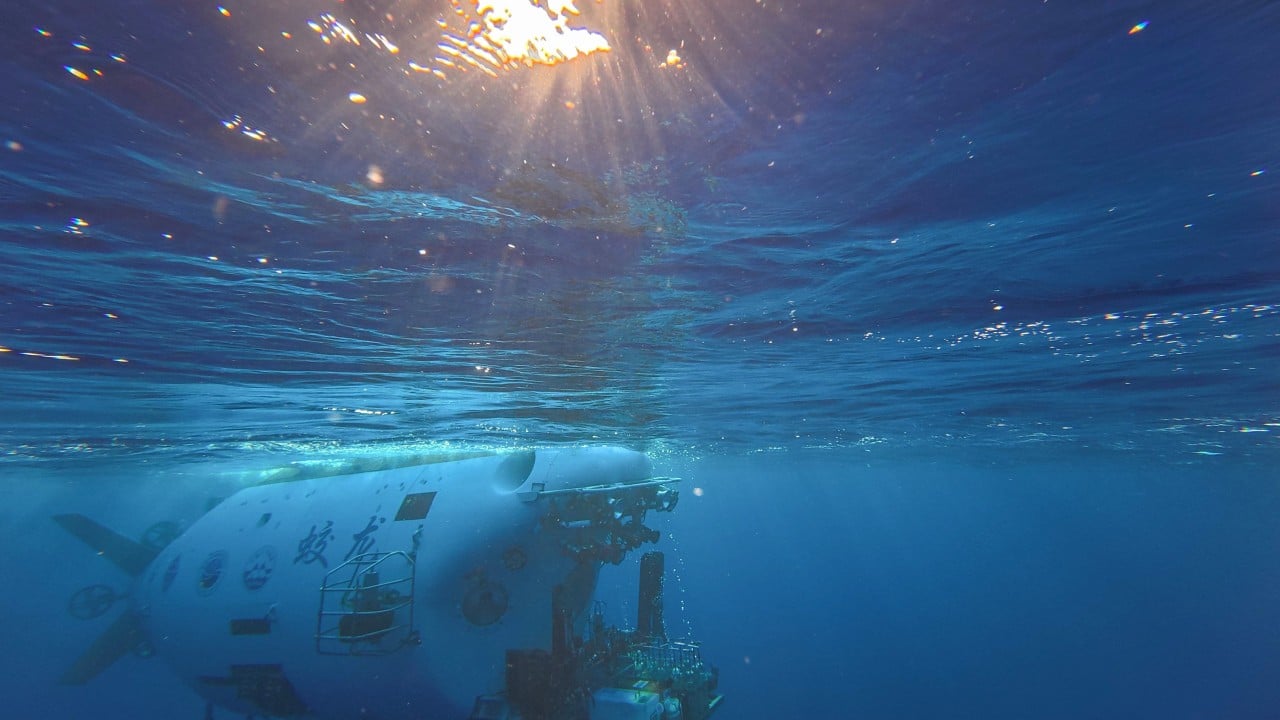
Instead, Chinese teams deployed deep-sea manned submersibles like the Shenhai Yongshi (Deep Sea Warrior) alongside tethered remotely operated vehicles and autonomous underwater drones. Equipped with soft-touch robotic manipulators, high-precision laser scanners, and ultra-high-definition optical cameras, these machines descended into the black.
Think of the robotic arm not as a mechanical claw, but as a blindfolded pianist feeling for the keys. Traditional hydraulic claws exert hundreds of pounds of force; if they grab a waterlogged Ming Dynasty porcelain bowl, the bowl shatters into worthless confetti. The new generation of archaeological manipulators uses flexible, sensor-lined fingers calibrated to measure resistance in fractions of a gram. They can cradle a fragile ceramic jar coated in centuries of marine concretion, lift it without cracking the glaze, and place it inside a cushioned recovery basket.
Before a single artifact leaves the seabed, however, the machines map everything.
Using multi-beam sonar and structured-light 3D photogrammetry, autonomous vehicles fly slow, lawnmower-style grid patterns inches above the wreck. They capture millions of overlapping data points, measuring the exact tilt of every timber and the precise resting angle of every stacked plate. Back on the surface, computers stitch those points together into a millimeter-accurate virtual replica.
Even if a storm hits the next morning and scatters the wreck across the seabed, the spatial truth of that ship is preserved permanently in silicon.
The Pattern-Matching Ghost
Hardware solves the problem of reach, yet reach alone creates a secondary crisis: drowning in data.
A single modern excavation—whether at the bottom of the South China Sea or inside the moisture-controlled glass chambers of Sanxingdui—generates terabytes of raw imagery, soil chemistry logs, lidar scans, and acoustic readings. A team of twenty human specialists could spend thirty years just sorting through the shard fragments from one prolific kiln site, trying to match curved pieces of broken pottery by eye like an endless, monochrome jigsaw puzzle.
Here is where artificial intelligence steps into the trench—not as a replacement for the historian, but as a tireless apprentice with photographic memory.
Imagine a massive warehouse filled with fifty thousand broken terracotta fragments from the Qin Dynasty, each roughly the size of your palm. A human restorer picks up one piece, studies the curvature, examines the thickness of the clay, and walks down aisles of tables hoping to spot its twin. It is noble, maddening work.
Now imagine feeding high-resolution 3D scans of all fifty thousand fragments into a deep-learning neural network trained on ancient ceramic geometry. The algorithm does not get bored. It does not need coffee. Within hours, it analyzes the microscopic fracture lines, mineral grain distribution, and wall curvature of every shard, flagging hundreds of high-probability matches that would have taken human hands a decade to find.
Chinese research institutes and universities have increasingly deployed these computer-vision models across major terrestrial and marine sites. At Sanxingdui, where thousands of shattered ivory tusks, gold masks, and bronze trees were buried in sacrificial pits over three millennia ago, digital modeling and AI-assisted reconstruction allow researchers to test how twisted bronze fragments fit together virtually before risking physical stress on the fragile original metal.
On the ocean floor, AI plays an even more active role. Autonomous underwater vehicles patrolling vast stretches of seabed use real-time object recognition to distinguish between an ordinary volcanic rock and the telltale geometric curve of a buried amphora. Instead of blindly dredging miles of empty mud, the robot pauses, hovers, and pings the mother ship: Look here.
What the Algorithm Cannot Feel
Still, anyone who tells you that technology has solved archaeology is lying to you—or has never actually held a three-thousand-year-old bone needle in their hand.
There is a quiet anxiety humming beneath the excitement in academic corridors from Beijing to Xi'an. When you hand over the initial sorting of history to neural networks, you inherit the blind spots of whoever trained the code. An algorithm trained primarily on imperial kiln porcelain from Jingdezhen might glance right past an anomalous, crude clay pot made by an undocumented coastal village, dismissing it as geological noise.
History is often hiding in the anomalies. The weird stuff. The mistakes.
More fundamentally, an AI can tell you where a ship sank, what cargo it carried, and how its hull planks were joined. It cannot tell you why the captain stayed at the helm during a typhoon, or what a young merchant felt when he packed a small, cheap jade pendant into his wooden chest before leaving port in Fujian, hoping to bring it back to his mother.
Technology gives us the skeleton of the past with breathtaking clarity. Flesh and breath still require human empathy.
When we mistake the scanner for the scholar, we risk turning archaeology into a sterile inventory exercise—a glorified warehouse audit of dead civilizations. The danger is not that robots will take over the dig; the danger is that we become so dazzled by the 3D hologram that we forget to ask why the people who built the ship mattered in the first place.
Why This Matters Far Beyond History Books
You might wonder why a taxpayer in Chengdu, or a software engineer in Shenzhen, or a reader half a world away should care whether a robotic arm pulls a intact Song Dynasty celadon plate out of cold mud.
Look at the world outside your window. We live in an era of frantic amnesia. Entire digital archives vanish when servers shut down; news cycles evaporate in forty-eight hours; communities fracture over competing versions of what happened ten years ago, let alone a thousand.
Archaeology is the ultimate antidote to cultural narcissism. It reminds us that globalization did not start with fiber-optic cables or container ships. Seven hundred years ago, merchants from Quanzhou were navigating by starlight and magnetic compasses, trading Chinese silk and porcelain for Southeast Asian spices, Arabian frankincense, and East African ivory. Their ships were floating cities where languages, religions, and currencies collided daily.
When Chinese archaeologists send AI-guided robots into the deep sea, they are not merely hunting for museum trophies. They are recovering the lost receipts of human connection. Every shipwreck mapped on the floor of the South China Sea is physical proof that distant cultures have always found ways to trade, talk, and depend on one another across vast, terrifying oceans.
And there is a practical dividend that reaches straight into the modern world. The technologies forged to survive the crushing dark of archaeological excavations—soft-touch robotic grippers, ultra-low-light optical sensors, autonomous swarm navigation, and damage-free material scanning—do not stay in museums. They migrate directly into deep-sea cable repair, offshore wind turbine inspection, surgical robotics, and planetary exploration. Teaching a machine to gently pick up an ancient porcelain bowl in pitch-black water turns out to be remarkably similar to teaching a rover how to sample fragile ice crusts on Europa.
The Lamp in the Silt
Back in that control room off the coast of Hainan, the night shift is settling in. Outside the portholes, the South China Sea is an endless expanse of ink under a sliver of moon.
Fifteen hundred meters below the hull, a tethered robot hovers motionless just inches above the seabed, its LED floodlights carving a bright white cone out of the eternal night. Dust motes of marine snow drift lazily through the beams like falling stars in slow motion.
On Lin’s screen, the AI finishes stitching together the latest sonar pass. A new shape resolves out of the static—not cargo this time, not timber, not anchor stone. It is a small, bronze oil lamp, half-buried in the silt near what would have been the ship's stern cabin, tipped onto its side where it fell centuries ago when the sea finally rushed in.
The robotic arm extends slowly into the light, its soft-touch fingers opening like a hand reaching across the dark.