Silence.
In the sterile, windowless corridors of Beijing’s Central Military Commission, silence is never merely the absence of noise; it is the heavy, suffocating precursor to a vanishing. When a three-star general fails to appear at a scheduled plenary session, or when the chairman of a state-owned aerospace giant suddenly stops answering encrypted calls, nobody asks where they went. Everyone already knows. They have been swallowed by the apparatus they spent forty years learning to manipulate, leaving behind an empty leather chair, a scrubbed biography on a government portal, and a terrifying question that echoes all the way from the rocket silos of Gansu to the trading floors of Wall Street.
What happens when the world’s largest standing military discovers that the weapons it bought to conquer the future were hollowed out from the inside?
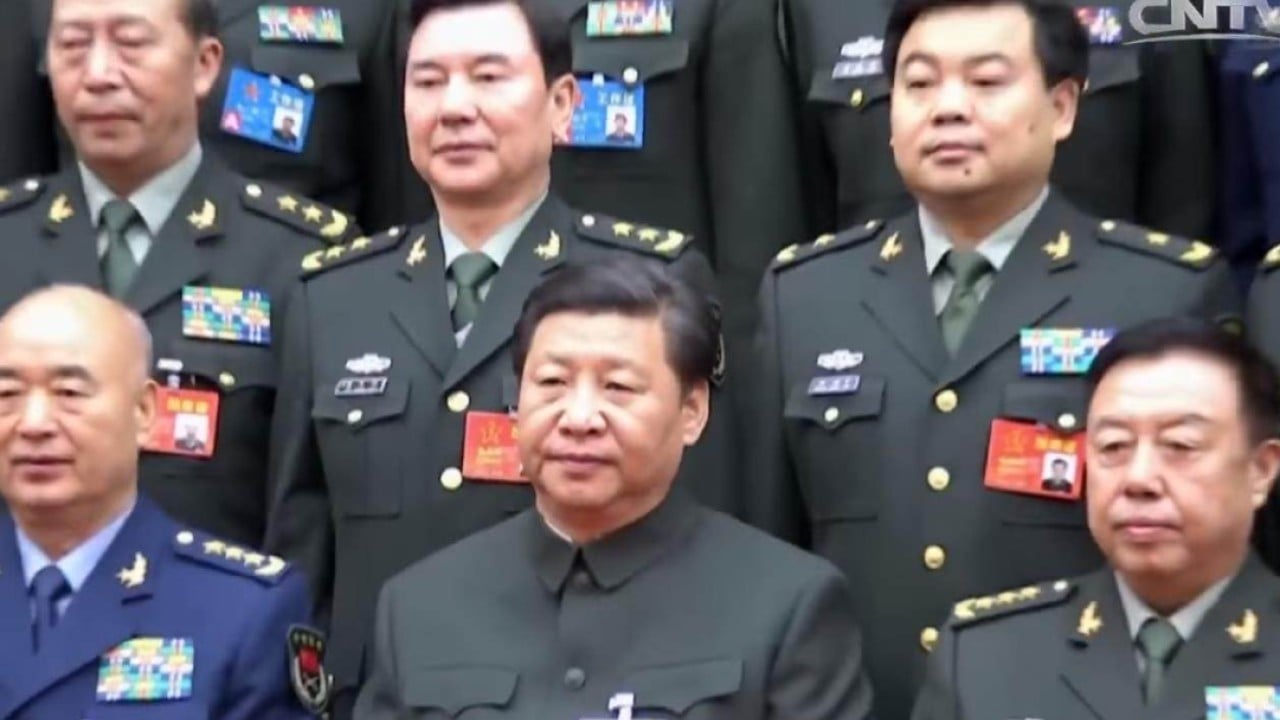
To understand the shockwaves rippling out from Beijing’s decision to expel sixteen high-ranking generals and a cadre of defense corporate chiefs from the Chinese Communist Party, you have to look past the dry, bureaucratic announcements of the Xinhua News Agency. On paper, this reads like another routine sweep in Xi Jinping’s decade-long anti-corruption crusade—a statistical update in a campaign that has already ensnared millions of officials. Sixteen generals. A handful of defense executives. Stripped of rank, expelled from the Party, handed over to military prosecutors.
Numbers lie by omission. They flatten human terror into a spreadsheet.
Consider, for a moment, a hypothetical figure—let us call him Director Lin—standing inside a subterranean assembly facility deep in the mountains of western China. Lin is not a cartoon villain twirling a mustache; he is a composite of the exact defense industry executives who have been systematically purged over the past two years from conglomerates like the China Aerospace Science and Technology Corporation (CASC) and Norinco. For twenty years, Lin was rewarded for hitting impossible production quotas while navigating a labyrinth of unwritten rules. To secure the titanium alloys needed for hypersonic glide vehicles, you paid a "consulting fee" to a cousin of a procurement officer. To get a missile guidance system signed off before the National Day parade, you quietly overlooked a subcontractor’s decision to substitute cheaper, commercial-grade microchips for military-hardened silicon. Everybody ate. The generals got villas in Hainan and promotions; the defense chiefs got bonuses and political protection; the state got shimmering, terrifying hardware to roll down Chang’an Avenue.
Then, the music stopped.
The Architecture of Hollow Steel
I have spent years tracking the intersection of authoritarian statecraft and defense procurement, watching how closed systems inevitably rot when fear replaces accountability. When you sit across from former defense contractors who managed to get out before the doors locked, the first thing you notice isn't anger. It is exhaustion. They describe a system where corruption wasn't a bug that crept into the machinery—it was the grease that kept the gears turning at all. Without off-the-books cash, nothing moved. Approvals stalled for years. Supply chains froze.
Think of a modern intercontinental ballistic missile as a luxury high-rise built in a seismic zone. From the street, the glass curtain wall gleams in the sun, projecting absolute permanence and power. Inside, however, the contractor watered down the concrete to pocket the difference, and the city inspector signed the certificate in exchange for a stack of cash in a mooncake box. Everything looks magnificent until the earth actually shakes.
For Beijing, the earth began shaking in the autumn of 2023 and hasn't stopped since.
When intelligence reports—some leaked to Western analysts, others unearthed by Beijing’s own terrified auditors—revealed the true state of the People’s Liberation Army Rocket Force, the reaction at the top wasn't mere anger. It was existential panic. The Rocket Force is the crown jewel of China’s military modernization, the nuclear and conventional fist meant to deter American intervention in the Pacific and hold Taiwan at ransom. Yet investigators found silos with hatches that wouldn't open properly, fuel tanks allegedly filled with water instead of liquid propellant so corrupt officers could sell the fuel on the black market, and procurement budgets looted to the tune of billions of yuan.
Expelling sixteen generals and top corporate chiefs isn't a victory lap. It is an emergency amputation.
You do not cut off your own sword arm unless gangrene has already reached the elbow. By purging the very men tasked with building and commanding China’s nuclear deterrent, hypersonic arsenal, and naval expansion, Beijing is tacitly admitting that its massive, multi-trillion-yuan defense buildup has been compromised by systemic graft. The loyalty of the brass was purchased with state funds, and when the bills came due, the hardware didn't work.
Why Wall Street Should Care About Beijing’s Barracks
It is tempting, sitting thousands of miles away in Chicago or New York, to view a purge of Chinese generals as distant palace intrigue—a bloody game of thrones played out behind the red walls of Zhongnanhai. That is a dangerous misreading of how deeply China’s military-industrial complex is wired into the global economy.
Look closely at who was expelled alongside the men in uniform. They were not just battlefield commanders; they were corporate chiefs. In China, the boundary between a civilian tech titan, a state-owned defense executive, and a People’s Liberation Army general is largely an illusion maintained for foreign investors. Under Beijing’s doctrine of "Military-Civil Fusion," the same conglomerates manufacturing commercial satellites, electric vehicle batteries, artificial intelligence chips, and telecommunications gear are the primary contractors feeding the PLA.
When the Party’s Central Commission for Discipline Inspection kicks down the doors of a defense giant, the tremors hit global supply chains immediately.
Suppose you are a portfolio manager in London or a supply-chain director in Munich sourcing rare-earth magnets, specialized alloys, or aerospace components from a Chinese state-affiliated enterprise. Overnight, the chief executive you negotiated with vanishes. His deputies are frozen in terror, refusing to sign a single export license, approve a joint venture, or authorize a capital expenditure for fear that any decision might later be construed as treason or graft. Bureaucratic paralysis becomes the safest survival strategy.
I remember speaking with an industrial consultant in Shanghai during an earlier wave of regulatory crackdowns, watching him stare at his phone as another state executive disappeared from the news cycle. "You don't understand the psychology," he told me, stirring a cold coffee. "When the purge starts, the smartest thing you can do is nothing. If you sign a contract, you might be accused of taking a kickback. If you innovate, you might break an unspoken rule. So everyone sits on their hands and waits for the storm to pass."
Except this storm isn't passing. It is widening.
By linking the expulsion of corporate executives directly to the downfall of sixteen generals, Beijing is signaling that no boardroom is immune. The campaign has moved beyond individual greed—beyond the cliché of the general with basements full of jade and Moutai liquor—and into the structural plumbing of how China funds and builds its industrial power. Every defense conglomerate is now a crime scene. Every procurement contract signed over the last decade is being audited under a microscope held by men whose primary qualification isn't engineering expertise, but ideological ferocity.
The Paradox of Absolute Control
There is a profound, almost tragic irony at the heart of this crackdown, one that echoes through centuries of imperial history.
In an open society, corruption is exposed by messy, infuriating mechanisms: investigative journalists digging through public filings, whistleblowers protected by independent courts, opposition lawmakers screaming in parliament, short-sellers tearing apart fraudulent balance sheets. It is noisy, embarrassing, and constant. Yet it acts like a controlled burn in a forest, clearing out the dead brush before an unstoppable wildfire can ignite.
In an authoritarian system, there is no controlled burn. There is no independent press to ask why a defense contractor’s brother-in-law suddenly owns a fleet of yachts. There is no opposition party to audit the defense budget. Instead, the supreme leader relies on a secret police force—the discipline inspectors—to police the system from the top down.
Consider what happens next: the inspectors themselves become the ultimate power brokers, immune from scrutiny until the day another faction turns on them. Meanwhile, the generals who survive the purge learn a devastating lesson. Competence will not save you. Technical brilliance will not save you. Winning battles on a simulation map will not save you. The only currency that matters is absolute, performative political loyalty.
Have you ever wondered what happens to an army when its officers are more afraid of their own political commissars than they are of the enemy?
History offers a grim answer. In the late 1930s, Joseph Stalin purged tens of thousands of Red Army officers, wiping out three of five marshals and the vast majority of corps and division commanders in the name of rooting out traitors and wreckers. The Soviet military looked terrifying on paper—massive tank divisions, endless manpower, sweeping industrial output. Yet when Germany invaded in 1941, the Red Army collapsed in catastrophic encirclements because its surviving commanders were paralyzed by fear, terrified of taking initiative without written orders from Moscow.
Beijing is not Moscow in 1937, and Xi Jinping is not executing his generals in the basement of the Lubyanka. Expulsion from the Party and life imprisonment in Qincheng Prison—the luxury penitentiary north of Beijing reserved for fallen elites—is a quieter fate. Yet the psychological effect on the command structure is eerily similar.
Right now, inside the headquarters of the PLA’s theater commands, newly promoted officers are stepping into the boots of the sixteen purged generals. They are looking at the empty desks of men who were once hailed as the architects of China’s military renaissance—men personally vetted and promoted by Xi Jinping himself. That is the detail that makes this purge so destabilizing. These sixteen generals were not holdovers from a previous administration; they were Xi’s own men. Their downfall proves that even personal patronage offers zero protection.
The Invisible Stakes in the Pacific
To be honest, watching this unfold from the outside brings a strange, unsettling mix of relief and dread.
The relief is obvious. For years, defense analysts in Washington, Tokyo, and Taipei have watched China’s military buildup with growing alarm, plotting graphs of ship hull counts and missile inventories that pointed toward an inevitable shift in the balance of power by 2027. Knowing that the PLA is wrestling with deep-seated corruption, defective equipment, and shattered trust between its civilian leadership and its military brass suggests that Beijing is far less ready for a major conflict than its parade-ground propaganda claims. You do not launch an amphibious invasion across a hundred miles of treacherous water when you aren't sure whether your missiles will ignite or your commanders will report the truth about fuel reserves.
Yet dread sits right beside that relief.
Weakness in a nuclear-armed superpower is rarely stabilizing. When a leader realizes his conventional military might be hollow, or when he begins to suspect that his own generals are lying to him about operational readiness, paranoia becomes policy. A cornered, suspicious leadership is far more prone to miscalculation—to overreacting to a naval patrol in the South China Sea, or misinterpreting a diplomatic signal over Taiwan, because backing down looks like fatal weakness to domestic rivals waiting in the wings.
More than that, the widening purge reveals a regime locked in a perpetual war against its own nature. You cannot build a hyper-modern, transparent, innovation-driven military-industrial complex inside a political system that criminalizes independent inquiry and concentrates absolute power in one set of hands. The two impulses are fundamentally incompatible. Innovation requires the freedom to fail, to report bad news up the chain of command without being accused of sabotage, and to challenge superiors when the engineering doesn't work.
In today’s Beijing, reporting bad news is a career death sentence.
Picture an engineer tonight in a sprawling defense compound outside Chengdu or Xi’an. A test run on a new radar array or a solid-fuel booster has just turned up an anomaly—a hairline fracture, a software glitch, a supplier’s substandard valve. Five years ago, he might have buried the report to protect his boss’s bonus. Today, with sixteen generals stripped of their stars and corporate chiefs led away in handcuffs, what does he do? Does he blow the whistle, knowing the investigation might sweep him up too? Or does he falsify the telemetry data one more time, praying the missile sits in its dark silo until he retires?
Across China’s vast defense apparatus, thousands of men and women are making that exact calculation in the quiet hours before dawn, staring at screens glowing with numbers they dare not trust, waiting for the knock on the door that tells them whose turn it is to disappear.


